A species
Common periwinkle
Littorina littorea
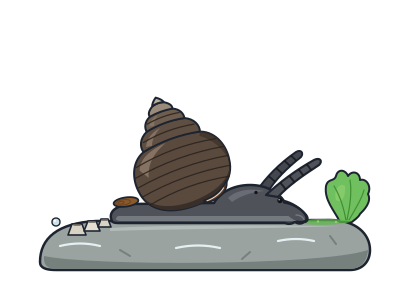
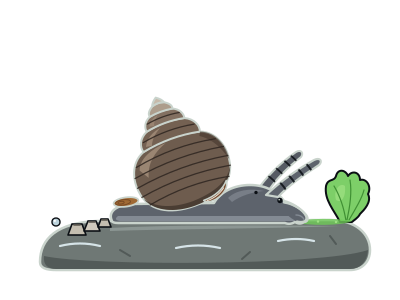
The little dark snail of rocky shores, scraping seaweed as the tide comes and goes.
You and the common periwinkle meet in the Two-sided animals branch, shown at about 580 million years ago (on 11 November, in a calendar from life's shared ancestor to today).
This little dark snail is one of the most familiar animals on rocky shores. As the tide moves in or out, it crawls over wet rock and seaweed. It scrapes off fine green, brown and red seaweeds, such as sea lettuce, with a rasping tongue called a radula. It is most active when it is wet. When the tide is out, groups of periwinkles huddle in cracks and rock pools so they do not dry out.
Its shell is a sharply pointed, coiled cone. It is grey to dark brown or almost black, with fine dark spiral lines. A grown shell is often about 3 centimetres tall, about as long as the top joint of your thumb, and the biggest reach about 5 centimetres. That makes it the largest periwinkle in Britain.
On the tree of life, this plain little grazer belongs to the sea snails and whelks. That puts it in the same group as some far showier shells, such as the queen conch, the tiger cowrie and the violet sea snail.
It is now the most common sea snail on the North Atlantic coast of North America, and its grazing has changed which seaweeds grow there. Scientists have argued for more than 100 years about how it got there.
A huge number of eggs
A large female can release about 100,000 eggs a year. The eggs float in tiny capsules that usually hold 2 or 3 eggs each, and the young drift in the sea for weeks.
A seaside snack
In Britain, cooked winkles are sold at the seaside. People pull them out of the shell with a pin and eat them with vinegar and white pepper.
On the menu since the Stone Age
Periwinkle shells turn up in prehistoric shell heaps across Europe. People in Scotland are thought to have eaten them since about 7500 BC.
Next to it on the tree
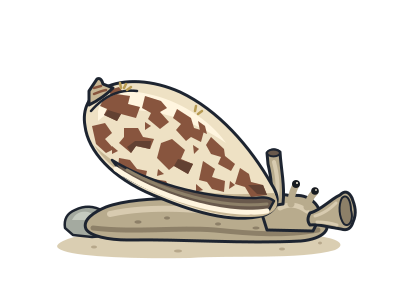
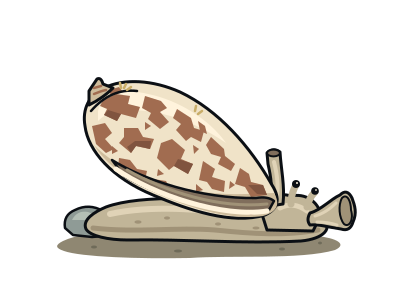
- Geography coneHarpoons fish with venom so potent it has killed people; cone snail venom inspired a painkiller.
- Common whelkA scavenging sea snail whose spongy egg cases wash up on beaches as "sea wash balls".
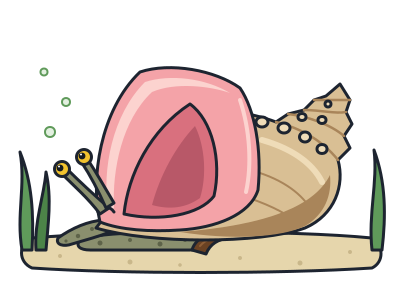
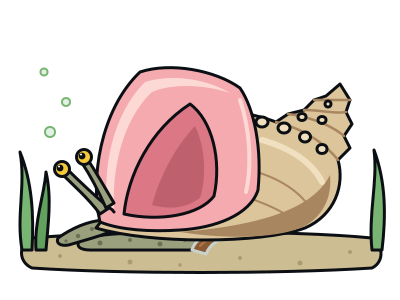
- Queen conchA big snail with a pink-lipped shell that can be blown like a trumpet.
- Tiger cowrieA glossy spotted shell that the snail polishes by wrapping its own body around it.
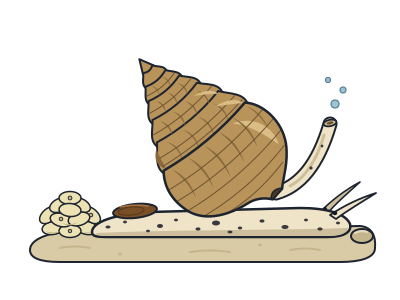
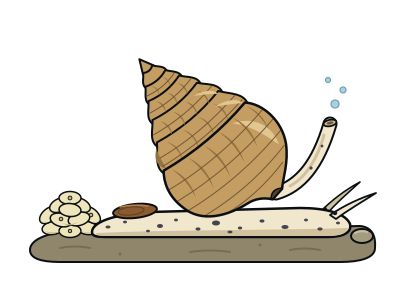
- Violet sea snailFloats upside down on a raft of bubbles it makes from mucus.