A species
Queen conch
Aliger gigas
A big sea snail with a pink-lipped shell you can blow like a trumpet
You and the queen conch meet in the Two-sided animals branch, shown at about 580 million years ago (on 11 November, in a calendar from life's shared ancestor to today).
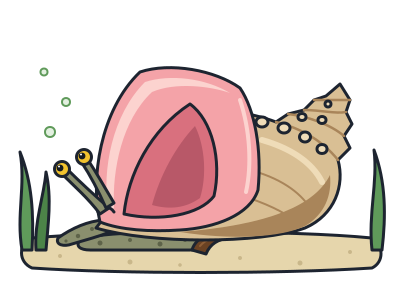
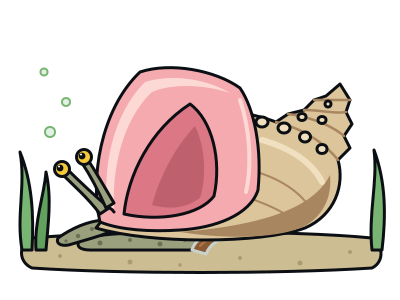
The queen conch is a snail, in the same big group as the snails in your garden. On the tree it sits with sea snails such as the whelk, the periwinkle and the tiger cowrie. But it is a giant. Its heavy, spiralled shell is usually about 15 to 31 centimetres long, roughly the length of a school ruler. Adults grow a wide, flared lip that is glossy pink inside, though it can also be peach, cream or yellow.
That big shell makes a fine horn. In the Caribbean, people have made conch trumpets for a very long time, and some still do. They cut a hole near the pointed tip and blow into it. The Aztecs also played conch trumpets in religious ceremonies.
The living snail looks out on two long eye stalks. Each one ends in an eye with a yellow iris and a black pupil. It doesn't glide like a garden snail. It hops instead: it digs a hard, claw-shaped trapdoor into the sand and flings its shell forward, a bit like a pole vaulter. It grazes on algae and seagrass in warm, shallow seas.
Too much fishing has made it rare in places. Conchs have to touch to mate, so when only a few are left, they struggle to find each other. In 2024 the United States listed the queen conch as threatened.
Rare pink pearls
Only about 1 in 10,000 queen conchs makes a pearl. Pink ones are worth the most. They lack the glossy shine of oyster pearls and have a silky, flame-like pattern instead. Scientists have grown some in a lab, but they are not farmed for sale like oyster pearls.
Egg strings as long as a tennis court
A female lays her eggs in long, sticky strings. One string can stretch to about 23 metres and hold hundreds of thousands of tiny eggs.
Not really the ocean
Hold a big shell to your ear and you hear a roar, but it isn't the sea. It's noise from the room echoing inside the hollow shell. A cup or a cupped hand does the same thing.
Next to it on the tree
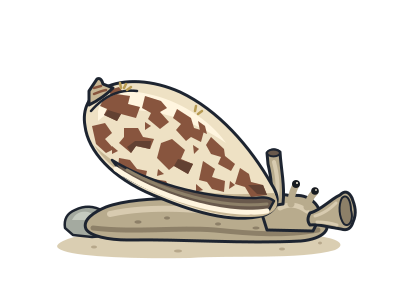
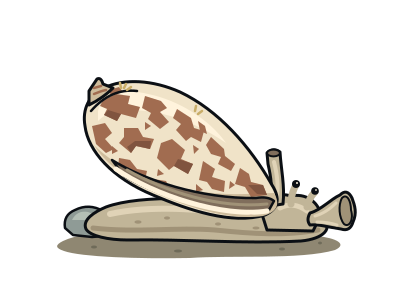
- Geography coneHarpoons fish with venom so potent it has killed people; cone snail venom inspired a painkiller.
- Common whelkA scavenging sea snail whose spongy egg cases wash up on beaches as "sea wash balls".
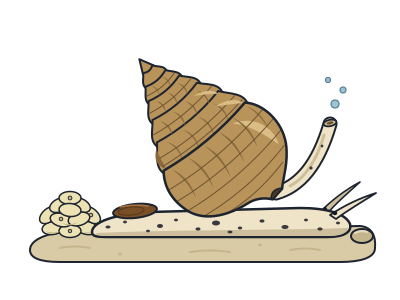
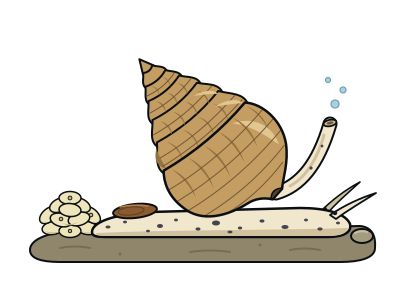
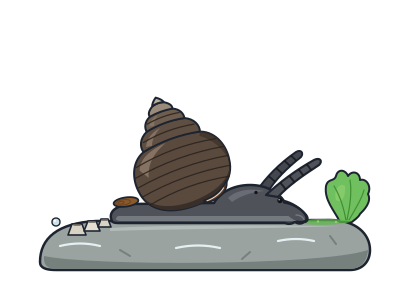
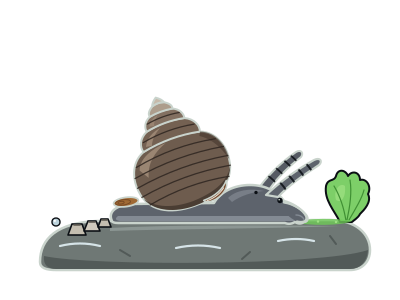
- Common periwinkleThe little dark snail of rocky shores that grazes on algae as the tide goes out.
- Tiger cowrieA glossy spotted shell that the snail polishes by wrapping its own body around it.
- Violet sea snailFloats upside down on a raft of bubbles it makes from mucus.