A species
Geography cone
Conus geographus
A fish-hunting snail with a venomous harpoon
You and the geography cone meet in the Two-sided animals branch, shown at about 580 million years ago (on 11 November, in a calendar from life's shared ancestor to today).
The geography cone harpoons fish with venom so powerful it has killed people. Yet one of its relatives helped inspire a painkiller. This hunter belongs to the same broad snail-and-slug group as garden snails, sea slugs and limpets. Unlike the plant-eating garden snail, it hunts fish.
Its harpoon is actually a modified tooth, carried at the end of a feeding tube that can stretch out. It can spread a fleshy hood like a net around fish before the tooth delivers venom that paralyses them. This snail lives on reefs in the Indo-Pacific, around coral, broken coral and nearby sand.
The medicine connection comes from another species: the magician cone. A compound in that relative’s venom inspired the approved painkiller Prialt. The medicine uses a manufactured version of one venom component, not the snail’s whole venom. It reduces pain by interfering with signals passing between nerve cells.
After-dark hunter
It usually feeds at night and shelters on or beneath rocks, coral slabs or rubble during daylight.
Not quite a cone
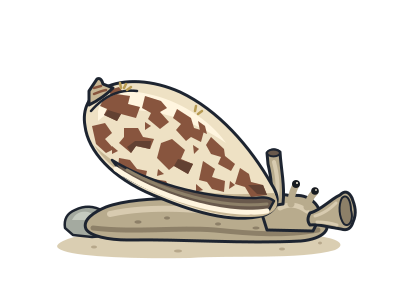
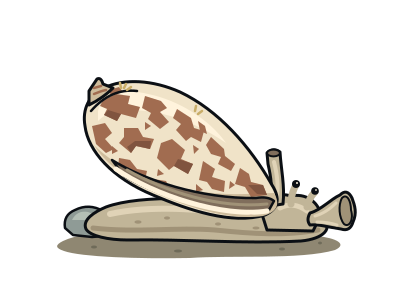
Despite its name, its shell is nearly cylindrical, with a wide opening along one side.
Patterned shell
Its shell has an intricate brown-and-white pattern.
Next to it on the tree
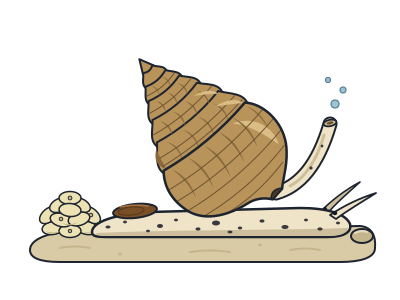
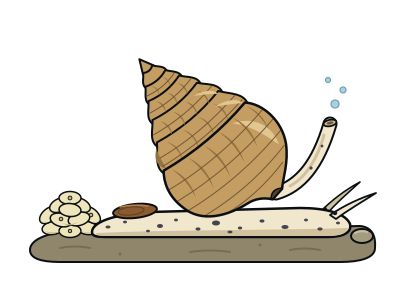
- Common whelkA scavenging sea snail whose spongy egg cases wash up on beaches as "sea wash balls".
- Common periwinkleThe little dark snail of rocky shores that grazes on algae as the tide goes out.
- Queen conchA big snail with a pink-lipped shell that can be blown like a trumpet.
- Tiger cowrieA glossy spotted shell that the snail polishes by wrapping its own body around it.
- Violet sea snailFloats upside down on a raft of bubbles it makes from mucus.