A group of living things
Tunicates
Tunicata
Bag-like filter feeders with a surprising family connection to us
This branch is shown at about 450 million years ago; its age is a rough estimate.
You and tunicates meet in the Chordates branch, shown at about 550 million years ago (on 14 November, in a calendar from life's shared ancestor to today).
Many tunicates look like little bags that filter food from water. Yet they are our closest living relatives without a backbone—even closer to us than the more fish-like lancelets. Their jelly-like appearance can be misleading: tunicates are not jellyfish. This family includes attached sea squirts, swimming salps and mostly tiny, tadpole-shaped animals called larvaceans.
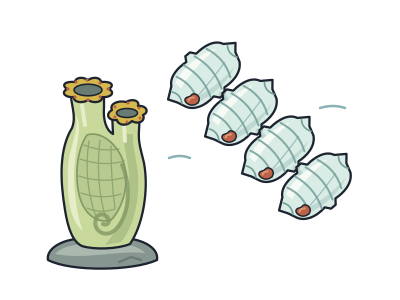
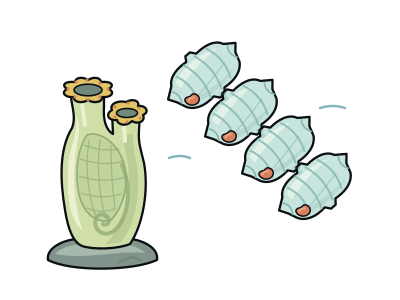
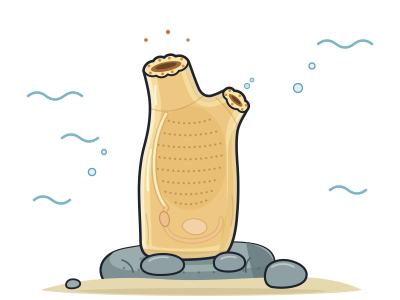
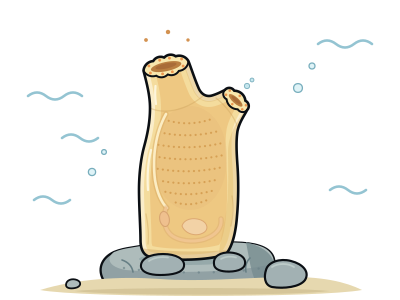
A typical adult sea squirt stays attached to a surface. It draws water through one opening and sends it out through another, filtering small food particles from the passing water. These openings are called siphons. For this animal, water flowing through its body delivers its meals.
Salps offer a different picture. They can swim alone or link together in chains containing a hundred or more individuals. Each link is a separate animal, not a piece of one long creature. What looks like a single strange ribbon is really many animals swimming together.
A coat with a plant connection
A sea squirt’s outer coat contains cellulose, the material that helps strengthen plant cell walls.
A surprisingly effective net
Salps catch food on a sticky internal net that can trap particles smaller than its gaps.
Sending carbon downwards
Salp droppings sink into deep water, carrying carbon from their food away from the ocean surface.
Inside tunicates
- Sea squirtOur closest invertebrate relatives: they start as swimming tadpoles, then settle and absorb their own brain.
- Giant salpJelly-like barrels that clone into chains metres long and jet through the ocean.
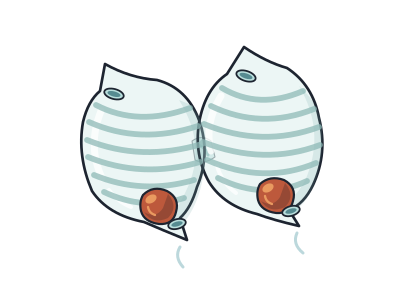
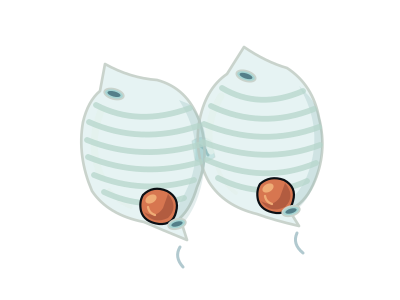
- LarvaceanA tiny tadpole that builds a mucus 'house' to filter food, and throws it away several times a day.
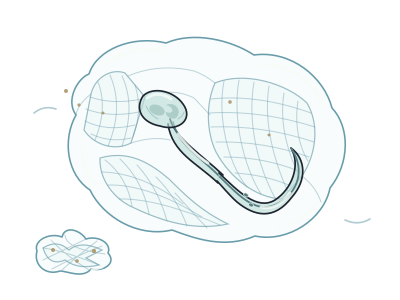
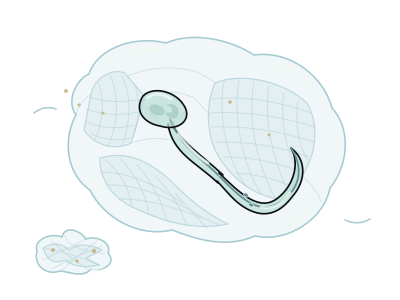
- PyrosomeA glowing tube made of thousands of clones that flashes blue-green when touched.
- Golden star tunicateLives in star-shaped clusters and can regrow a whole body from its blood vessels.
- Predatory tunicateA deep-sea sea squirt whose hood-shaped mouth snaps shut on drifting animals like a flytrap.
Next to it on the tree
- VertebratesAnimals with a backbone and a skull: fish, frogs, reptiles, birds and mammals.
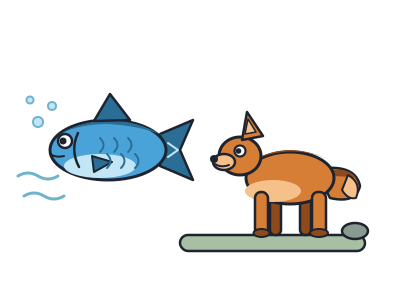
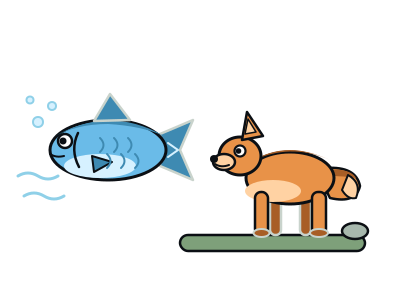
- LanceletA see-through sliver that buries itself in sand: the chordate body plan with nothing extra.
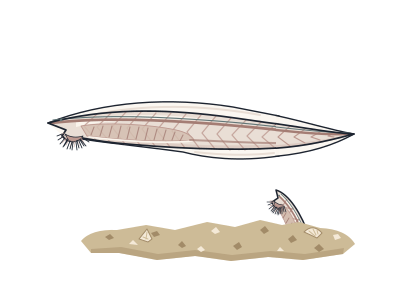
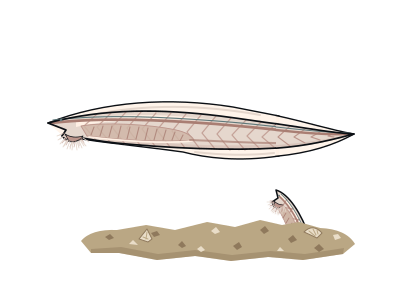
- PikaiaA finger-long Cambrian swimmer from the Burgess Shale, once hailed as our earliest ancestor.
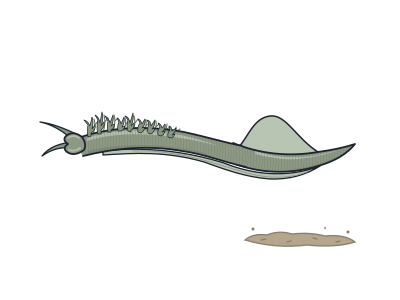
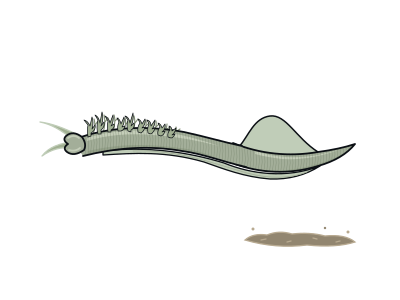
- HaikouichthysOne of the first fish-like animals, an inch long, swimming 518 million years ago.
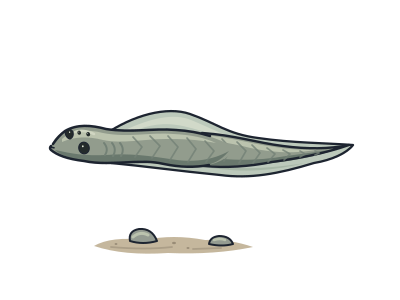
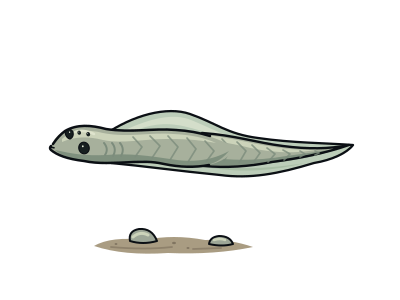
- MetasprigginaA Cambrian swimmer with big eyes and paired gill arches, the bars that later became jaws.