A species
Larvacean
Oikopleura dioica
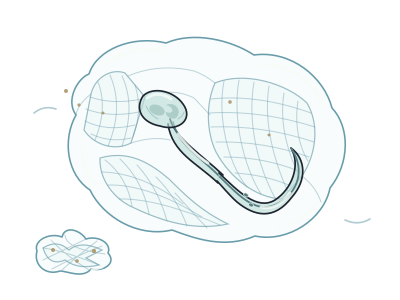
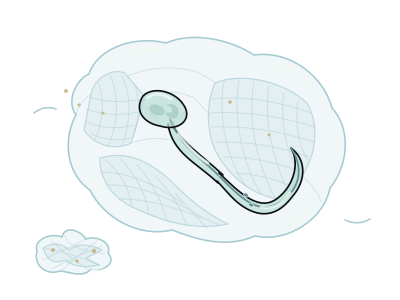
A tiny, tadpole-shaped animal with a throwaway house
You and the larvacean meet in the Chordates branch, shown at about 550 million years ago (on 14 November, in a calendar from life's shared ancestor to today).
This tiny, tadpole-shaped animal builds a mucus ‘house’ to filter food from seawater. It can throw away and replace the house several times a day. Despite its shape, it is no frog or fish. It belongs to the tunicates, the same animal group as sea squirts and salps.
The house is a feeding tool, not a permanent shell. Inside are delicate filters that gather microscopic food, including particles too small for many larger animals to eat directly. The animal waves its muscular tail to pump water through these filters. When they clog, it abandons the house and builds another. That same tail also helps it swim.
Looking like a tadpole does not mean it is waiting to grow into something else. Even an adult, ready to reproduce, keeps this body shape. It is not an unfinished sea squirt waiting to settle onto a surface: this little relative stays a swimmer.
Ocean snow
Discarded houses help form ‘marine snow’: clumps of material from living things drifting through the ocean.
Separate sexes
Each individual is male or female. Other described larvaceans normally produce both eggs and sperm.
A rod, not a backbone
Inside the adult’s tail is a flexible supporting rod, rather than a backbone.
Next to it on the tree
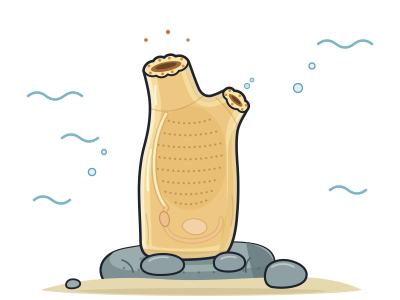
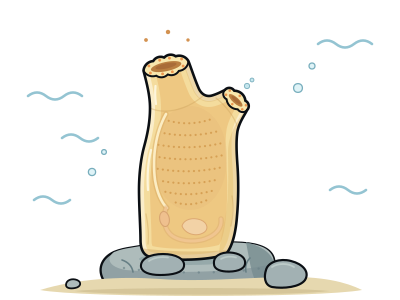
- Sea squirtOur closest invertebrate relatives: they start as swimming tadpoles, then settle and absorb their own brain.
- Giant salpJelly-like barrels that clone into chains metres long and jet through the ocean.
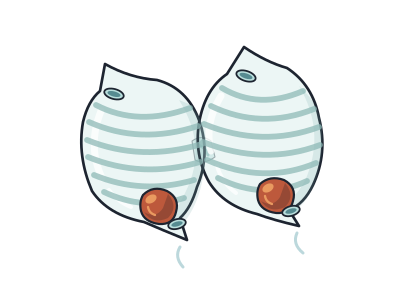
- PyrosomeA glowing tube made of thousands of clones that flashes blue-green when touched.
- Golden star tunicateLives in star-shaped clusters and can regrow a whole body from its blood vessels.
- Predatory tunicateA deep-sea sea squirt whose hood-shaped mouth snaps shut on drifting animals like a flytrap.