An extinct species
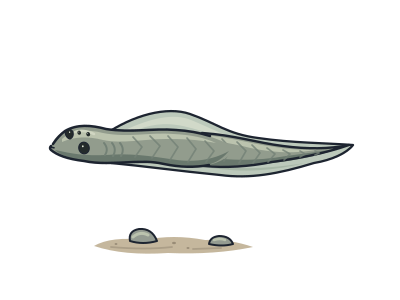
Haikouichthys †
Haikouichthys ercaicunensis
An inch-long swimmer near the beginnings of fish
Lived about 518–517 million years ago.
You and the haikouichthys meet in the Chordates branch, shown at about 550 million years ago (on 14 November, in a calendar from life's shared ancestor to today).
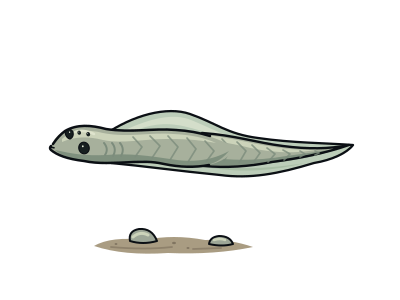
Only about an inch long, this was one of the earliest known fish-like animals. It lived in the sea about 518 to 517 million years ago. It was an early relative of animals with backbones, not a proven direct ancestor of people or modern fish.
Fossils preserved more than its slender outline. They showed zigzag blocks of muscle and fine threads within its gills. Researchers also identified a flexible supporting rod along its body, called a notochord. This was not the same thing as a modern bony backbone.
Its streamlined shape and muscle blocks suggested that it swam actively. That was an inference from its body, rather than behaviour directly recorded in the fossils. It resembled young lampreys, but it was not simply a modern lamprey from the distant past. The likeness reflected features shared early in their family history.
Hundreds of fossils
More than 500 specimens had been reported by 2003.
A discovery in China
Its fossils came from near Haikou, south of Kunming in Yunnan, China.
Pigment survived
Eye fossils preserved microscopic bodies containing melanin, a pigment also found in living vertebrate eyes.
Next to it on the tree
- VertebratesAnimals with a backbone and a skull: fish, frogs, reptiles, birds and mammals.
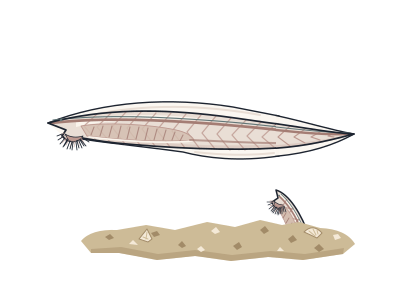
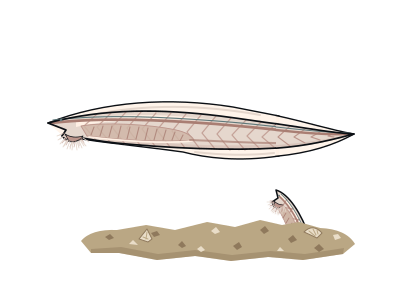
- LanceletA see-through sliver that buries itself in sand: the chordate body plan with nothing extra.
- TunicatesBag-like filter feeders that are our closest relatives without a backbone.


- PikaiaA finger-long Cambrian swimmer from the Burgess Shale, once hailed as our earliest ancestor.
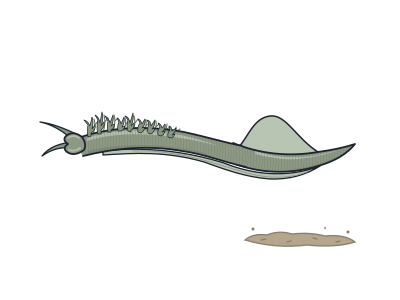
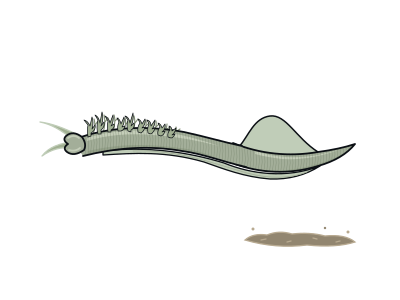
- MetasprigginaA Cambrian swimmer with big eyes and paired gill arches, the bars that later became jaws.