A species
Sea sawdust
Trichodesmium erythraeum
A sea bacterium whose floating rafts can be seen from space, feeding the ocean with nitrogen from the air.
You and the sea sawdust meet in the All life branch, shown at about 4.2 billion years ago (on 1 January, in a calendar from life's shared ancestor to today).
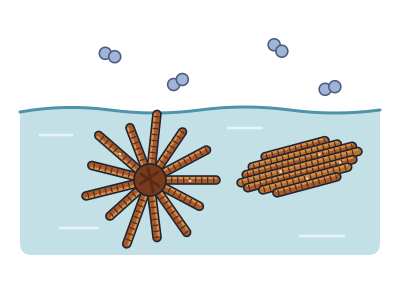
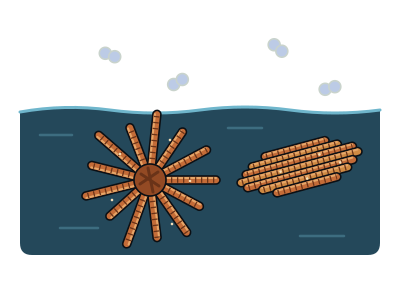
On warm, calm tropical seas, long brown streaks sometimes appear. They are so big that satellites can photograph them from space. In 2010 a NASA satellite captured yellow-green streaks stretching for miles south of Fiji. Up close, the streaks look like sawdust floating on the water, which is how sailors gave this living thing its name. But it is not wood or a plant. It is a bacterium, a kind called a cyanobacterium.
Each speck is a colony. It is made of tens to hundreds of threads, and each thread is a chain of tiny cells. The threads bundle into round, spiky puffs or long tufts. Gas pockets fill at least half of each cell and keep it afloat.
Its real superpower is taking nitrogen gas that has soaked into the sea from the air and turning it into a fertiliser that other sea life can use. Many warm tropical seas are poor in nutrients, so this helps feed them. Its relative star jelly does the same job inside special thick-walled cells that keep oxygen away. Sea sawdust has none of those cells. Even so, it makes fertiliser in bright daylight, while it is also making food from sunlight. Scientists are still working out how it does this.
Spotted by Captain Cook
In 1770, near the Great Barrier Reef, Captain James Cook wrote that the sea was covered with 'a kind of a brown scum', which sailors generally called 'spawn'. It is one of the earliest known written records of these blooms.
Darwin sailed through it
On his voyage on the Beagle, Charles Darwin described bands of it about 10 yards (about 9 metres) wide and at least two and a half miles (about 4 kilometres) long.
Named after the Red Sea
The second part of its scientific name means 'red' and comes from an old Greek name for the Red Sea. A scientist named it in 1830 after seeing a red bloom while crossing that sea. Healthy colonies are usually golden-brown, from a reddish pigment mixed with green.
Next to it on the tree
- ProchlorococcusThe smallest, most numerous photosynthetic cell on Earth; it makes a share of every breath you take.
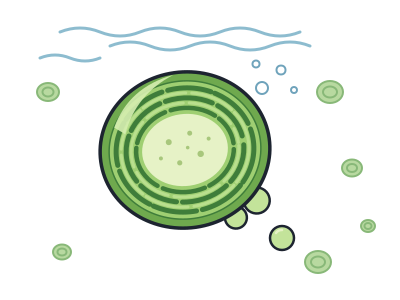
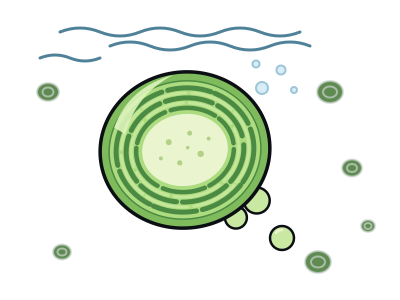
- EoentophysalisFossil cell clusters about 1.9 billion years old, among the first microbes we can confidently call cyanobacteria.
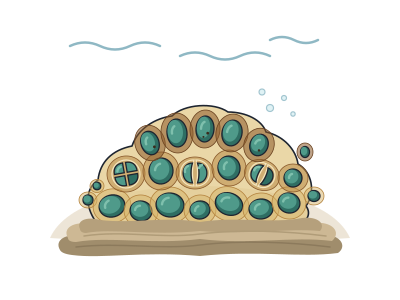
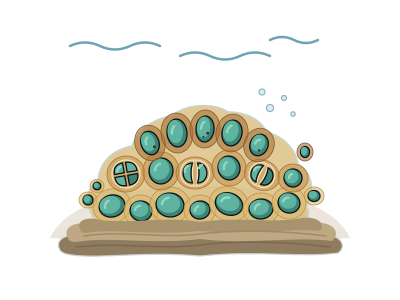
- GloeobacterThe oddball cyanobacterium with no internal membranes; its line split first from all other cyanobacteria.
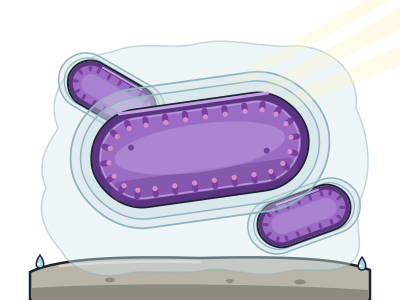
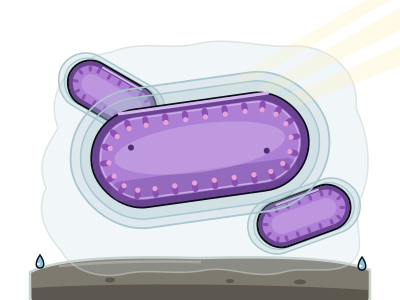
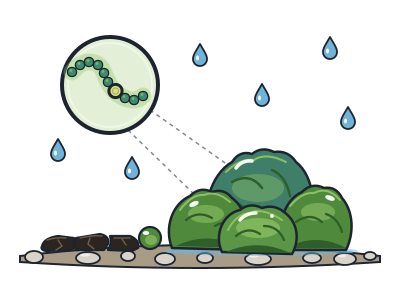
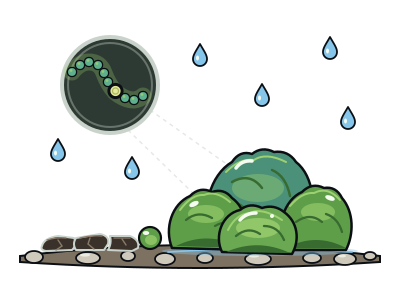
- Star jellyDries to a black crust, then swells into green jelly blobs after rain, ready to photosynthesise again.
- SpirulinaSpiral green threads harvested from soda lakes and sold as a protein-rich food powder.