A species
Star jelly
Nostoc commune
A black crust that swells into green jelly after rain
You and the star jelly meet in the All life branch, shown at about 4.2 billion years ago (on 1 January, in a calendar from life's shared ancestor to today).
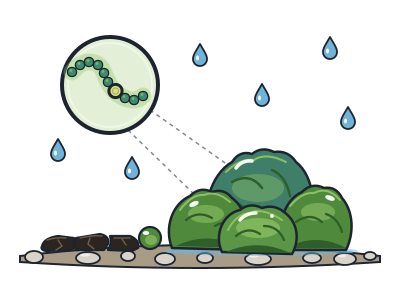
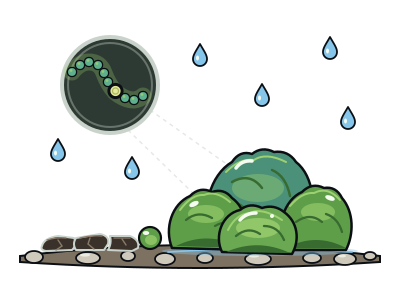
On a dry day you would walk straight past it. It is a thin, crisp, black-brown crust on a gravel path, and people often mistake it for dried dog droppings. Then it rains. In lab tests, a dried crust soaked up about five times its own dry weight in water in about five minutes. It swells into slippery, olive-green jelly blobs. In one experiment, about ten minutes after it got wet in the light, its oxygen making had reached its highest level.
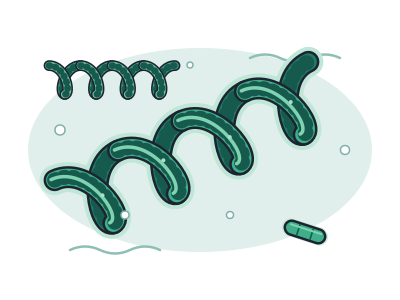
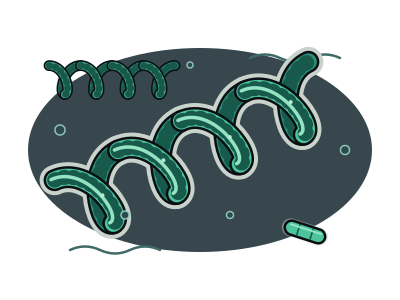
It looks like a plant or a fungus, but it is neither. Star jelly is a bacterium, one of the cyanobacteria. These bacteria make their own food from sunlight, as plants do. On the tree it sits in the same group as spirulina and sea sawdust. Each blob is a colony made of countless tiny cells. The cells are joined in chains like strings of beads and packed in jelly.
The jelly is made mostly of sugar-like chains. It protects the cells' food-making machinery while they dry out or freeze, so they can start up again when water returns. Star jelly seems to appear from nowhere after rain, so people once believed it fell from shooting stars. In fact it was there all along, waiting for the rain.
It makes its own fertiliser
Here and there along its chains of cells are larger, pale, thick-walled cells. These cells take nitrogen from the air and turn it into a form the colony can use. This lets star jelly grow on poor ground where other living things struggle.
A slow start after a long drought
Colonies that had been dry for 8 years took over 30 hours to get fully wet again the first time. After two rounds of drying and wetting, they did it in about 3 hours. This may stop a colony waking up too early after a long drought, and then help it make quick use of short bursts of rain.
On the menu, and many names
People eat it in several Asian countries. In the Philippines it is made into a salad, and in Taiwan it is nicknamed 'post-rain mushroom'. In English it has other odd names too, such as witch's butter and mare's eggs.
Next to it on the tree
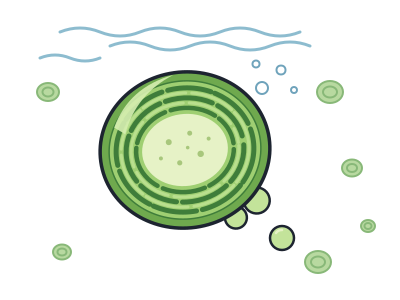
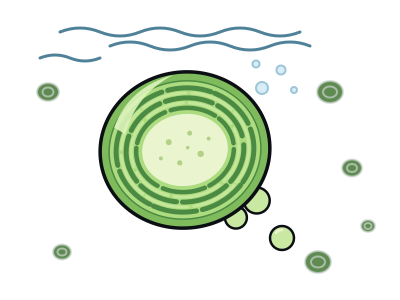
- ProchlorococcusThe smallest, most numerous photosynthetic cell on Earth; it makes a share of every breath you take.
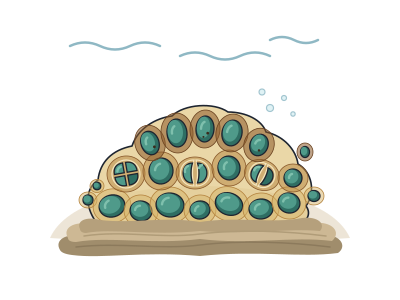
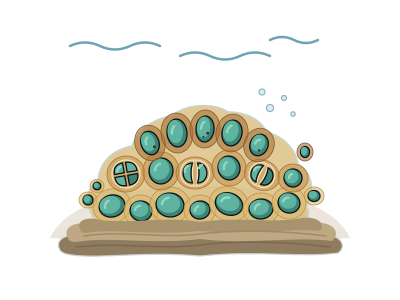
- EoentophysalisFossil cell clusters about 1.9 billion years old, among the first microbes we can confidently call cyanobacteria.
- GloeobacterThe oddball cyanobacterium with no internal membranes; its line split first from all other cyanobacteria.
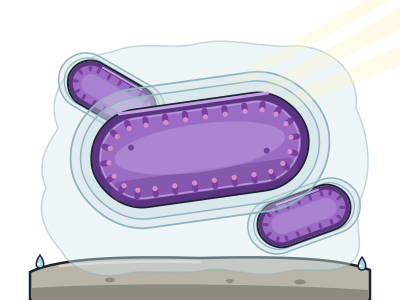
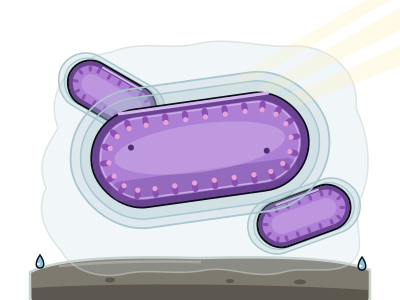
- Sea sawdustForms floating rafts big enough to see from space and fertilises the ocean with nitrogen from the air.
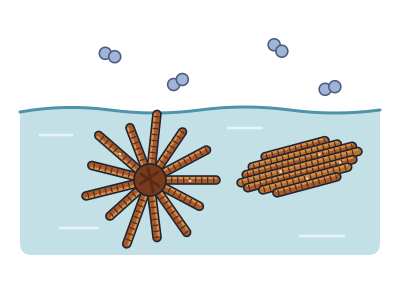
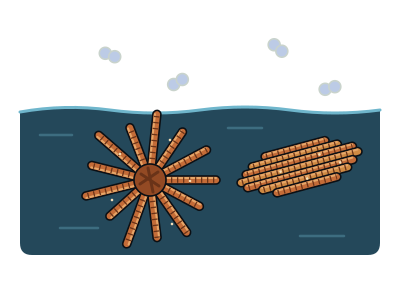
- SpirulinaSpiral green threads harvested from soda lakes and sold as a protein-rich food powder.