An extinct species
Eoentophysalis †
Eoentophysalis belcherensis
Tiny cell clusters about 2 billion years old, among the oldest fossils we can confidently call cyanobacteria.
Lived about 2,000–1,850 million years ago.
You and the eoentophysalis meet in the All life branch, shown at about 4.2 billion years ago (on 1 January, in a calendar from life's shared ancestor to today).
Long before any plant or animal existed, tiny round cells clustered together in shallow, tidal seas in what is now northern Canada. Their fossils are about 2,000 to 1,850 million years old. They are among the oldest that scientists can confidently call cyanobacteria. That makes them relatives of Spirulina and star jelly, which sit beside them on the tree.
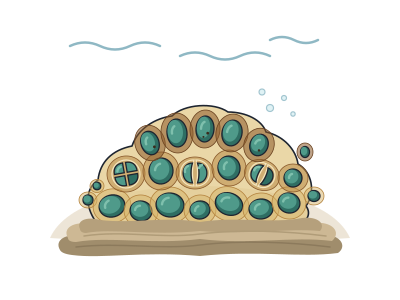
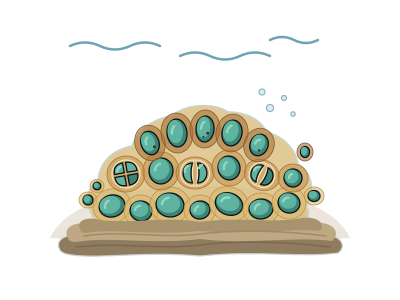
The fossils show colonies of round cells. Each cell sat inside its own layered, jelly-like wrapper, like a bubble inside a bubble. Each cell was only about 3 to 5 micrometres across, roughly a tenth to a twentieth of the width of a human hair. Many cells are found in dividing pairs. They were preserved in silica-rich rock inside stromatolites, which are layered rocks built up by mats of microbes.
Several clues point the same way. There is the cells' shape, and there is a way of dividing that is known today only from cyanobacteria. The cells are also lined up inside the stromatolites as if they grew towards light. They look almost exactly like a cyanobacterium called Entophysalis, which still lives on rocky seashores and in rock pools today.
Some things are educated guesses. Like their living look-alike, they probably made food from sunlight. The wrappers on the upper side of the colonies are darker. This may come from a brown sunscreen pigment like the one living Entophysalis makes.
A dawn name
The name means roughly 'an early Entophysalis'. It joins the Greek word for dawn with the name of its living look-alike. The geologist Hans Hofmann described it in 1976.
A very deep stack of rock
The rocks that hold these fossils, on the Belcher Islands in Hudson Bay, form a stack of well-preserved layers nearly 9 kilometres thick. That is about as thick as Mount Everest is tall.
Dated by volcanic ash
Layers of volcanic ash near the bottom of the same rock stack have been dated to about 2,018 and 2,015 million years ago. These dates gave scientists their first firm age limits for the fossils.
Next to it on the tree
- ProchlorococcusThe smallest, most numerous photosynthetic cell on Earth; it makes a share of every breath you take.
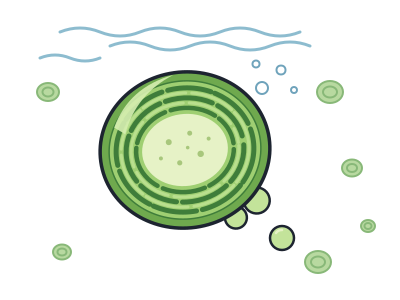
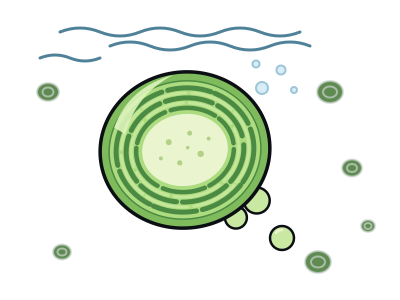
- GloeobacterThe oddball cyanobacterium with no internal membranes; its line split first from all other cyanobacteria.
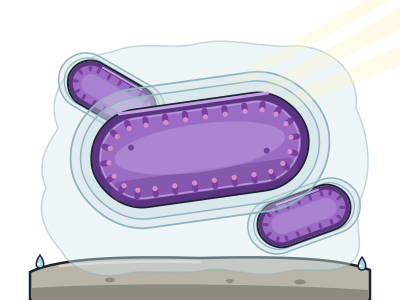
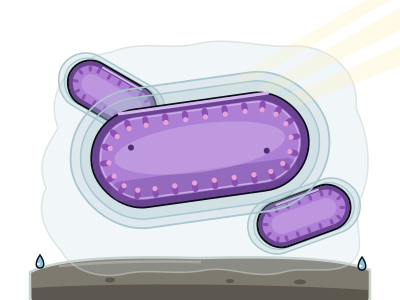
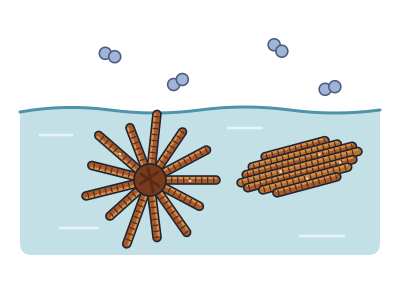
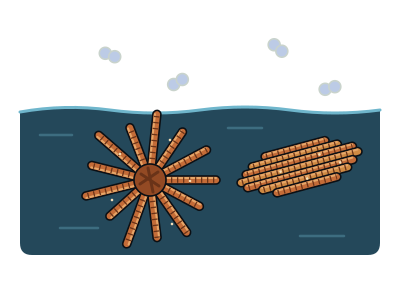
- Sea sawdustForms floating rafts big enough to see from space and fertilises the ocean with nitrogen from the air.
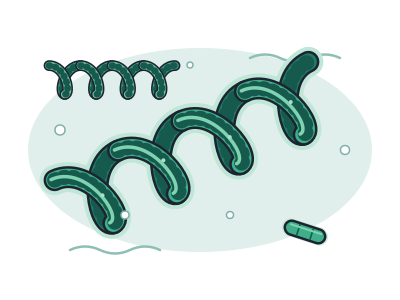
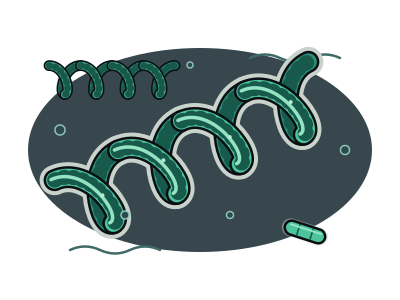
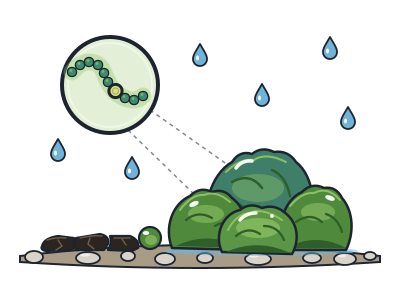
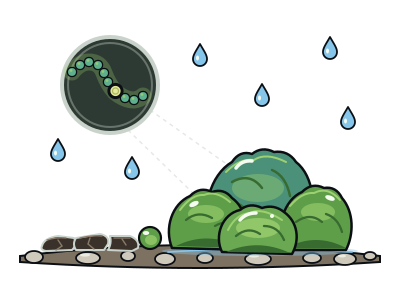
- Star jellyDries to a black crust, then swells into green jelly blobs after rain, ready to photosynthesise again.
- SpirulinaSpiral green threads harvested from soda lakes and sold as a protein-rich food powder.