A species
Gloeobacter
Gloeobacter violaceus
The cyanobacterium with no inner membranes, from the oldest side branch of the family
You and the gloeobacter meet in the All life branch, shown at about 4.2 billion years ago (on 1 January, in a calendar from life's shared ancestor to today).
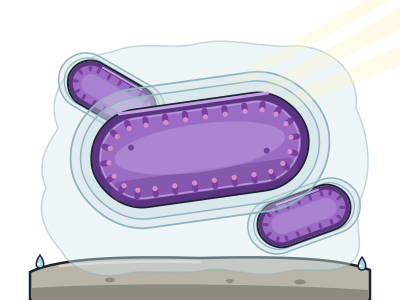
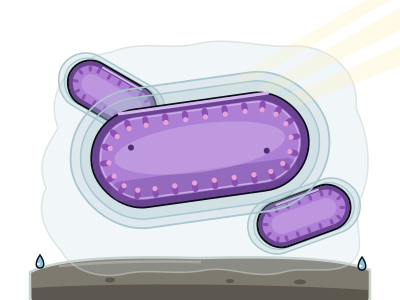
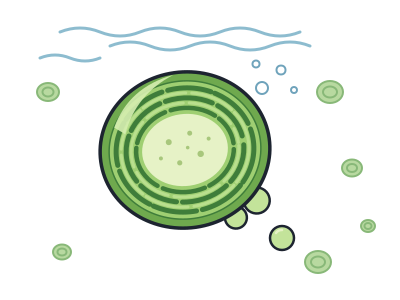
Nearly every cyanobacterium, and every chloroplast in a plant, catches sunlight on layers of thin membranes packed inside the cell. Gloeobacter has none. It still uses sunlight to make food and release oxygen, but it does all of that work in its cell membrane, the thin skin that wraps around the cell's insides. Its light-catching antennae line the inner side of that membrane, and the cell breathes there too.
Family trees built from genes show why this oddball matters. Its small branch split off first. The other main branch led to almost all other cyanobacteria and to the chloroplasts of algae and plants. That makes it a distant cousin on the oldest side branch, not their ancestor. It is a modern species that has kept evolving just as long as the others have.
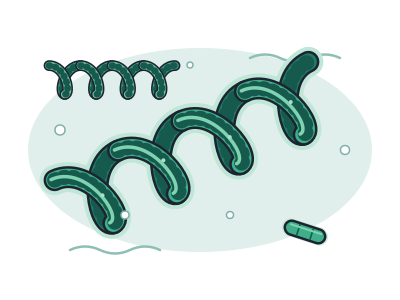
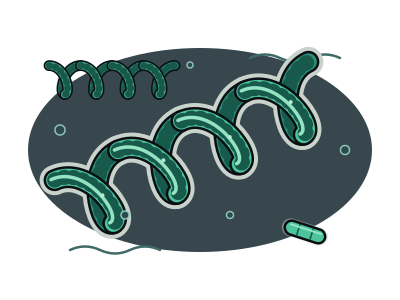
Each cell is a tiny rod about 2 to 5 micrometres long when grown in the lab. That is roughly a twentieth of the width of a human hair. The cells sit inside layered slime coats and clump together into jelly-like films on wet, shaded rock. It grows slowly, partly because catching light and breathing have to share one membrane. Strong light easily harms it.
A colour-changing culture
Lab cultures change colour as they age. They start grey or grey-violet, turn bright violet or pinkish-violet at their peak, then go green, and end up yellow and orange as they die off.
No body clock
Most other cyanobacteria carry genes for a daily body clock. Gloeobacter does not have them, and neither does its distant relative Anthocerotibacter, which was found on a hornwort plant in Panama.
A cousin in a lava cave
A second species of Gloeobacter was found living as purple films, about half a millimetre thick, in a warm, humid lava cave in Hawaiʻi.
Next to it on the tree
- ProchlorococcusThe smallest, most numerous photosynthetic cell on Earth; it makes a share of every breath you take.
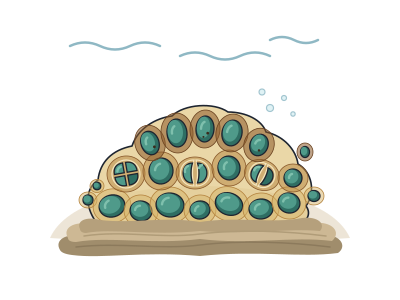
- EoentophysalisFossil cell clusters about 1.9 billion years old, among the first microbes we can confidently call cyanobacteria.
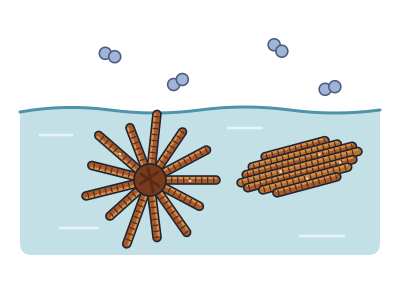
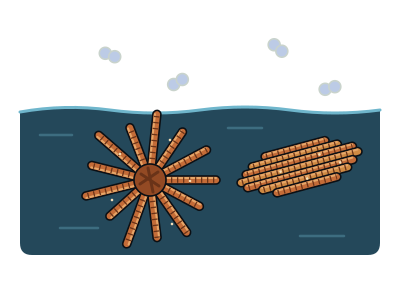
- Sea sawdustForms floating rafts big enough to see from space and fertilises the ocean with nitrogen from the air.
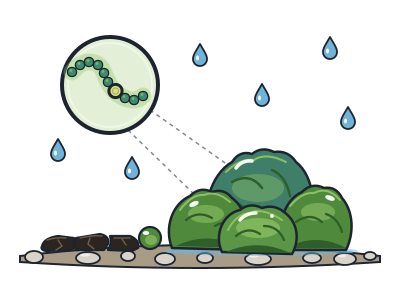
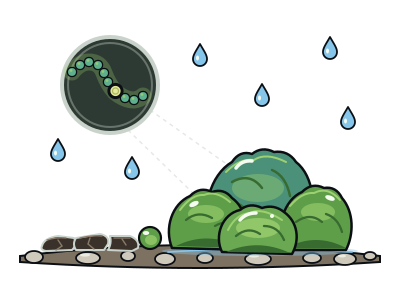
- Star jellyDries to a black crust, then swells into green jelly blobs after rain, ready to photosynthesise again.
- SpirulinaSpiral green threads harvested from soda lakes and sold as a protein-rich food powder.