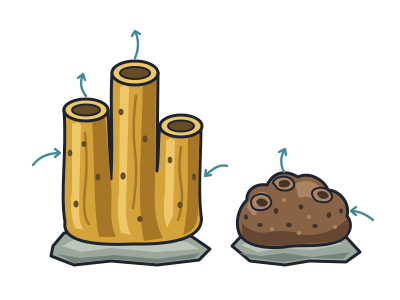
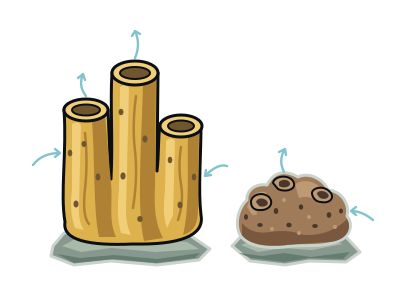
A group of living things
Sponges
Porifera
No brain, gut or muscles—most still pump water.
This branch is shown at about 650 million years ago; its age is a rough estimate.
You and sponges meet in the Animals branch, shown at about 700 million years ago (on 1 November, in a calendar from life's shared ancestor to today).
Sponges are animals with no brain, gut or muscles. Yet most pump water through their bodies to filter out food. Like corals and us, they belong to the animal family—but they are not plants or a kind of coral.
In a filter-feeding sponge, water enters through many tiny holes and leaves through larger openings. Inside, special feeding cells beat tiny, whip-like structures to keep water moving. A mesh-like collar around each whip catches food, including bacteria. Individual cells digest the food, and other cells carry nutrients around the body. There is no stomach hidden inside: those water passages are not a gut.
This way of feeding works in bodies shaped like tubes, barrels, branches or thin crusts. A tube-shaped reef sponge and a soft bath sponge belong to the same animal group, despite looking so different. Not every sponge filters its meals, though: a specialised group catches small animals instead.
A swimming start
Adults generally live attached to a surface, but their young can swim before settling.
Not just seawater
Most sponges live in the sea, but some live in fresh water.
More than a food delivery
The water flowing through a sponge also brings oxygen and carries away wastes.
Inside sponges
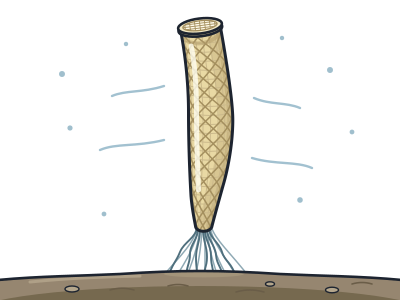
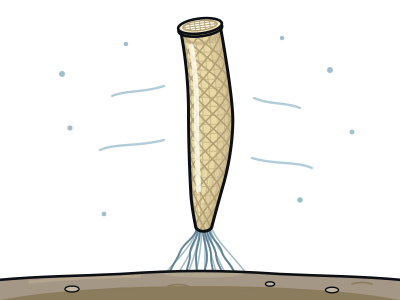
- Venus' flower basketA deep-sea sponge with a lace skeleton of glass; it has no brain, nerves or muscles.
- Bath spongeThe original bathroom sponge was a real animal, harvested from the Mediterranean seabed for thousands of years.
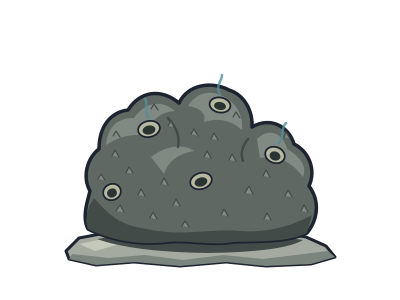
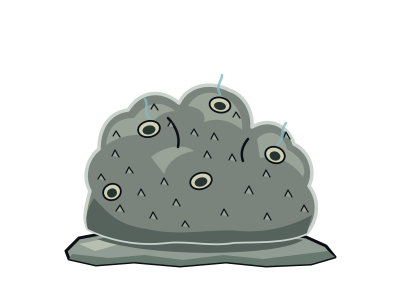
- ArchaeocyathidsCup-shaped sponges that built the first animal reefs, then vanished in the Cambrian.
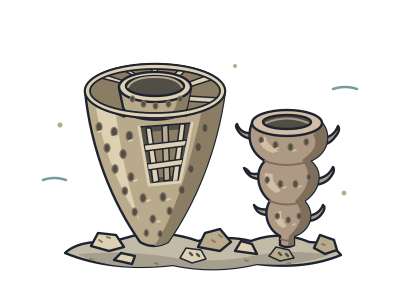
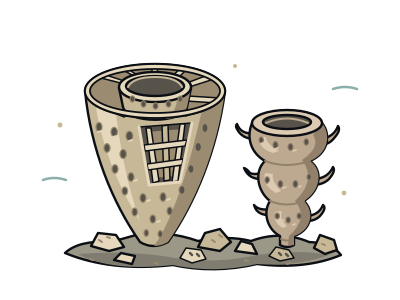
- Giant barrel spongeA Caribbean sponge big enough to climb into, which can live for over 2,000 years.
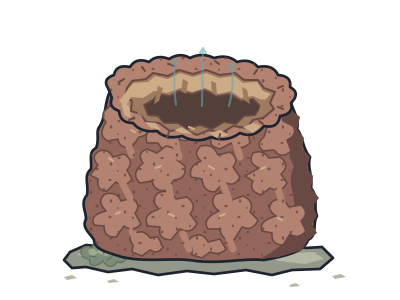
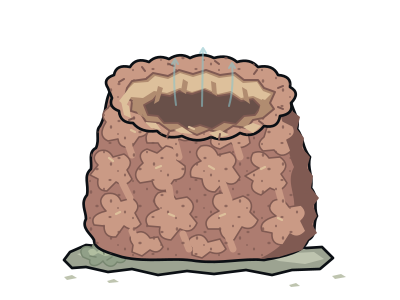
- Harp spongeA deep-sea sponge shaped like a candelabra or harp that snares tiny animals instead of filtering water.
- Freshwater spongeA sponge that lives in lakes and rivers, often green from algae living inside it.
- Giant glass rod spongeAnchored by a single glass spike up to three metres long; one is thought to be over 10,000 years old.
Next to it on the tree
- Jellyfish and coralsStinging-cell animals; a coral reef is built by tiny jellyfish relatives.
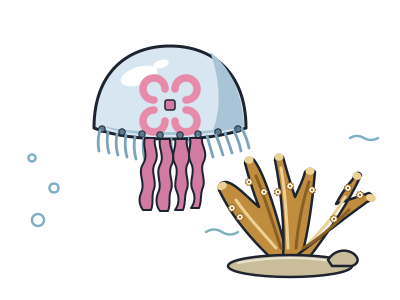
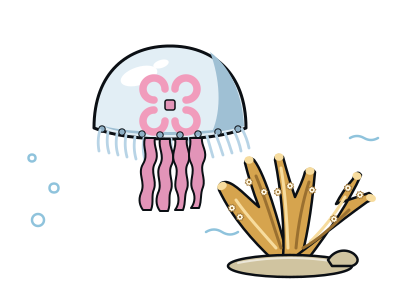
- Two-sided animalsA left, a right, a front and a back: the body plan of worms, insects, octopuses and you.
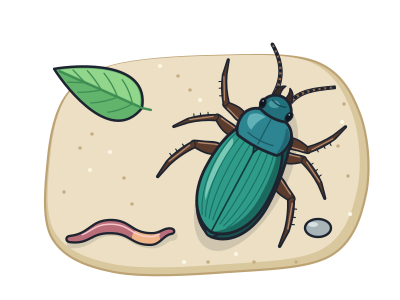
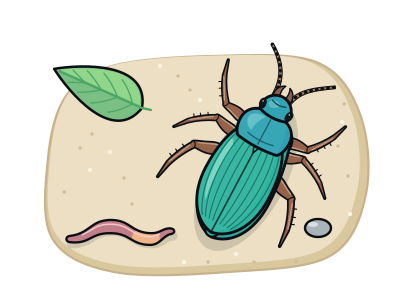
- PlacozoanThe simplest-looking animal: a flat, crawling smear of cells with no front, back, mouth or nerves.
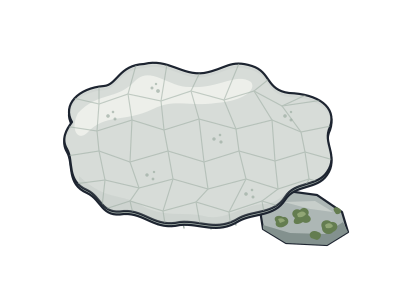
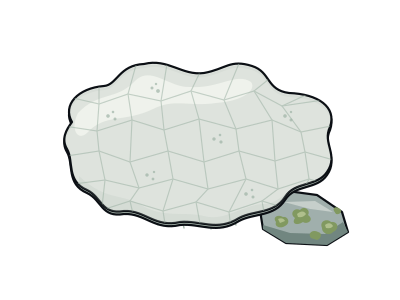
- DickinsoniaA rippled oval mat from 555 million years ago; fat molecules in its fossils show it was an animal.
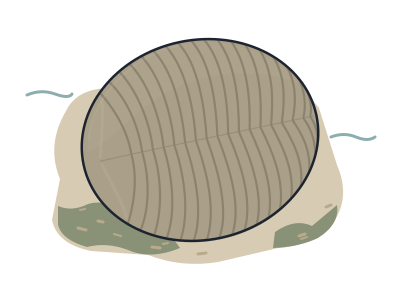
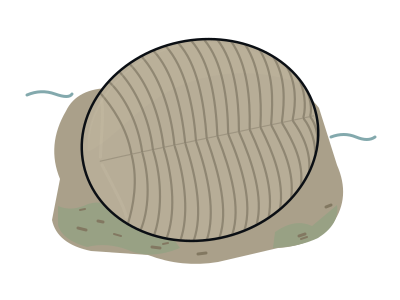
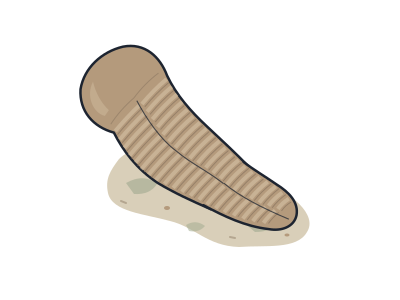
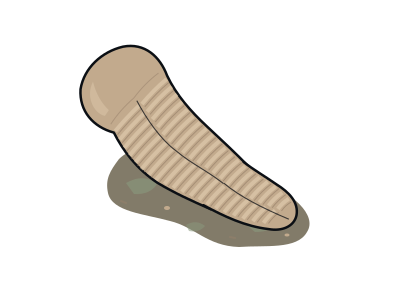
- SprigginaA segmented, shield-headed Ediacaran creature that looks like it might have had a front end.
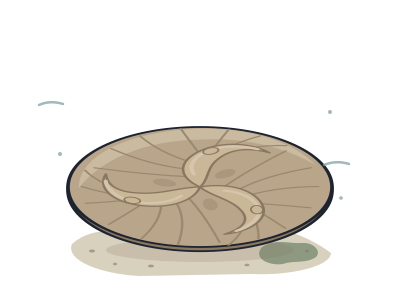
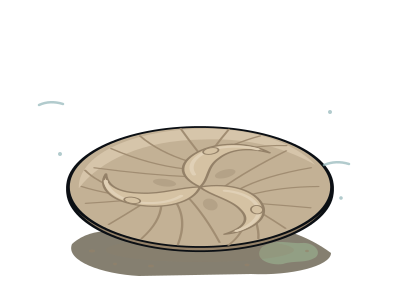
- TribrachidiumA disc with three curling arms, a body plan no living animal uses.
- Comb jelliesGlassy hunters that swim with rows of beating hairs, scattering rainbows as they go.
- RangeomorphsFrond-shaped creatures built from repeating branches, the first large living things on the deep seafloor.
- CloudinaA stack of tiny cones, like nested paper cups, that is one of the first animals to build a hard shell.