An extinct group
Archaeocyathids †
Archaeocyatha
Cup-shaped sponge relatives that helped pioneer animal reefs
Lived about 529–497 million years ago.
You and archaeocyathids meet in the Animals branch, shown at about 700 million years ago (on 1 November, in a calendar from life's shared ancestor to today).
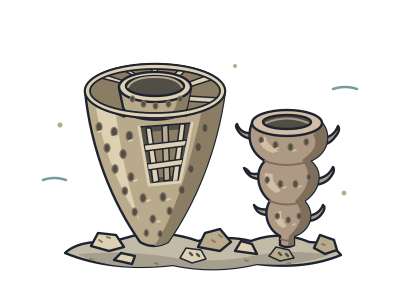
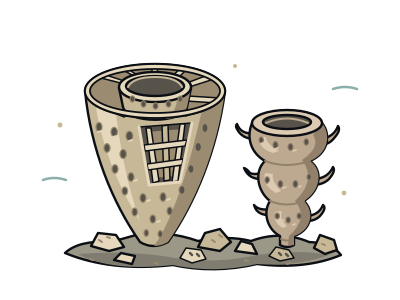
These cup-shaped relatives of living sponges were pioneering reef builders, not corals. They lived from about 529 million years ago into the middle Cambrian. Unlike a soft bath sponge, they had rigid skeletons. They lived attached to the seabed rather than swimming through the sea.
Fossils showed that a typical skeleton looked like one narrow cup inside another. Both walls had many small holes, with internal supports linking them around a central space. Researchers interpreted these animals as feeding by straining tiny food particles from water. Water was thought to pass through their bodies and leave through the central opening, but fossils did not preserve this activity.
They did not build their reefs alone. Tiny organisms that formed mineral deposits helped construct these habitats too. Together, they created structures with sheltered spaces and surfaces where other organisms could attach. These reefs were more than collections of cups: they provided places for other sea life to live.
Stone-like skeletons
Their skeletons were made of a mineral called calcite.
Not always double-walled
Some members had only one wall rather than the familiar nested pair.
Widely scattered fossils
Their fossil reefs were recorded in places including Australia, Siberia, Germany, Labrador, California and Nevada.
Next to it on the tree
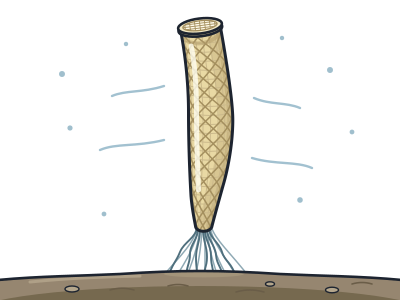
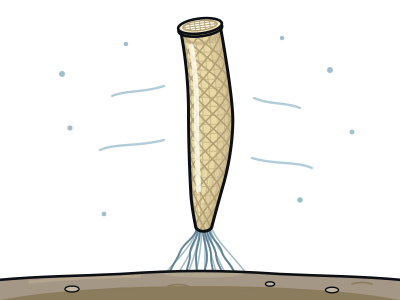
- Venus' flower basketA deep-sea sponge with a lace skeleton of glass; it has no brain, nerves or muscles.
- Bath spongeThe original bathroom sponge was a real animal, harvested from the Mediterranean seabed for thousands of years.
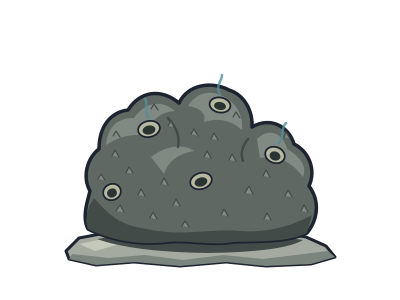
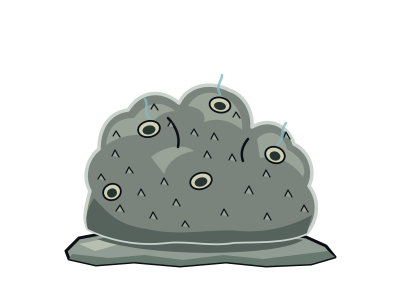
- Giant barrel spongeA Caribbean sponge big enough to climb into, which can live for over 2,000 years.
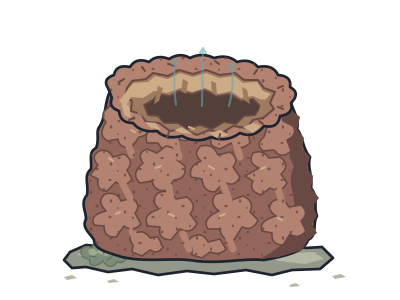
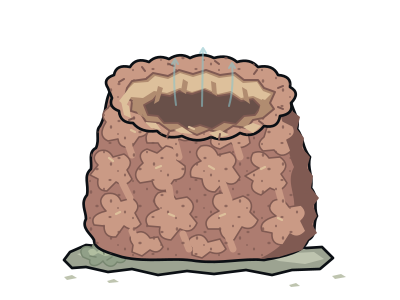
- Harp spongeA deep-sea sponge shaped like a candelabra or harp that snares tiny animals instead of filtering water.
- Freshwater spongeA sponge that lives in lakes and rivers, often green from algae living inside it.
- Giant glass rod spongeAnchored by a single glass spike up to three metres long; one is thought to be over 10,000 years old.