A species
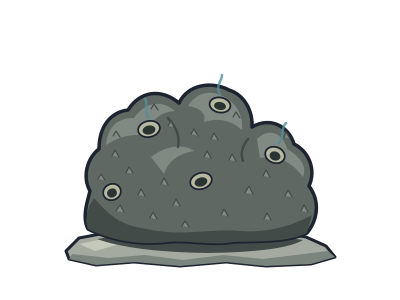
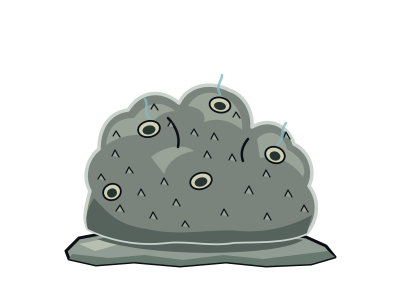
Bath sponge
Spongia officinalis
The original bathroom sponge was a real animal.
You and the bath sponge meet in the Animals branch, shown at about 700 million years ago (on 1 November, in a calendar from life's shared ancestor to today).
The original bathroom sponge came from a living animal on the Mediterranean seabed. Greek divers were collecting sponges for bathing about 4,000 years ago. That history covers several species, not just this one. Despite looking nothing like a fish, the bath sponge belongs to the animal family tree, on its sponge branch.
A natural sponge sold for washing is the animal’s cleaned, dried skeleton. Its support comes from a network of springy protein fibres, rather than the mineral needles found in many other sponges. These fibres make it soft enough to squeeze but resistant to tearing. Most modern bathroom sponges, however, are artificial.
In the sea, bath sponges live attached to rock. In shallow water, they favour shaded places such as caves and overhangs. They feed on tiny particles, including bacteria, single-celled algae and organic scraps. Their larger, visible holes are water outlets, not mouths: filtered water leaves through them.
A change of colour
Living bath sponges are usually grey to nearly black. Their dried skeletons are yellow.
A swimming start
Their young have a swimming stage before settling onto a surface and becoming attached sponges.
Pressure from harvesting
Heavy harvesting is an important threat to wild bath sponges.
Next to it on the tree
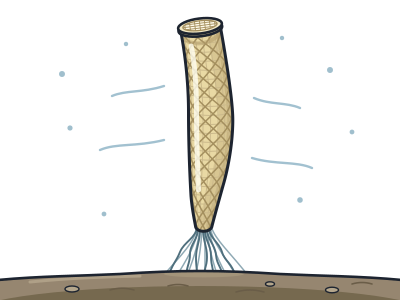
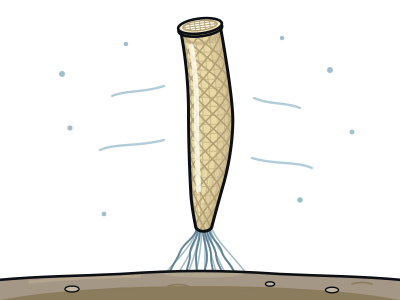
- Venus' flower basketA deep-sea sponge with a lace skeleton of glass; it has no brain, nerves or muscles.
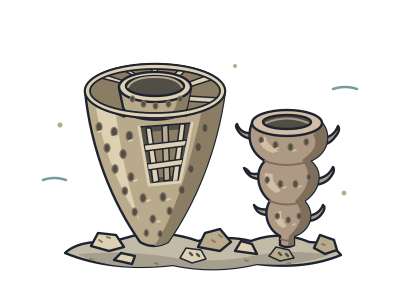
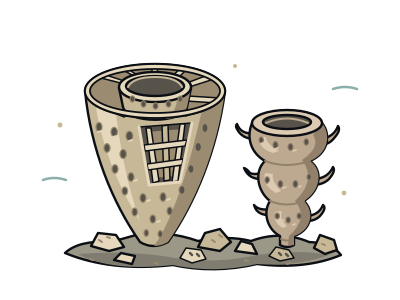
- ArchaeocyathidsCup-shaped sponges that built the first animal reefs, then vanished in the Cambrian.
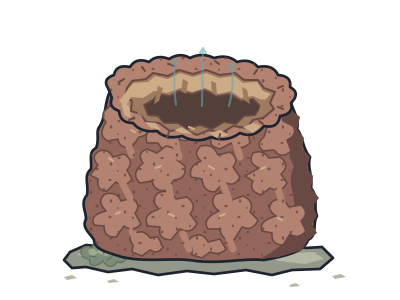
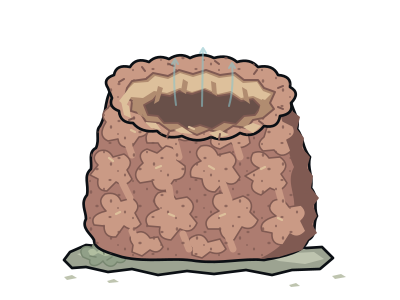
- Giant barrel spongeA Caribbean sponge big enough to climb into, which can live for over 2,000 years.
- Harp spongeA deep-sea sponge shaped like a candelabra or harp that snares tiny animals instead of filtering water.
- Freshwater spongeA sponge that lives in lakes and rivers, often green from algae living inside it.
- Giant glass rod spongeAnchored by a single glass spike up to three metres long; one is thought to be over 10,000 years old.