A species
Giant barrel sponge
Xestospongia muta
A barrel-sized animal that may live for thousands of years.
You and the giant barrel sponge meet in the Animals branch, shown at about 700 million years ago (on 1 November, in a calendar from life's shared ancestor to today).
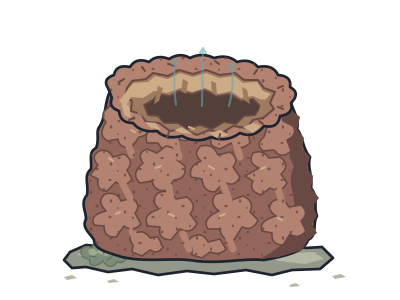
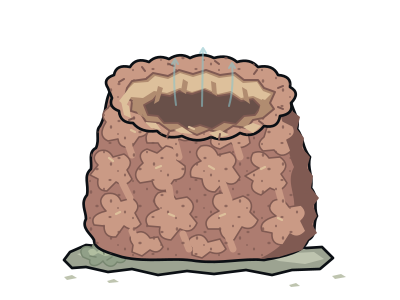
A huge relative of the bath sponge, this Caribbean animal can have a top opening over a metre wide—large enough for a person to fit inside. Some exceptionally large individuals are estimated to be over 2,000 years old. Those ages come from growth models, not from watching a sponge live that long. Venus’ flower basket, shown beside it on the tree, is another sponge relative.
Its thick body rises from the reef like a barrel or vase. Smaller individuals can look like squat volcanoes. Large ones can reach about 1.5 metres tall. Despite the name, it is not soft like a kitchen sponge: its body is hard, brittle and easily broken. That roomy opening is somewhere to look, not climb into.
The opening is a water outlet, not a mouth. Water enters through tiny holes across the body. Millions of cells with tiny beating hairs help move it along and catch microscopic food. The water then leaves through the top. Adults stay attached in one place while this feeding system keeps working.
No nerves needed
This animal has no nervous system.
A home for others
Its large body provides habitat for fish and other animals without backbones.
A seasonal colour change
Some individuals turn pale and later regain their brown colour in a recurring seasonal cycle.
Next to it on the tree
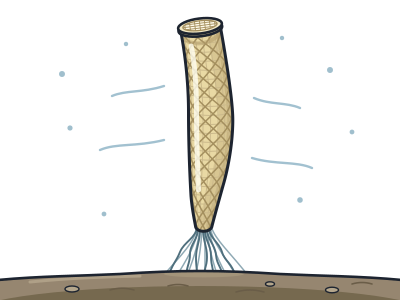
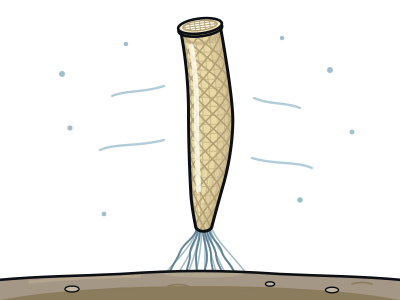
- Venus' flower basketA deep-sea sponge with a lace skeleton of glass; it has no brain, nerves or muscles.
- Bath spongeThe original bathroom sponge was a real animal, harvested from the Mediterranean seabed for thousands of years.
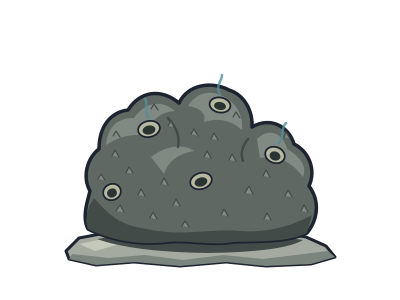
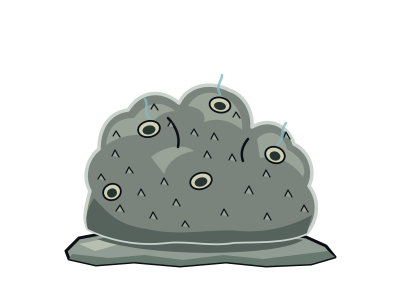
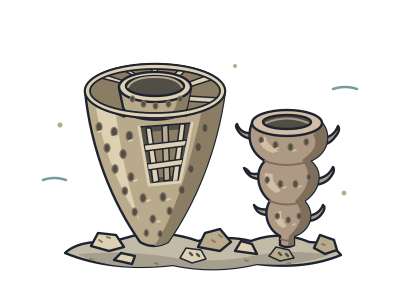
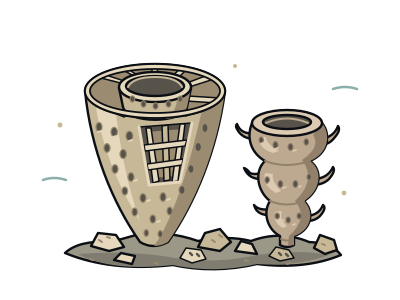
- ArchaeocyathidsCup-shaped sponges that built the first animal reefs, then vanished in the Cambrian.
- Harp spongeA deep-sea sponge shaped like a candelabra or harp that snares tiny animals instead of filtering water.
- Freshwater spongeA sponge that lives in lakes and rivers, often green from algae living inside it.
- Giant glass rod spongeAnchored by a single glass spike up to three metres long; one is thought to be over 10,000 years old.