An extinct species
Dickinsonia †
Dickinsonia costata
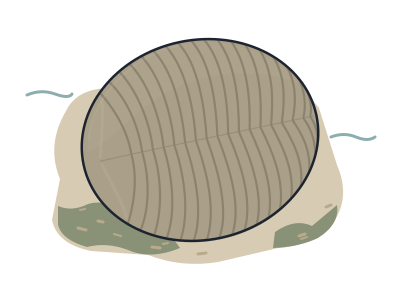
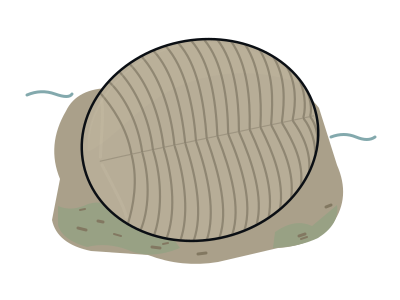
A rippled oval whose fossil fats revealed an animal.
Lived about 558–550 million years ago.
You and the dickinsonia meet in the Animals branch, shown at about 700 million years ago (on 1 November, in a calendar from life's shared ancestor to today).
This rippled oval looked like a little mat, yet it belonged to the animal family alongside sponges and jellyfish. It lived about 558 to 550 million years ago. Its shape alone had left researchers puzzled. In 2018, fat molecules preserved in exceptional fossils provided decisive evidence that it was an animal. Those molecules were related to cholesterol, a fat characteristic of animal bodies.
Fossil impressions showed a flattened oval with closely spaced, curved divisions on either side of a lengthwise middle line. These rib-like divisions were repeated body units, not exposed bones. Australian fossils commonly preserved the outside of its soft body as impressions beneath sandstone beds, rather than as bones or shells.
It lived on shallow, sandy seabeds covered with carpets of microscopic life. Despite its mat-like appearance, it was not itself one of those living carpets. Its unusual outline had even led researchers to consider whether it had been a giant single-celled organism or a lichen.
Hundreds of complete fossils
A 2017 study examined about 540 complete specimens without obvious distortion.
Growing without losing its shape
It grew by adding body units and enlarging existing ones while keeping its oval outline.
No clear mouth
Researchers found no convincing mouth or gut in the fossils examined in the 2017 study.
Next to it on the tree
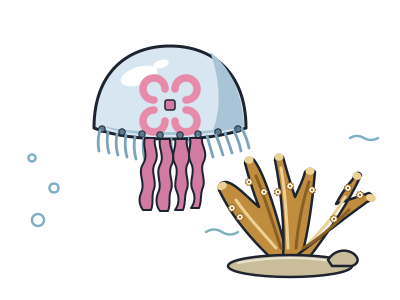
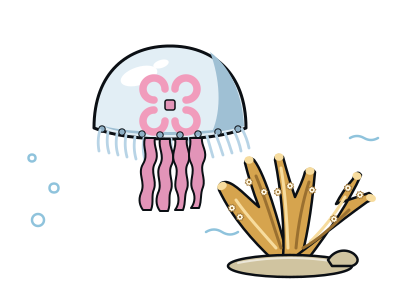
- Jellyfish and coralsStinging-cell animals; a coral reef is built by tiny jellyfish relatives.
- Two-sided animalsA left, a right, a front and a back: the body plan of worms, insects, octopuses and you.
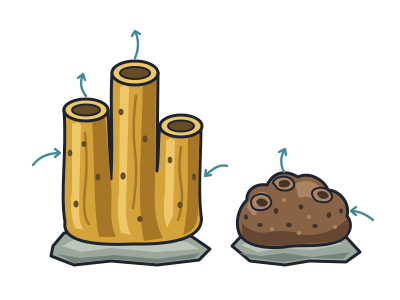
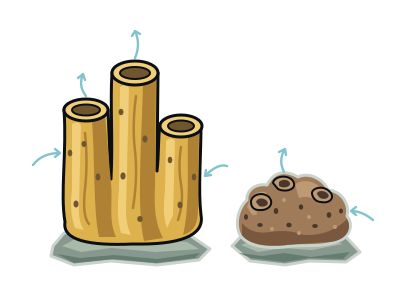
- SpongesAnimals with no brain, gut or muscles that pump water through their bodies to filter out food.
- PlacozoanThe simplest-looking animal: a flat, crawling smear of cells with no front, back, mouth or nerves.
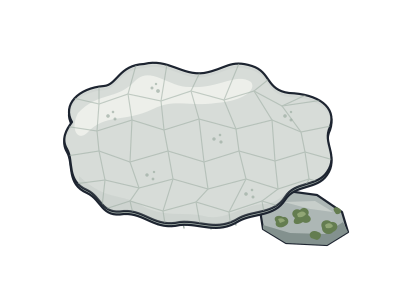
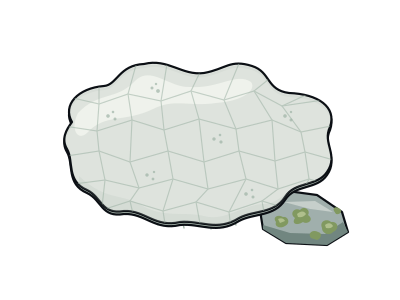
- SprigginaA segmented, shield-headed Ediacaran creature that looks like it might have had a front end.
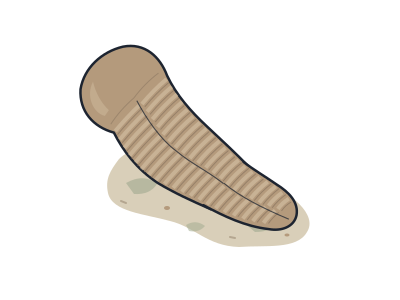
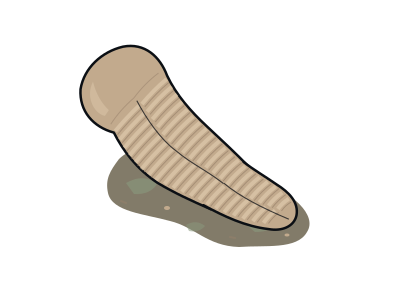
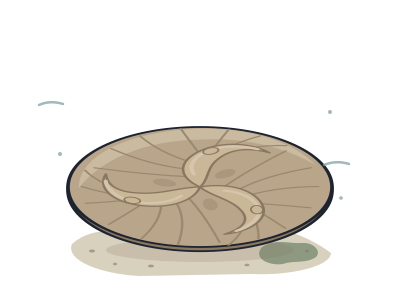
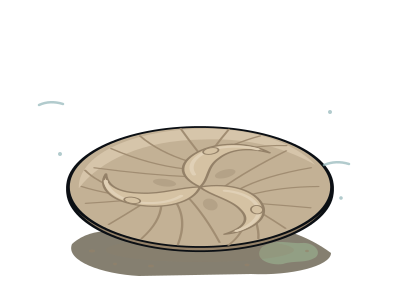
- TribrachidiumA disc with three curling arms, a body plan no living animal uses.
- Comb jelliesGlassy hunters that swim with rows of beating hairs, scattering rainbows as they go.
- RangeomorphsFrond-shaped creatures built from repeating branches, the first large living things on the deep seafloor.
- CloudinaA stack of tiny cones, like nested paper cups, that is one of the first animals to build a hard shell.