A species
Placozoan
Trichoplax adhaerens
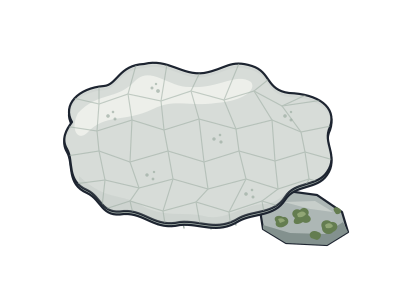
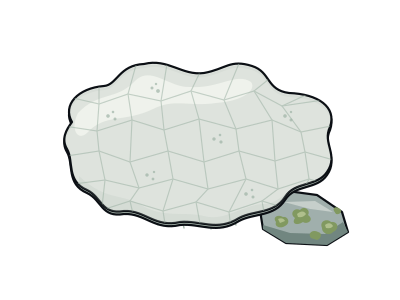
A crawling smear of cells, with no mouth or nerves
You and the placozoan meet in the Animals branch, shown at about 700 million years ago (on 1 November, in a calendar from life's shared ancestor to today).
This animal looks like a flat smear of cells, with no fixed front or back, no mouth and no nerves. Yet it belongs to a broad group of animals that also includes jellyfish, corals and humans. Its resemblance to an amoeba is misleading: this is a many-celled animal, not one giant cell.
Its upper and lower surfaces are different. Tiny beating hairs on its underside carry it across surfaces in warm coastal seawater. Without muscles or a nervous system, it can still move towards food rather than simply wander at random. It grazes on microscopic algae, digesting them outside its body beneath its lower surface, then taking up the released food.
Simple-looking does not mean uncoordinated. Specialised cells communicate using small chemical messengers. Some of their internal machinery resembles that used by nerve cells in jellyfish and humans. This animal has no nerves, but its cells can still work together.
One becomes two
It can reproduce by splitting into separate individuals, without mating.
Hidden branches
A network of branching cells lies inside its thin body.
Feeding stays local
Cells near algae release digestive substances, rather than every digestive cell releasing them at once.
Next to it on the tree
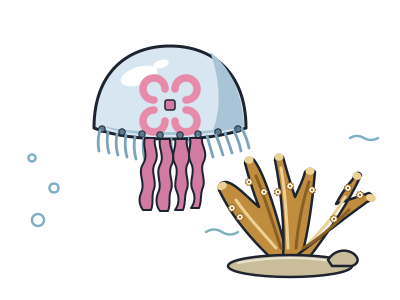
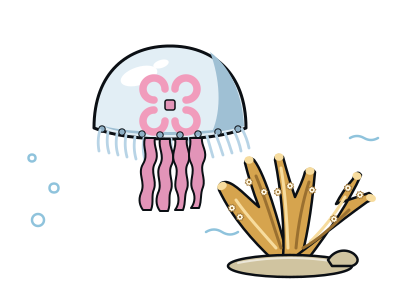
- Jellyfish and coralsStinging-cell animals; a coral reef is built by tiny jellyfish relatives.
- Two-sided animalsA left, a right, a front and a back: the body plan of worms, insects, octopuses and you.
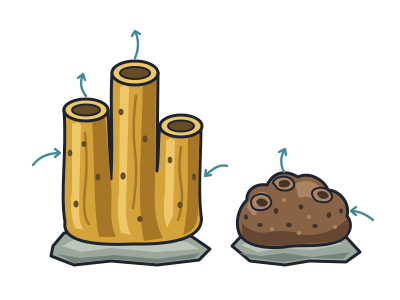
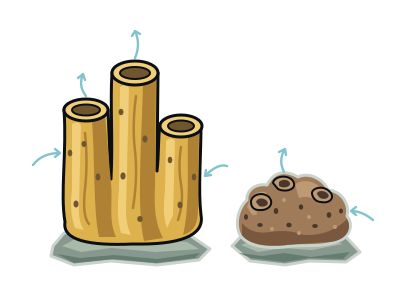
- SpongesAnimals with no brain, gut or muscles that pump water through their bodies to filter out food.
- DickinsoniaA rippled oval mat from 555 million years ago; fat molecules in its fossils show it was an animal.
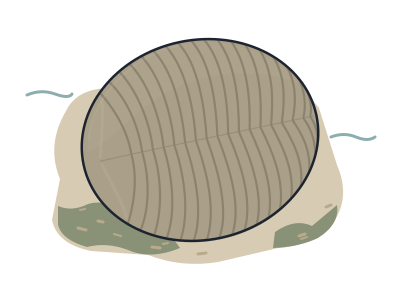
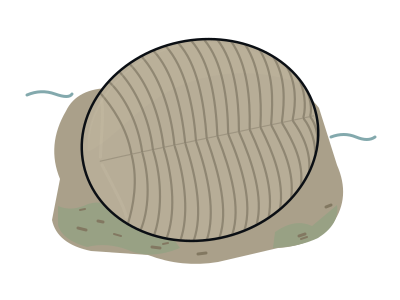
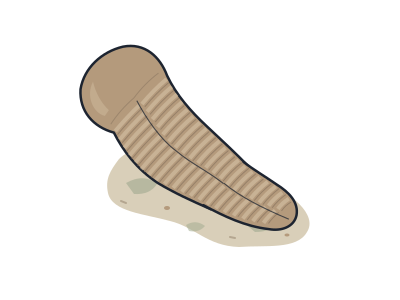
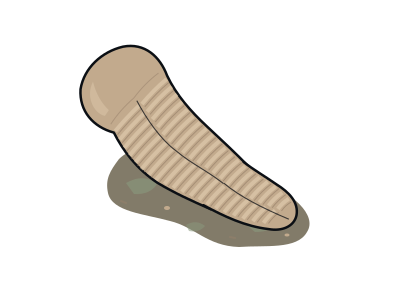
- SprigginaA segmented, shield-headed Ediacaran creature that looks like it might have had a front end.
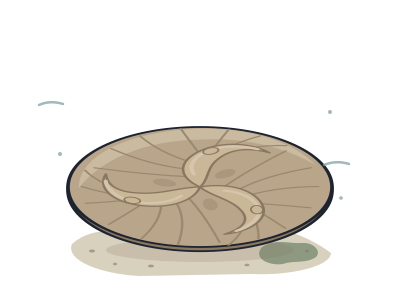
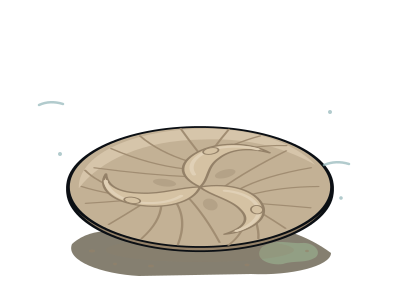
- TribrachidiumA disc with three curling arms, a body plan no living animal uses.
- Comb jelliesGlassy hunters that swim with rows of beating hairs, scattering rainbows as they go.
- RangeomorphsFrond-shaped creatures built from repeating branches, the first large living things on the deep seafloor.
- CloudinaA stack of tiny cones, like nested paper cups, that is one of the first animals to build a hard shell.