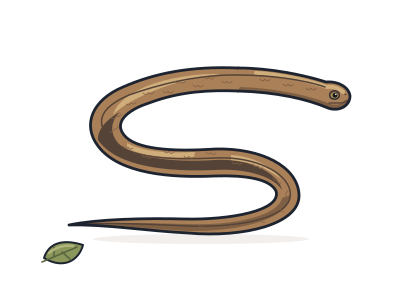
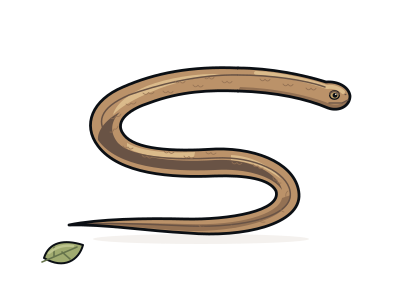
A species
Slow worm
Anguis fragilis
A lizard in snake-like disguise
You and the slow worm meet in the Amniotes branch, shown at about 320 million years ago (on 4 December, in a calendar from life's shared ancestor to today).
The slow worm looks like a snake, but it is a lizard with no legs. Look at its eyes: movable eyelids let it blink, unlike a snake. Its wider lizard branch also includes monitor lizards and Gila monsters. These are family connections, not lookalikes: slow worms belong to a different family from either group.
Its tail offers another escape route. If an animal attacks, a slow worm can shed part of its tail and get away. This defence means that not every adult has a full-length tail. Despite its name and shape, it is not a worm either.
Slow worms eat small, slow-moving animals, especially little slugs. They rarely sunbathe out in the open, often sheltering beneath logs or in compost heaps instead. Females keep their developing eggs inside their bodies and give birth to live young in late summer.
A touch of blue
Some males have blue spots, though not all do.
Shiny youngsters
Young slow worms are gold or silver above, with black bellies.
A winter pause
In Britain, slow worms usually spend about October to March resting through winter.
Next to it on the tree
- Komodo dragonThe largest living lizard, with a venomous bite and a nose for food kilometres away.
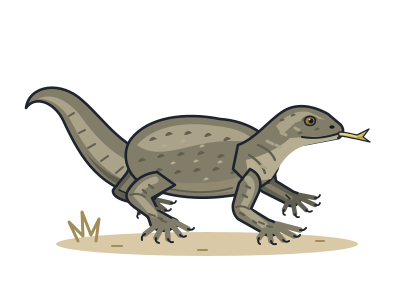
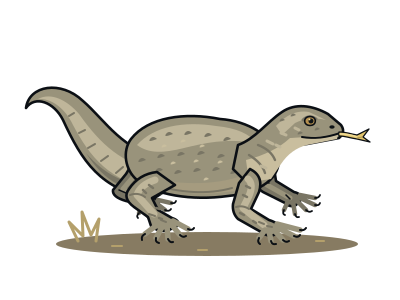
- MegalaniaA giant monitor lizard, perhaps 5 to 7 metres long, that met Australia's first people.
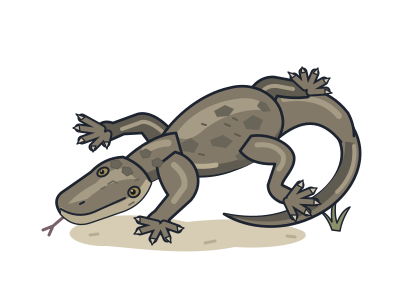
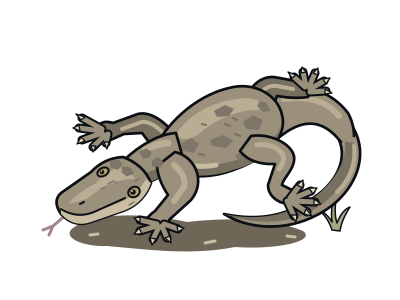
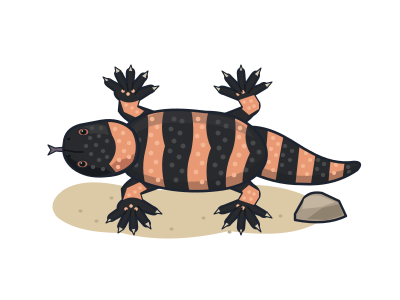
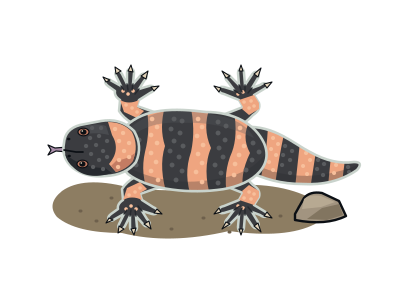
- Gila monsterA beaded, venomous desert lizard whose saliva inspired a diabetes drug.
- Asian water monitorThe second-heaviest lizard, a strong swimmer often seen in city canals in Southeast Asia.
- Earless monitor lizardA rarely seen Bornean lizard with no ear openings, the closest living cousin of monitors.