An extinct species
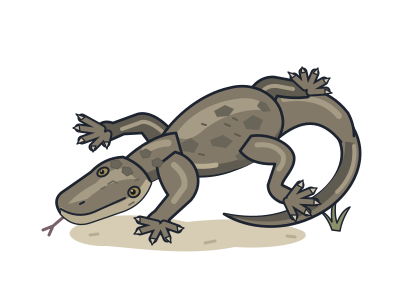
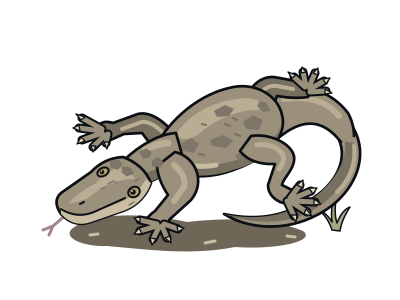
Megalania †
Varanus priscus
A giant goanna that may have shared Australia with its first people.
Lived about 1.5–0.05 million years ago.
You and the megalania meet in the Amniotes branch, shown at about 320 million years ago (on 4 December, in a calendar from life's shared ancestor to today).
Megalania was a giant monitor lizard, a relative of the living Komodo dragon—not a dinosaur. It may have shared Australia with the first people. Older estimates put its length at about 5 to 7 metres, but other studies gave smaller sizes. None came from measuring a complete skeleton.
It lived roughly 1.5 million to 50,000 years ago, though the exact dates remained uncertain. Its fossils were found across central and eastern Australia, reaching as far south as Naracoorte Caves in South Australia. Museum interpretations described it as both a hunter and an animal that ate remains it found. That feeding behaviour was an interpretation, rather than something the bones showed directly.
A tiny fossil offered a clue about giant lizards and people. A bone from the skin of a giant monitor was dated to about 50,000 years ago, showing that giant monitors and people overlapped in Australia. But researchers could not tell whether it belonged to Megalania, a Komodo dragon or another giant monitor.
A record-sized lizard
It was the largest known land-dwelling lizard.
Mostly scattered pieces
Its most common fossils were backbone bones and separate teeth.
Named in 1859
Richard Owen first described it from fossils from Queensland’s Darling Downs in 1859.
Next to it on the tree
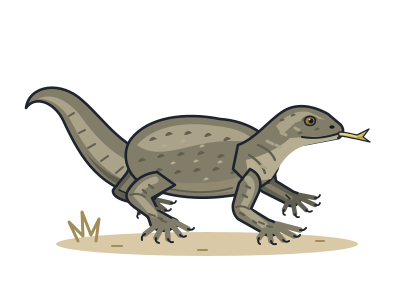
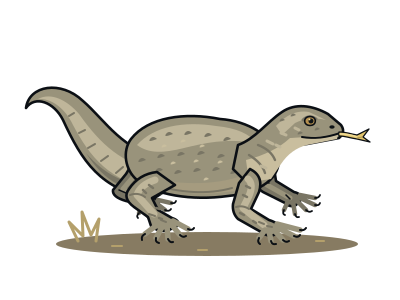
- Komodo dragonThe largest living lizard, with a venomous bite and a nose for food kilometres away.
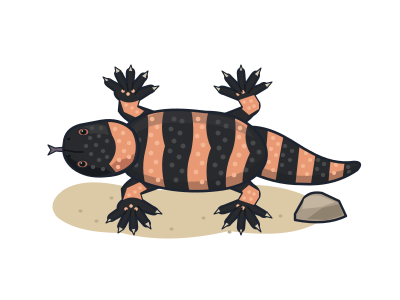
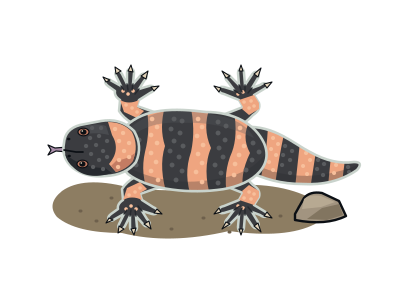
- Gila monsterA beaded, venomous desert lizard whose saliva inspired a diabetes drug.
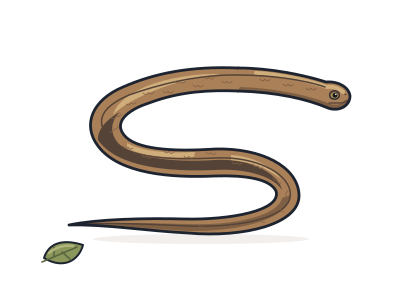
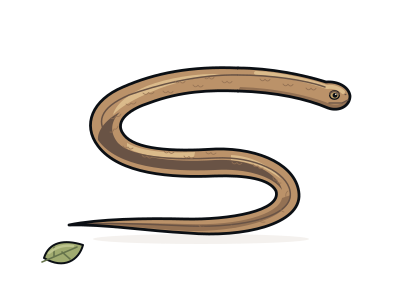
- Slow wormLooks like a snake but is a legless lizard that can blink and drop its tail.
- Asian water monitorThe second-heaviest lizard, a strong swimmer often seen in city canals in Southeast Asia.
- Earless monitor lizardA rarely seen Bornean lizard with no ear openings, the closest living cousin of monitors.