A species
Silkworm
Bombyx mori
A moth that depends on people—and gives us silk.
You and the silkworm meet in the Two-sided animals branch, shown at about 580 million years ago (on 11 November, in a calendar from life's shared ancestor to today).
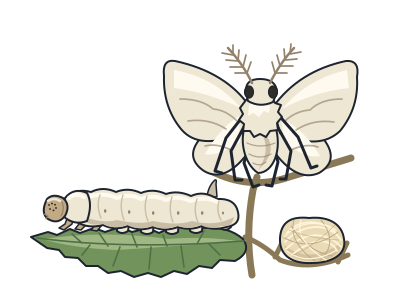
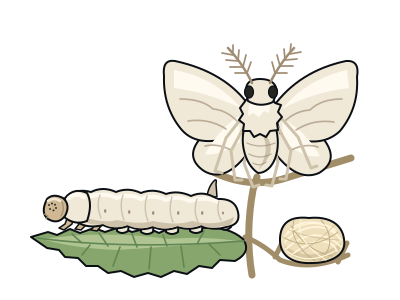
This moth has been so changed by life with people that it cannot survive on its own in the wild. Its cocoon gives us silk. The silkworm is its caterpillar stage, not a true worm. It belongs to the same broad insect group as butterflies.
The caterpillar eats mulberry leaves. When it is ready to change into a moth, it builds a silk cocoon over about three to four days. Inside, it becomes a pupa, the stage between caterpillar and adult. The cocoon is a covering around the pupa, not the pupa itself. The moth emerges about two weeks later.
That soft covering begins as fine strands from two silk-making organs inside the caterpillar. A sticky protein coating joins the strands into the thread used to build its cocoon. People have kept these insects for silk for thousands of years, beginning in China.
Silk comes from the front
Silk leaves through a tiny spinning opening beneath the caterpillar’s mouth, not from its rear.
Scent-finding feelers
Males use their large, comb-like antennae to detect the scent released by females.
Hundreds of eggs
A female commonly lays about 300–500 eggs.
Next to it on the tree
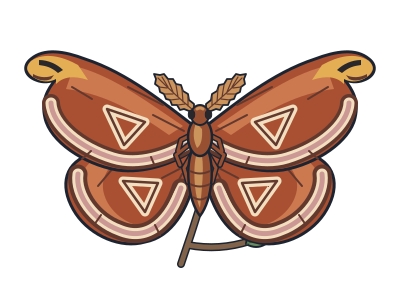
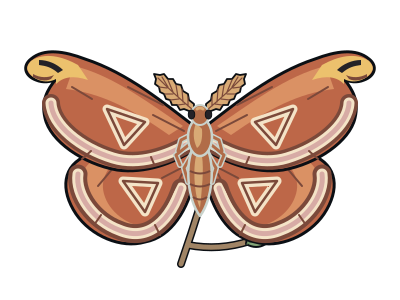
- Atlas mothWing tips shaped like snake heads, and no mouth as an adult.
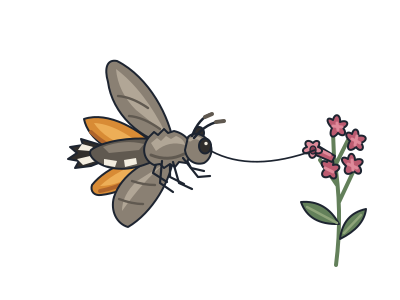
- Hummingbird hawk-mothHovers at flowers like a hummingbird, sipping with a long tongue.
- Luna mothA pale green moth with long tails that twist to confuse hunting bats.
- Morgan's sphinx mothDarwin predicted it existed from an orchid with a 30 cm nectar tube.
- Comet mothA Madagascan moth with long yellow tails, among the longest of any moth.
- Death's-head hawk-mothA big moth that squeaks loudly and sneaks into beehives to steal honey.
- Elephant hawk-mothA pink moth that sees colour by starlight; its caterpillar looks like a little trunk.