A species
Hummingbird hawk-moth
Macroglossum stellatarum
A moth with a hummingbird’s hovering style
You and the hummingbird hawk-moth meet in the Two-sided animals branch, shown at about 580 million years ago (on 11 November, in a calendar from life's shared ancestor to today).
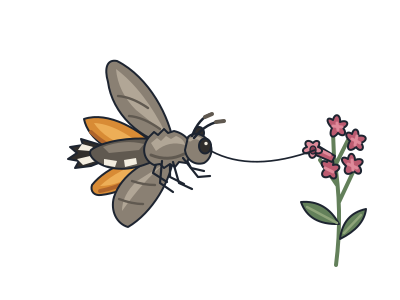
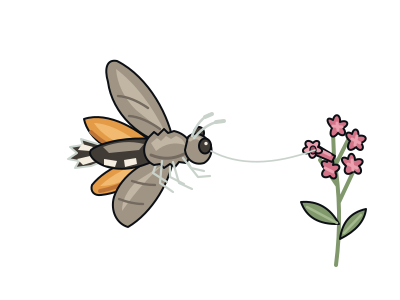
The hummingbird hawk-moth hovers in front of flowers, sipping nectar with a long, tongue-like feeding tube. It looks remarkably like a tiny hummingbird at work. But this is an insect, part of the same group as the monarch butterfly, silkworm and other moths shown beside it on the tree.
Its feeding tube is about as long as its body and curls into a spiral when not in use. Reaching a flower’s nectar takes careful aim. The moth uses sight to guide the tube, adjusting its movements as it feeds. It shifts its whole body to get roughly into position, then makes smaller movements with the tube. Visible patterns on flowers help guide it towards the nectar.
Unlike the familiar picture of a moth fluttering at night, this species flies and feeds in daylight, including sunshine. Look for grey-brown front wings, bright orange rear wings and a broad, black-and-white, tail-like end to its body.
A humming insect
Its rapidly beating wings make a hum you can hear.
A different childhood menu
The caterpillars eat bedstraw plants rather than drinking nectar.
Visitors from the south
These moths migrate from southern Europe to Britain. Their numbers vary considerably between years.
Next to it on the tree
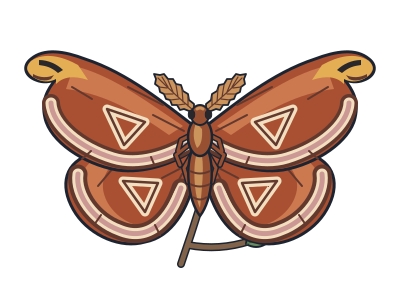
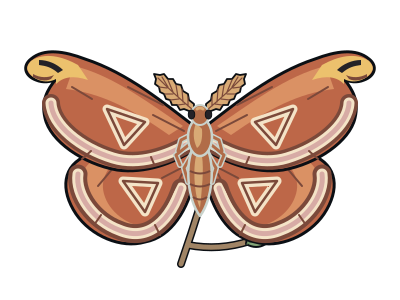
- Atlas mothWing tips shaped like snake heads, and no mouth as an adult.
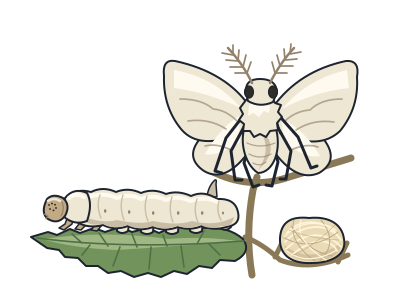
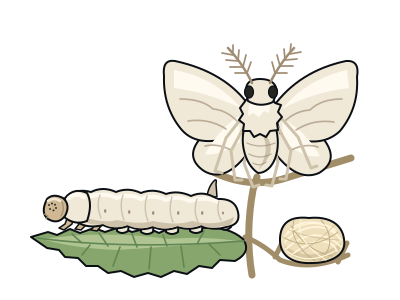
- SilkwormA moth so domesticated it cannot survive in the wild; its cocoon gives us silk.
- Luna mothA pale green moth with long tails that twist to confuse hunting bats.
- Morgan's sphinx mothDarwin predicted it existed from an orchid with a 30 cm nectar tube.
- Comet mothA Madagascan moth with long yellow tails, among the longest of any moth.
- Death's-head hawk-mothA big moth that squeaks loudly and sneaks into beehives to steal honey.
- Elephant hawk-mothA pink moth that sees colour by starlight; its caterpillar looks like a little trunk.