A species
Atlas moth
Attacus atlas
Snake-shaped wing tips, but no working mouthparts
You and the atlas moth meet in the Two-sided animals branch, shown at about 580 million years ago (on 11 November, in a calendar from life's shared ancestor to today).
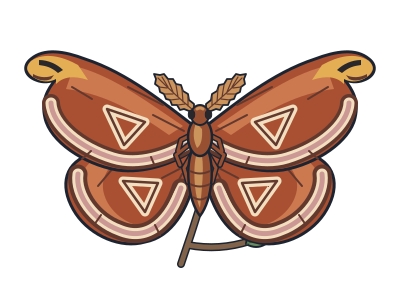
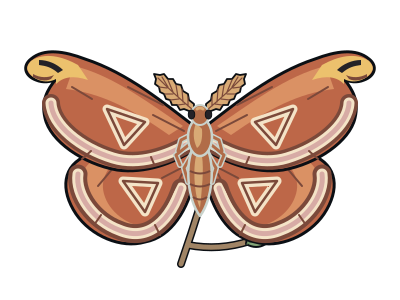
The atlas moth has front-wing tips shaped like snake heads—and no working mouthparts as an adult. Despite its unusual looks, it belongs to the same broad insect group as the monarch butterfly beside it on the tree. Its own family is the giant silk moths, which also includes luna moths and African moon moths.
An adult cannot eat. Instead, it uses energy stored when it was a caterpillar, eating leaves from plants such as citrus, guava and cinnamon. The plump, bluish-green caterpillar has pale projections along its back. Before becoming a winged adult, it spins a strong silk cocoon around itself.
The adult's reddish-brown wings have triangular, partly see-through patches, like little windows. During the day, it often rests against a tree trunk rather than flying around flowers. Those snake-shaped tips are striking, but whether they actually fool predators remains untested.
Scent after sunset
Females release scent signals after sunset. Males detect them using their feathery feelers.
A ready-made purse
Empty cocoons have been used as small purses in Taiwan.
Wings with scales
Like other butterflies and moths, atlas moths have tiny scales covering much of their wings.
Next to it on the tree
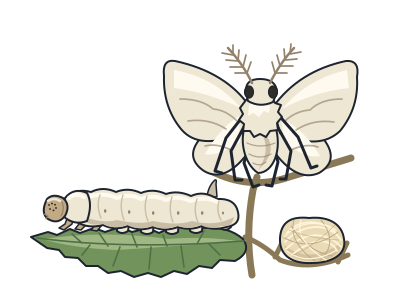
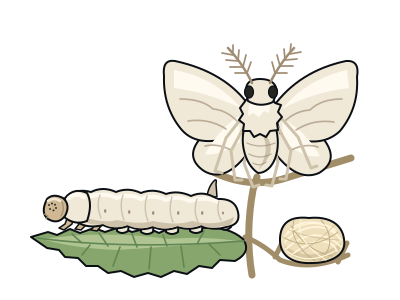
- SilkwormA moth so domesticated it cannot survive in the wild; its cocoon gives us silk.
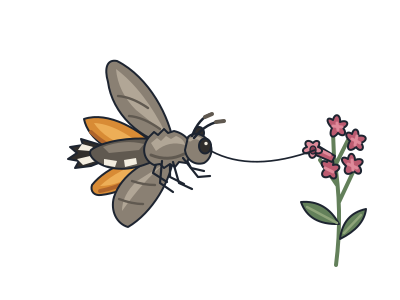
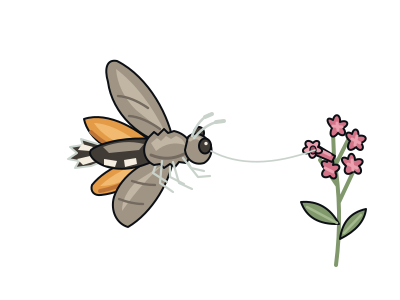
- Hummingbird hawk-mothHovers at flowers like a hummingbird, sipping with a long tongue.
- Luna mothA pale green moth with long tails that twist to confuse hunting bats.
- Morgan's sphinx mothDarwin predicted it existed from an orchid with a 30 cm nectar tube.
- Comet mothA Madagascan moth with long yellow tails, among the longest of any moth.
- Death's-head hawk-mothA big moth that squeaks loudly and sneaks into beehives to steal honey.
- Elephant hawk-mothA pink moth that sees colour by starlight; its caterpillar looks like a little trunk.