A group of living things
Sea urchins and sand dollars
Echinoidea
Echinoderms with a rigid ball or disc of plates, covered in moving spines.
This branch is shown at about 295 million years ago; its age is a rough estimate.
You and sea urchins and sand dollars meet in the Starfish, sea squirts and us branch, shown at about 560 million years ago (on 13 November, in a calendar from life's shared ancestor to today).
Starfish, sea squirts and usChordatesVertebratesJawed vertebratesBony fish and their descendantsLobe-finned fishFish on the way to landFour-limbed animalsAmniotesMammals and their ancestorsMammalsLive-bearing mammalsPlacental mammalsPrimates, rodents and rabbitsPrimatesApesGreat apesHumans and chimpanzeesHumanEchinodermsSea urchins and sand dollars
Echinoderms with a rigid ball or disc of plates, covered in moving spines.
The full page for Sea urchins and sand dollars is still being written and drawn.
Inside sea urchins and sand dollars
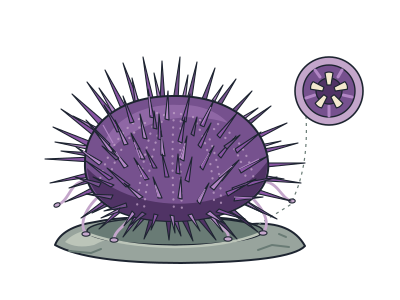
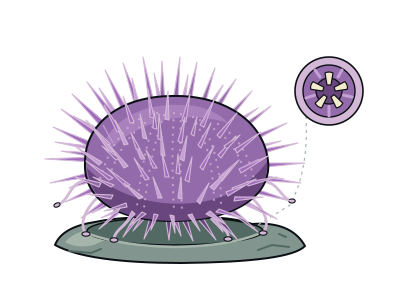
- Purple sea urchinA spiky ball that chews rock with a five-toothed jaw; its genome helped decode how embryos grow.
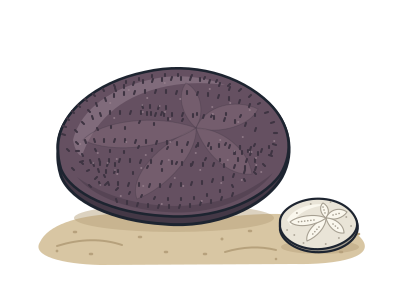
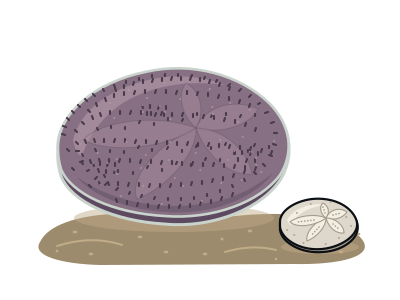
- Eccentric sand dollarA flattened sea urchin covered in velvety spines; the 'dollar' on the beach is its skeleton.
- Long-spined sea urchinWhen most of these Caribbean grazers died in 1983, seaweed smothered many coral reefs.
Next to it on the tree
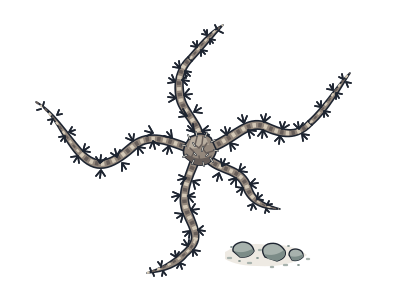
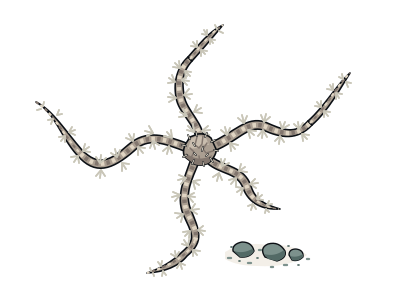
- Common brittle starWhip-thin arms that snap off to escape, then grow back; millions can carpet the sea floor.
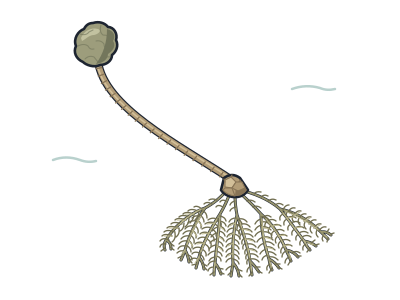
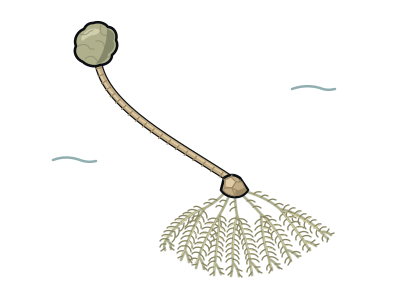
- Scyphocrinites sea lilyA fossil sea lily with a chambered bulb that may have let it drift instead of rooting in the seabed.
- Sea lilies and feather starsFlower-like echinoderms that catch food with feathery arms; once they carpeted ancient seas.
- Sea starsStar-shaped hunters that can push their stomachs out to digest food outside the body.
- Sea cucumbersSoft, sausage-shaped echinoderms that hoover the sea floor; in the deep sea they dominate.
- PentremitesA bud-shaped blastoid on a stalk, one of the commonest fossils in Carboniferous rocks of the US Midwest.