A species
Eccentric sand dollar
Dendraster excentricus
A flattened sea urchin in a velvet coat.
You and the eccentric sand dollar meet in the Starfish, sea squirts and us branch, shown at about 560 million years ago (on 13 November, in a calendar from life's shared ancestor to today).
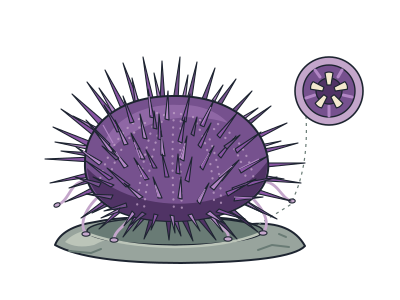
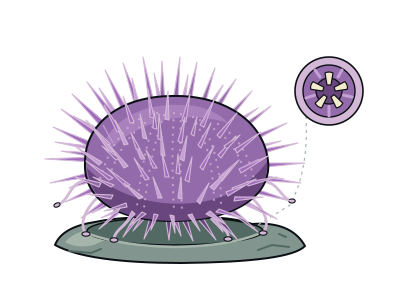
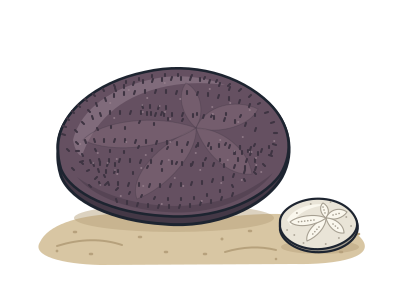
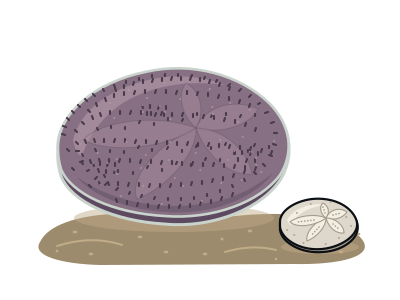
The eccentric sand dollar is a flattened sea urchin covered in tiny spines that look like velvet. It belongs to the same group as the purple sea urchin, despite their very different shapes. The white ‘dollar’ you might find on a beach is its bare skeleton, not what the living animal looks like.
Life on shifting sand calls for more than a flat shape. This sand dollar can stand on edge, partly buried in the seabed. When the water gets rough, it lies flat or buries itself. Adults move mainly by waving their spines. These animals often gather in crowded beds on sandy seabeds.
Its food includes tiny drifting organisms and particles of dead material. Its mouth sits underneath its body and contains a jaw with five tooth-like sections. Although it has no arms, its wider animal family includes sea stars and sea cucumbers.
An off-centre flower
The name ‘eccentric’ refers to the flower-like pattern sitting off-centre on its upper surface.
Weighed down with sand
Young sand dollars swallow heavy sand grains, which help keep currents from sweeping them away.
Counting the years
Scientists estimate age by counting growth rings on plates of the skeleton.