A group of living things
Echinoderms
Echinodermata
A sea family with water-powered feet.
This branch is shown at about 500 million years ago; its age is a rough estimate.
You and echinoderms meet in the Starfish, sea squirts and us branch, shown at about 560 million years ago (on 13 November, in a calendar from life's shared ancestor to today).
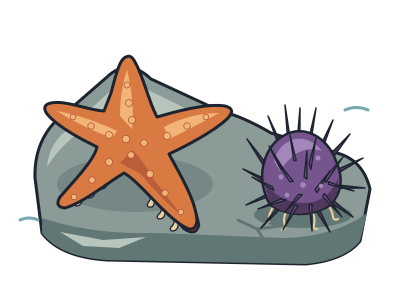
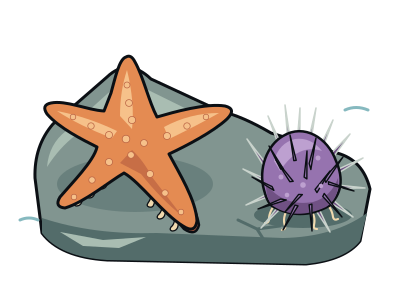
Their name means spiny-skinned, though some members are soft-bodied. Most living adults are built in fives, they have no central brain, and fluid pressure works their tiny feet. A starfish and a sea urchin may look very different, but both belong to this group. The five-part pattern means body parts are arranged around a centre—not that every member has five arms.
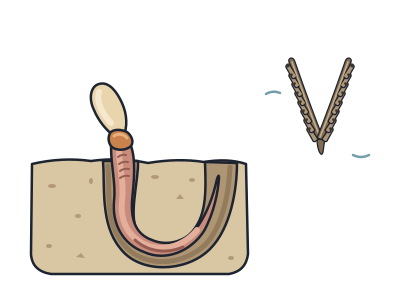
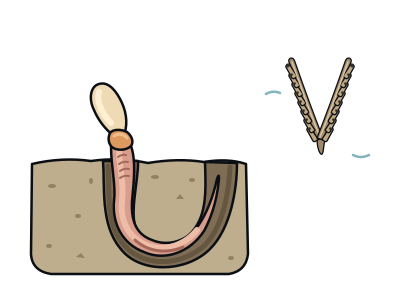
Their closest living relatives are acorn worms and their kin. That is an unexpected family connection for animals with such different shapes. And having no central brain does not mean having no nerves: networks of nerves allow echinoderms to coordinate their actions.
Inside their bodies, a plumbing system operates soft structures called tube feet. These can help with movement and feeding. In starfish and sea urchins, sticky substances help the feet grip surfaces; they do not attach simply by suction. Picture the feet holding a rock beneath a starfish’s arms or reaching out between an urchin’s spines.
Flattened relatives
Sand dollars belong to the sea-urchin group, despite their flattened shape.
Arms like oars
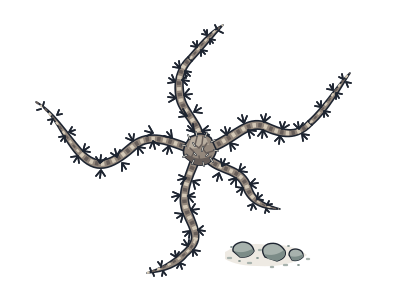
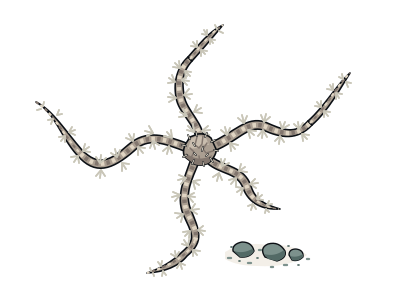
Most brittle stars move by rowing or dragging themselves with their arms rather than walking on tube feet.
Animals, not plants
Sea lilies and feather stars catch drifting food with feathery arms. Their plant-like names can be misleading.
Inside echinoderms
- Common brittle starWhip-thin arms that snap off to escape, then grow back; millions can carpet the sea floor.
- Scyphocrinites sea lilyA fossil sea lily with a chambered bulb that may have let it drift instead of rooting in the seabed.
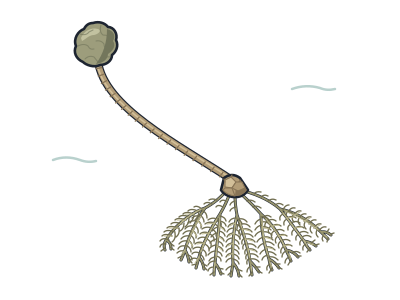
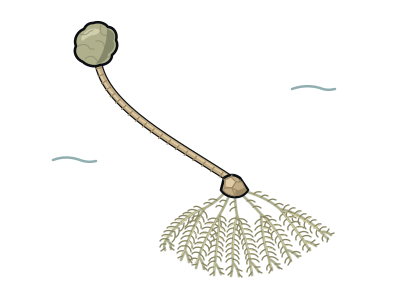
- Sea lilies and feather starsFlower-like echinoderms that catch food with feathery arms; once they carpeted ancient seas.
- Sea starsStar-shaped hunters that can push their stomachs out to digest food outside the body.
- Sea urchins and sand dollarsEchinoderms with a rigid ball or disc of plates, covered in moving spines.
- Sea cucumbersSoft, sausage-shaped echinoderms that hoover the sea floor; in the deep sea they dominate.
- PentremitesA bud-shaped blastoid on a stalk, one of the commonest fossils in Carboniferous rocks of the US Midwest.
Next to it on the tree
- ChordatesAnimals with a stiff rod down the back at some stage of life: the blueprint of a backbone.
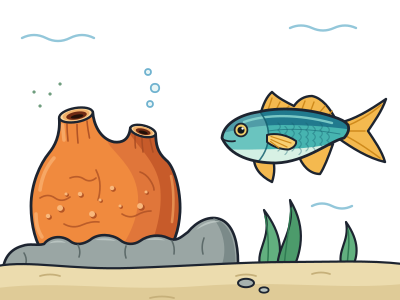
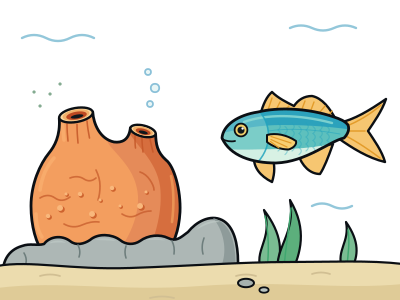
- HelicoplacusA small Cambrian relative of starfish with spiral plates and three feeding tracks inside its body wall.
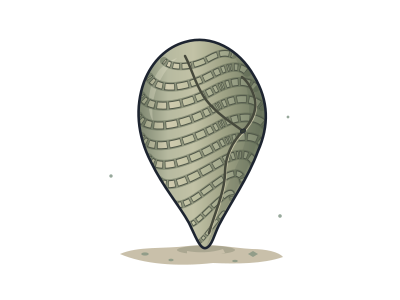
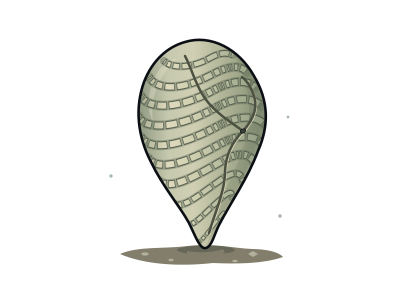
- Acorn worms and kinSeabed worms and tiny colonies with gill slits like ours, closer kin of starfish than of us.