A species
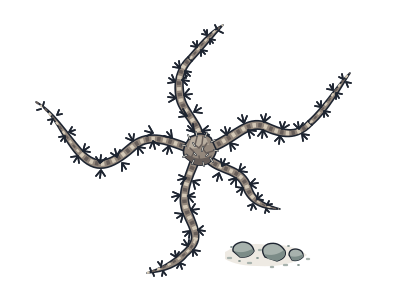
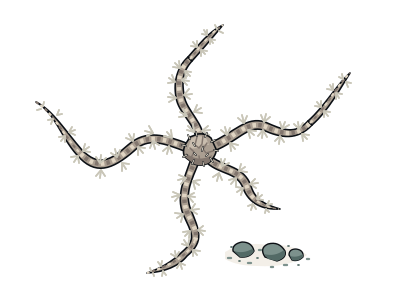
Common brittle star
Ophiothrix fragilis
Arms that break away—and grow back
You and the common brittle star meet in the Starfish, sea squirts and us branch, shown at about 560 million years ago (on 13 November, in a calendar from life's shared ancestor to today).
Whip-thin arms help the common brittle star escape: it can shed an arm to distract a predator, then grow the missing part back. Despite its starry shape, it is not an ordinary starfish. Brittle stars belong to a separate group within the broader animal group that includes starfish, sea urchins, sea cucumbers and feather stars.
These small animals can make enormous gatherings. The largest brittle-star beds contain millions of separate animals, not one joined colony. Common brittle stars and black brittlestars are the main bed-builders. A bed can contain either species or a mixture of both. Other animals, including crabs, shellfish and soft corals, can live among them.
A brittle star moves by bending its arms. Its tiny tube feet mainly help with feeding rather than walking. Food includes microscopic algae and tiny scraps of decaying material. The common starfish shown beside it on this tree is more than a relative: it is also one of its predators.
Spines, not fur
The hairy-looking fringe along its five arms is made of fine, glassy spines.
A hidden skeleton
Like its relatives, it has an internal skeleton made of small hard pieces.
Young hitch a ride
Small young develop hooks on their arms and can cling to adults as they begin life on the seabed.
Next to it on the tree
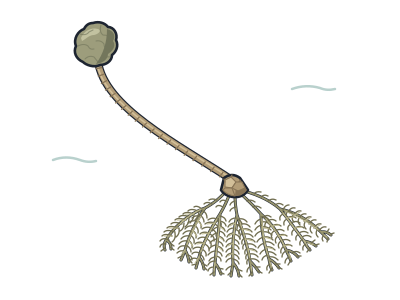
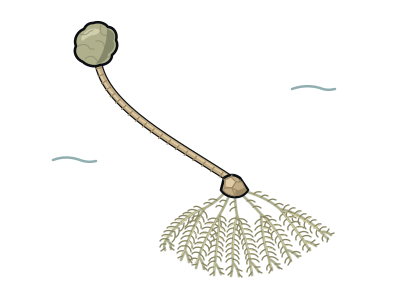
- Scyphocrinites sea lilyA fossil sea lily with a chambered bulb that may have let it drift instead of rooting in the seabed.
- Sea lilies and feather starsFlower-like echinoderms that catch food with feathery arms; once they carpeted ancient seas.
- Sea starsStar-shaped hunters that can push their stomachs out to digest food outside the body.
- Sea urchins and sand dollarsEchinoderms with a rigid ball or disc of plates, covered in moving spines.
- Sea cucumbersSoft, sausage-shaped echinoderms that hoover the sea floor; in the deep sea they dominate.
- PentremitesA bud-shaped blastoid on a stalk, one of the commonest fossils in Carboniferous rocks of the US Midwest.