A group of living things
Sea stars
Asteroidea
Star-shaped hunters that can push their stomachs out to digest food outside the body.
This branch is shown at about 250 million years ago; its age is a rough estimate.
You and sea stars meet in the Starfish, sea squirts and us branch, shown at about 560 million years ago (on 13 November, in a calendar from life's shared ancestor to today).
Starfish, sea squirts and usChordatesVertebratesJawed vertebratesBony fish and their descendantsLobe-finned fishFish on the way to landFour-limbed animalsAmniotesMammals and their ancestorsMammalsLive-bearing mammalsPlacental mammalsPrimates, rodents and rabbitsPrimatesApesGreat apesHumans and chimpanzeesHumanEchinodermsSea stars
Star-shaped hunters that can push their stomachs out to digest food outside the body.
The full page for Sea stars is still being written and drawn.
Inside sea stars
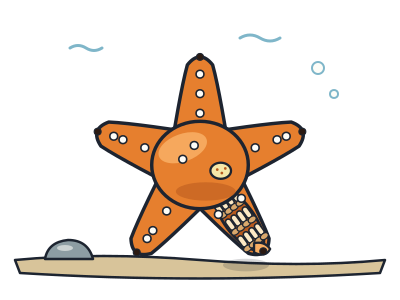
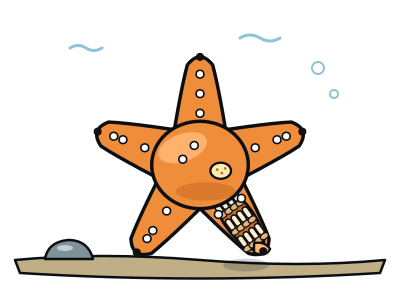
- Common starfishNot a fish; it walks on hundreds of water-powered tube feet and can regrow an arm.
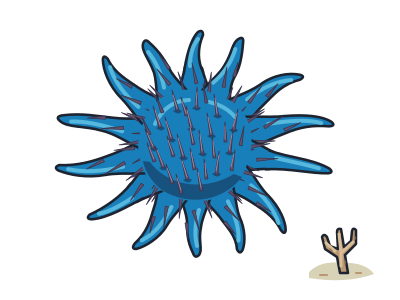
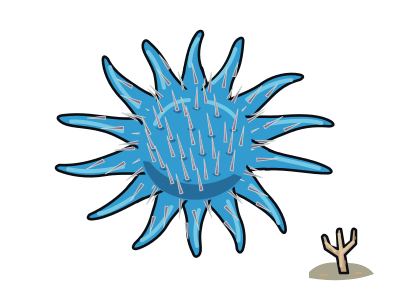
- Crown-of-thorns starfishA venom-spined starfish with up to 21 arms whose population booms can strip coral reefs bare.
- Sunflower sea starOne of the biggest, fastest sea stars, with up to 24 arms; a wasting disease killed billions after 2013.
Next to it on the tree
- Common brittle starWhip-thin arms that snap off to escape, then grow back; millions can carpet the sea floor.
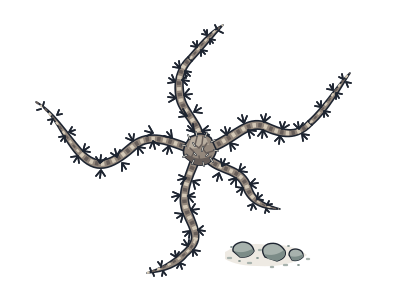
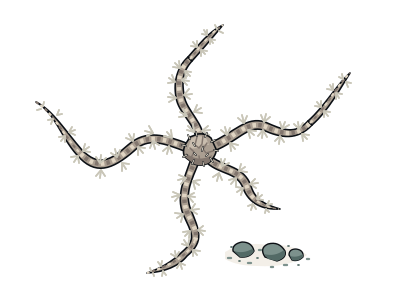
- Scyphocrinites sea lilyA fossil sea lily with a chambered bulb that may have let it drift instead of rooting in the seabed.
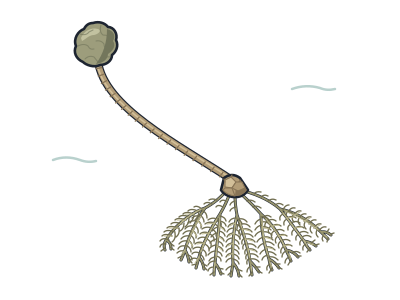
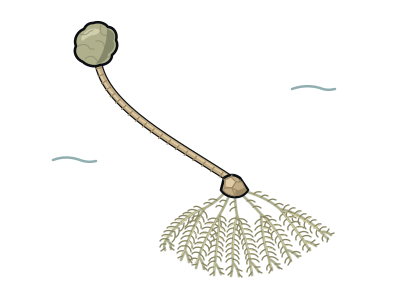
- Sea lilies and feather starsFlower-like echinoderms that catch food with feathery arms; once they carpeted ancient seas.
- Sea urchins and sand dollarsEchinoderms with a rigid ball or disc of plates, covered in moving spines.
- Sea cucumbersSoft, sausage-shaped echinoderms that hoover the sea floor; in the deep sea they dominate.
- PentremitesA bud-shaped blastoid on a stalk, one of the commonest fossils in Carboniferous rocks of the US Midwest.