An extinct group
Helicoplacus †
Helicoplacus
A spiral-plated relative of starfish, without starfish arms
Lived about 521–514 million years ago.
You and helicoplacus meet in the Starfish, sea squirts and us branch, shown at about 560 million years ago (on 13 November, in a calendar from life's shared ancestor to today).
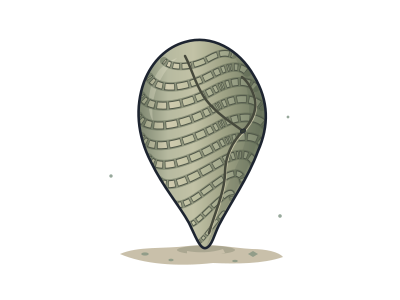
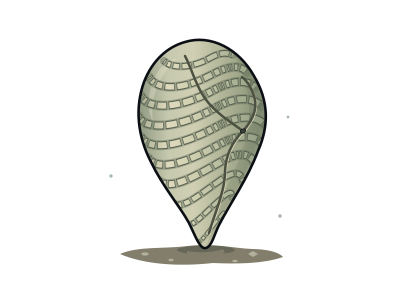
A spindle-shaped sea creature wrapped in spiral plates was an unlikely-looking relative of starfish and sea urchins. It belonged on an early branch of their wider family, but it did not look like a starfish. Its body tapered towards its lower end, and three feeding tracks wound around it. These tracks lay within the body wall; they were not projecting arms.
A 2023 review placed its fossils in a Cambrian time interval about 521 to 514 million years ago. Its home was relatively quiet offshore water around an ancient continent that included much of present-day North America. Researchers interpreted it as collecting tiny food particles from seawater.
Fossils showed rows of small plates arranged around its body. More complete examples revealed how those plates formed spirals. Reconstructions generally placed its mouth on one side, where the feeding tracks met, but that position remained an interpretation. The preserved skeleton revealed its unusual shape much more clearly than its soft body parts or behaviour.
A flexible covering
Its plate arrangement suggested that its covering could fold like a concertina, rather than forming one completely rigid shell.
Opposite twists
Its spiral plates twisted in the opposite direction to those of the related fossil animal Helicocystis.
Impressions left behind
In some California fossils, plates dissolved or weathered away, leaving their impressions in the surrounding rock.
Next to it on the tree
- ChordatesAnimals with a stiff rod down the back at some stage of life: the blueprint of a backbone.
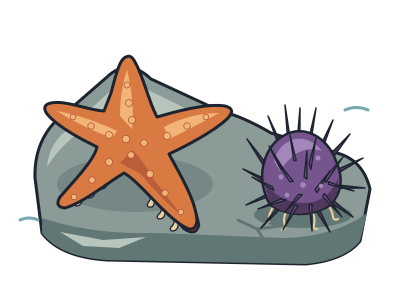
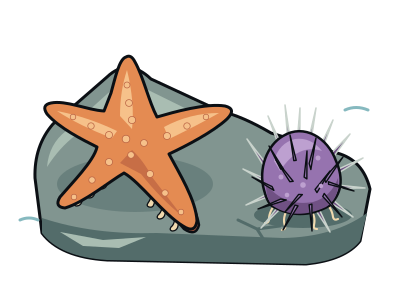
- EchinodermsSpiny-skinned sea animals built in fives, with no brain and water plumbing that works their feet.
- Acorn worms and kinSeabed worms and tiny colonies with gill slits like ours, closer kin of starfish than of us.