A species
California sea lion
Zalophus californianus
Flippers for swimming—and walking
You and the california sea lion meet in the Placental mammals branch, shown at about 95 million years ago (on 23 December, in a calendar from life's shared ancestor to today).
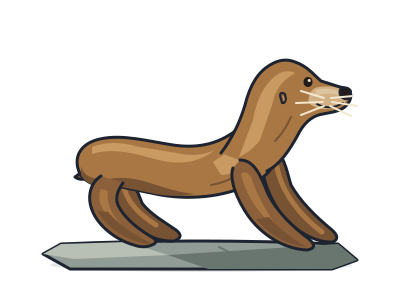
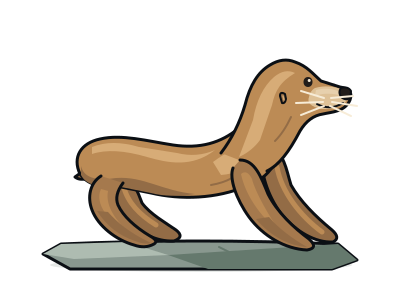
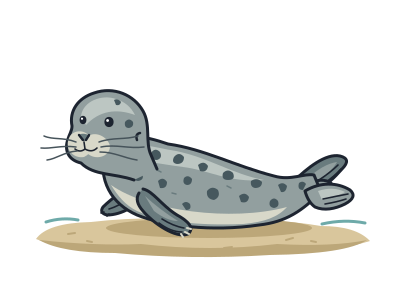
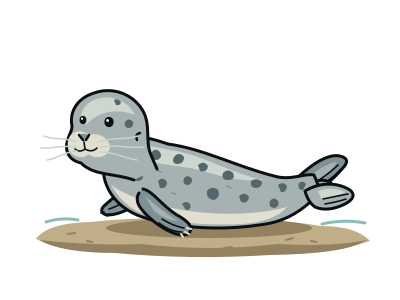
A California sea lion can walk on all four flippers. It turns its rear flippers underneath its body, lifting its belly off the ground. Its relative the harbour seal cannot tuck its rear flippers underneath this way, so it wriggles along on land instead. Similar-looking relatives can have quite different ways of getting around.
Sea lions belong to the eared-seal family, along with fur seals. True seals and walruses belong to two other families within the same wider group of flipper-footed mammals. Walruses can also turn their rear flippers underneath themselves to walk. Look closely at a sea lion’s head: its little ear flaps are another clue that separates it from true seals.
In the water, sea lions swim mainly with powerful strokes of their front flippers. True seals mainly use their rear flippers and swing their lower bodies from side to side. California sea lions live along Pacific coasts from south-east Alaska to central Mexico, coming ashore on beaches, rocks and docks.
Whiskers that sense movement
Sensitive whiskers detect tiny water movements made by nearby fish, helping sea lions find food in darkness.
A lion without a mane
Despite their name, California sea lions do not have the shaggy mane seen in some other sea lion species.
Mothers make feeding trips
Mothers spend several days feeding at sea between visits ashore to give their pups milk. Pups normally keep drinking their mother’s milk for almost a year.
Next to it on the tree
- Harbour sealRests on beaches and sandbanks; its land relatives include weasels, raccoons and bears.
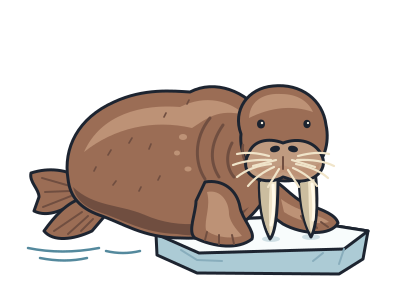
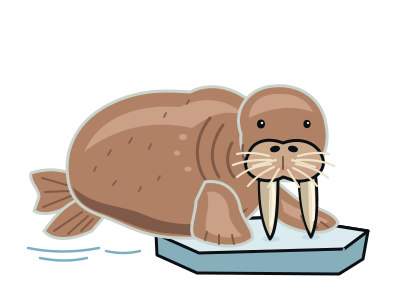
- WalrusTusks, flippers and body help it climb onto ice; very large males can approach two tonnes.
- Southern elephant sealThe largest seal; males can weigh as much as a car and dive over a kilometre deep.
- Leopard sealA spotted Antarctic seal with a big head that hunts fish, krill and penguins.
- Harp sealIts pups are born on sea ice in fluffy white coats that they shed within weeks.
- Caribbean monk sealA warm-water seal seen by Columbus; it was hunted out and last reliably seen in 1952.
- Antarctic fur sealAn eared seal that walks on all four flippers and recovered from near extinction by fur hunting.