A species
Harbour seal
Phoca vitulina
A sandbank rest, with bears and weasels in the family
You and the harbour seal meet in the Placental mammals branch, shown at about 95 million years ago (on 23 December, in a calendar from life's shared ancestor to today).
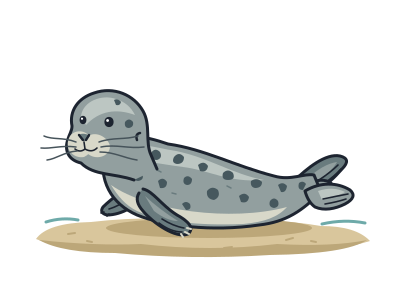
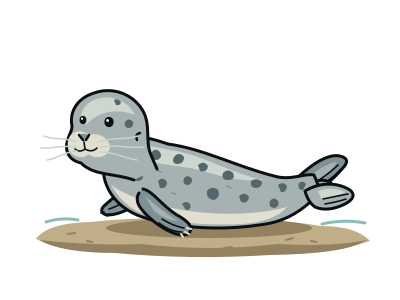
A harbour seal resting on a sandbank has surprising land relatives: bears and weasels. It leaves the water to rest on beaches and sandbanks around sheltered shores and river mouths. It belongs to the true-seal family. Sea lions and walruses belong to two other families within the same wider group of flipper-footed mammals.
Unlike a California sea lion, a harbour seal has no visible ear flaps. It cannot bring its rear flippers underneath its body to walk. Instead, it moves across land in waves, rather like a caterpillar. This movement is normal, not a sign of injury. In the water, it hunts fish such as herring and flounder, and also eats squid, octopus and crabs.
Pups can swim within minutes of birth. Their mothers keep hunting while raising them, so a pup alone on shore is not necessarily abandoned. People, dogs and boats can frighten resting seals into the water, interrupting rest and care of pups. Keeping well back helps avoid disturbing them.
Banana-shaped rest
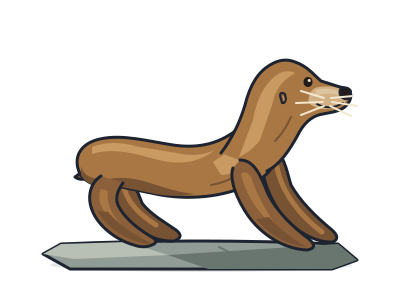
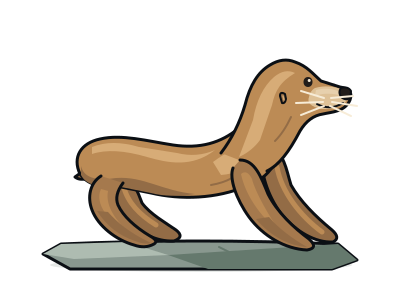
Resting seals sometimes lift both their head and rear end, making a curved banana shape.
Not always salty
A small population lives in Alaska’s freshwater Iliamna Lake.
Time for a new coat
Harbour seals spend more time out of the water during their yearly replacement of old hair.
Next to it on the tree
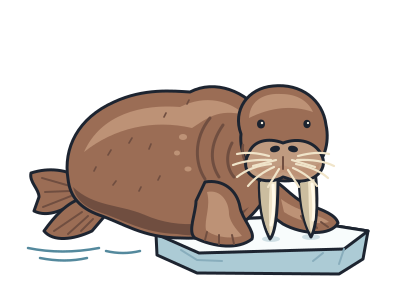
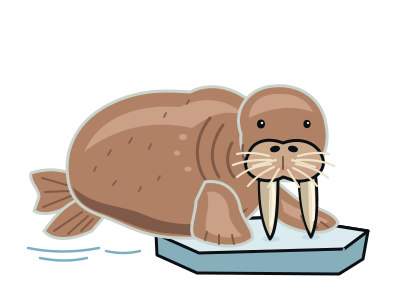
- WalrusTusks, flippers and body help it climb onto ice; very large males can approach two tonnes.
- California sea lionWalks on its flippers on land, unlike true seals.
- Southern elephant sealThe largest seal; males can weigh as much as a car and dive over a kilometre deep.
- Leopard sealA spotted Antarctic seal with a big head that hunts fish, krill and penguins.
- Harp sealIts pups are born on sea ice in fluffy white coats that they shed within weeks.
- Caribbean monk sealA warm-water seal seen by Columbus; it was hunted out and last reliably seen in 1952.
- Antarctic fur sealAn eared seal that walks on all four flippers and recovered from near extinction by fur hunting.