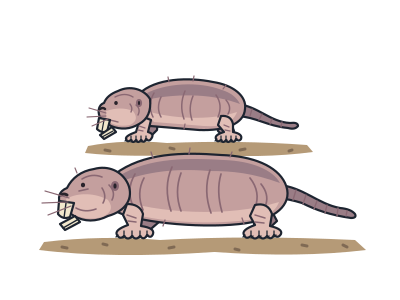
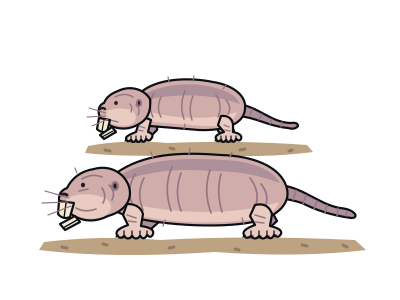
A species
Naked mole-rat
Heterocephalus glaber
A mammal with a queen and a remarkably low record of cancer.
You and the naked mole-rat meet in the Primates, rodents and rabbits branch, shown at about 90 million years ago (on 24 December, in a calendar from life's shared ancestor to today).
Naked mole-rats live with a queen, rather like bees, and cancer is rarely reported in them. But the bee connection is about teamwork, not family: these mammals are closer relatives of guinea pigs, chinchillas and porcupines than of ordinary rats. A colony usually has one breeding female, called the queen. Other members gather food, maintain tunnels and help raise her young.
Their home is beneath dry grasslands in eastern Africa. They eat underground plant parts, especially roots and fleshy storage parts. Digging is a team job: one animal loosens soil with its teeth while others sweep it towards the surface. To keep warm, they huddle together or move into warmer tunnels.
Their unusual health is another surprise. Cancer has been reported only rarely, but they are not immune: a scientific report published in 2016 described two cases in zoo animals. They can also live for more than 30 years in human care—an extraordinary lifespan for such a small mammal.
No drinks needed
They get the water they need from their food rather than drinking.
Lips behind the teeth
Their lips close behind their projecting front teeth, keeping soil out of their mouths while they dig.
Not quite naked
Sparse hairs help them feel their surroundings. Hairs between their toes help sweep soil.
Next to it on the tree
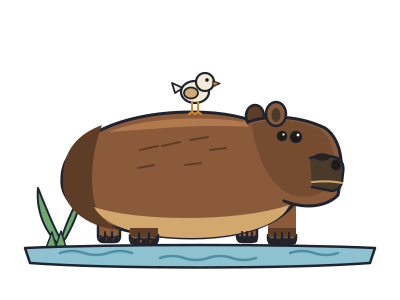
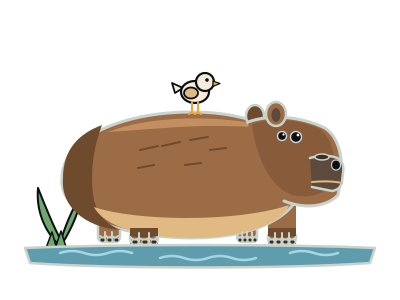
- CapybaraThe largest rodent, a calm swimmer that other animals happily sit on.
- Crested porcupineRattles its hollow quills and runs backwards into attackers.
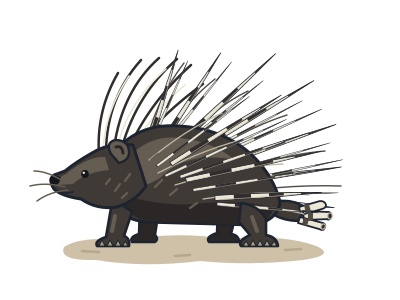
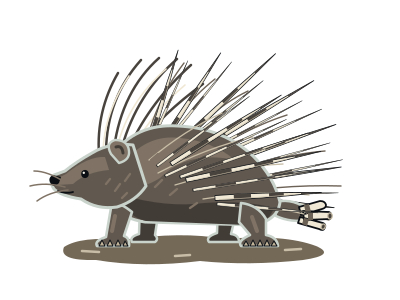
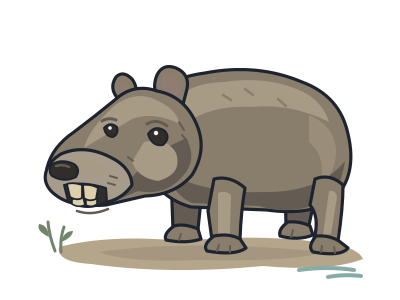
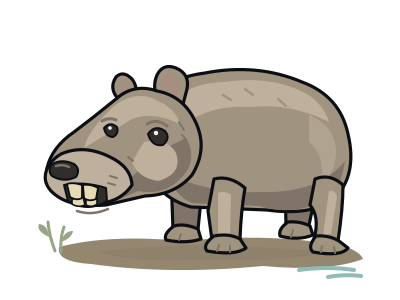
- JosephoartigasiaAn enormous extinct rodent known from a skull; estimates once compared it with a bull.
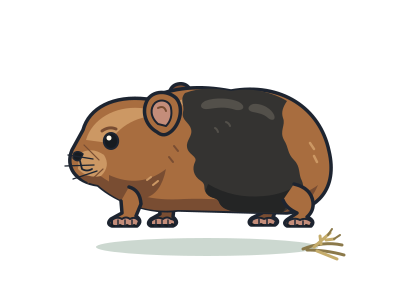
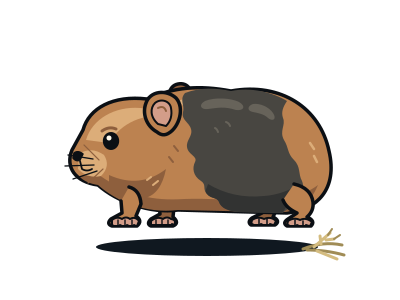
- Guinea pigNeither a pig nor from Guinea: a South American cavy that "popcorns" when happy.
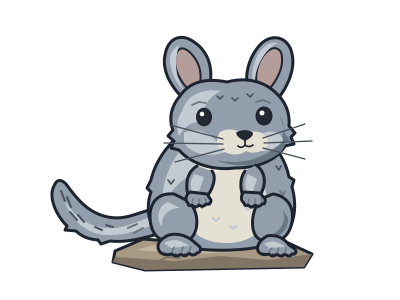
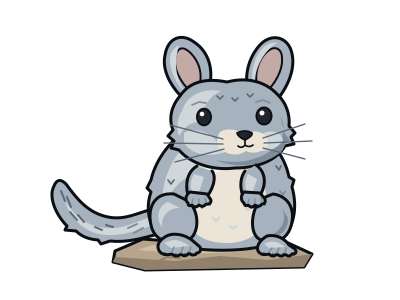
- ChinchillaHas the densest fur of any land mammal, up to 60 hairs per follicle.
- North American porcupineA tree-climbing porcupine whose barbed quills are a separate invention from the Old World kind.
- Patagonian maraA long-legged guinea-pig relative that runs and bounds across the steppe like a small deer.