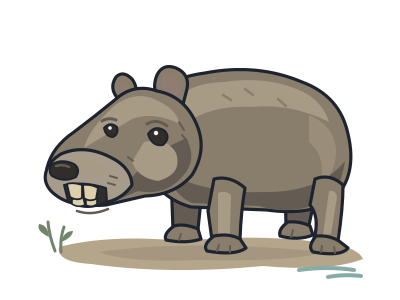
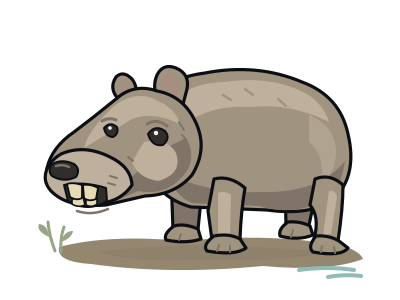
An extinct species
Josephoartigasia †
Josephoartigasia monesi
A bull-sized relative of small rodents
Lived about 4–2 million years ago.
You and the josephoartigasia meet in the Primates, rodents and rabbits branch, shown at about 90 million years ago (on 24 December, in a calendar from life's shared ancestor to today).
Often compared with a bull, this was the largest rodent ever found. It belonged to the same family as a rodent called the pacarana, rather than being a gigantic species of city rat. Its wider branch also included relatives of today's chinchillas. This giant lived about 4 to 2 million years ago in what became Uruguay.
The strongest clues came from an almost complete skull. At about 53 centimetres long, it measured slightly more than half a metre. The fossil preserved bone and teeth, but it was not a complete skeleton. An arch of bone beside one cheek, one upper front tooth and several grinding teeth were missing.
Despite its enormous front teeth, it was a plant-eater. Those teeth did not make it a hunter. The skull gave researchers firm evidence about its head, while any picture of the whole animal required reconstruction rather than simply copying a complete fossil.
Named in 2008
Andrés Rinderknecht and Ernesto Blanco formally described the species in 2008.
A long wait
Amateur fossil collector Sergio Viera donated the skull to Uruguay's national museum. It remained unstudied for about two decades.
Two people honoured
Its scientific name honoured Uruguayan national figure José Artigas and fossil researcher Álvaro Mones.
Next to it on the tree
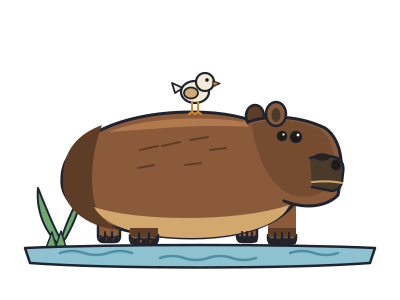
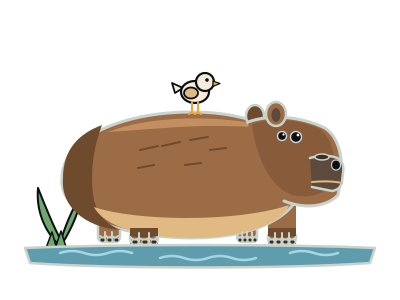
- CapybaraThe largest rodent, a calm swimmer that other animals happily sit on.
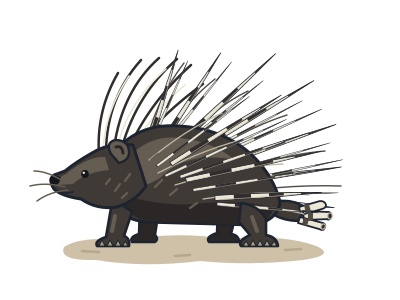
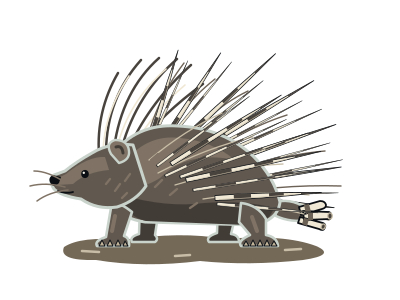
- Crested porcupineRattles its hollow quills and runs backwards into attackers.
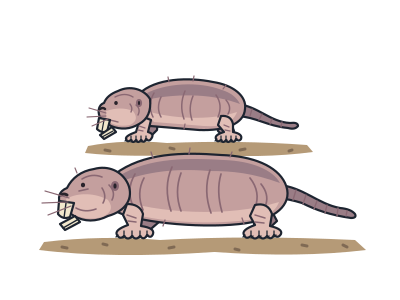
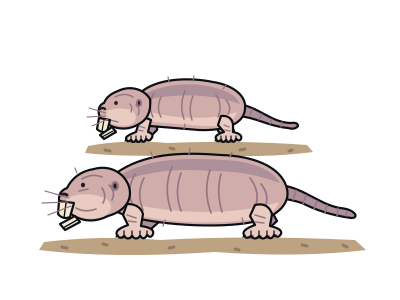
- Naked mole-ratLives in colonies with a queen, like bees; cancer is rarely reported, but it is not immune.
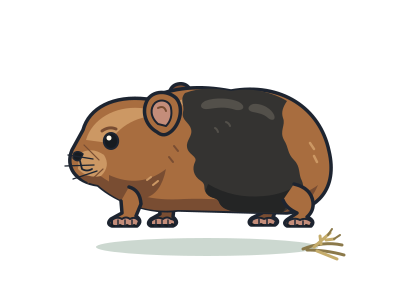
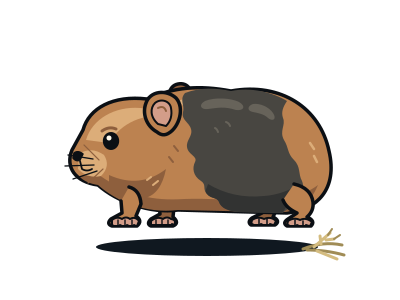
- Guinea pigNeither a pig nor from Guinea: a South American cavy that "popcorns" when happy.
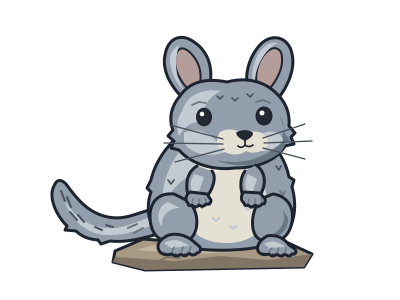
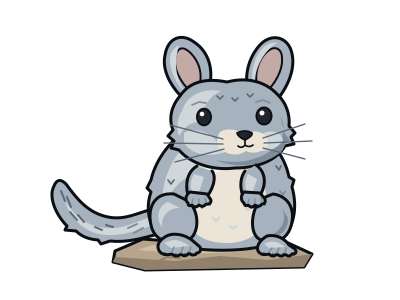
- ChinchillaHas the densest fur of any land mammal, up to 60 hairs per follicle.
- North American porcupineA tree-climbing porcupine whose barbed quills are a separate invention from the Old World kind.
- Patagonian maraA long-legged guinea-pig relative that runs and bounds across the steppe like a small deer.