A species
Housefly
Musca domestica
A tiny fly that tastes with its feet and turns its food into soup before drinking it.
You and the housefly meet in the Two-sided animals branch, shown at about 580 million years ago (on 11 November, in a calendar from life's shared ancestor to today).
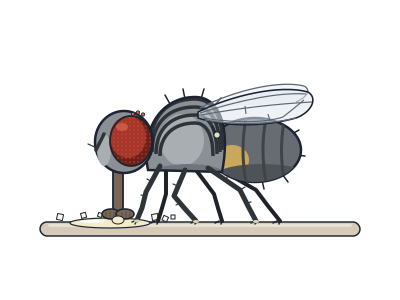
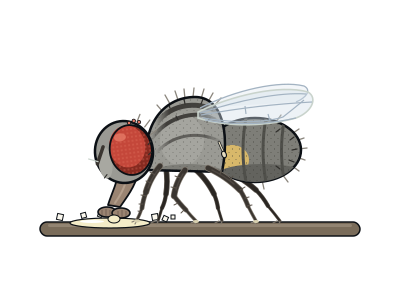
Imagine tasting your dinner by stepping in it. A housefly does just that. Its feet have taste sensors, so it can recognise food just by walking over it. Its relative the fruit fly also tastes with its legs. Some of the tiny taste hairs on a fruit fly's legs can pick up both sweet and bitter flavours.
A housefly can't bite or chew. Its mouth ends in a soft, spongy pad covered in tiny grooves that soak up liquid, a bit like a drink rising up a very thin straw. That means solid food has to be made runny first. The fly spreads saliva on it, and it may also bring up fluid from a storage pouch in its gut called the crop. Then it sucks the soupy mixture back up.
Houseflies live almost anywhere people do, on every inhabited continent, in cities and on farms. They are about 6 to 7 millimetres long, roughly the size of a grain of rice. They are grey, with four dark stripes along the back of the middle part of the body, and big red eyes. Their bodies and mouths can carry germs, but one quick landing on your food is a low risk for a healthy person.
Five eyes, not two
As well as its two big eyes, a housefly has three tiny simple eyes on top of its head. In males the two big eyes sit closer together than in females.
Hundreds of eggs
A female can lay up to about 500 eggs in her life, in batches of about 75 to 150. They hatch within about a day into legless white maggots.
Grown up in about a week
In warm weather a housefly can go from egg to adult in about 7 to 10 days. In poor conditions it can take up to two months.
Next to it on the tree
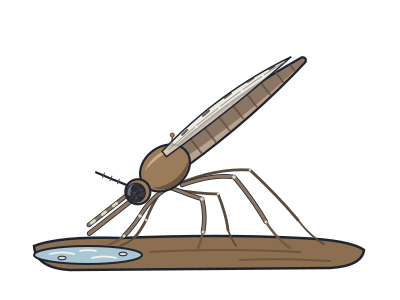
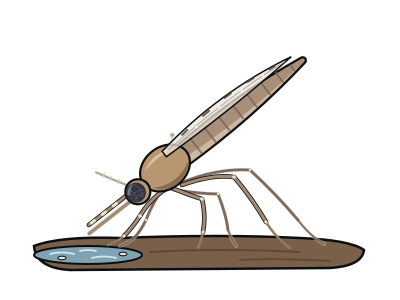
- Malaria mosquitoBy carrying malaria, it may be the deadliest animal to humans.
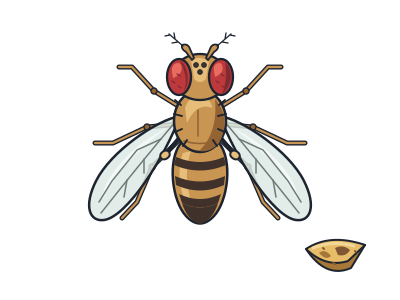
- Fruit flyA kitchen fly that taught scientists how genes build bodies.
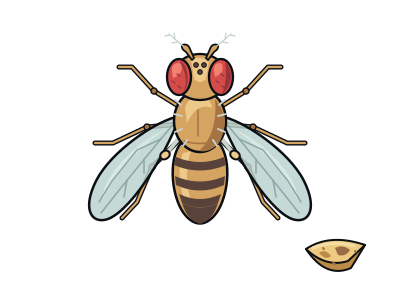
- Giant crane flyA daddy-long-legs with patterned wings; its larvae are leatherjackets in the soil.
- HoverfliesFlies dressed as bees and wasps that can hover still in mid-air.
- Hornet robberflyAn agile hunter that catches other insects in flight.
- Stalk-eyed flyMales have eyes on long stalks and size each other up eye to eye.
- Black soldier flyIts larvae turn food waste into animal feed and are farmed by the tonne.
- New Zealand glowwormGnat larvae that glow on cave ceilings and hang sticky threads to catch insects.