A species
Grant's golden mole
Eremitalpa granti
A blind sand-swimmer with a subtle shimmering coat.
You and the grant's golden mole meet in the Placental mammals branch, shown at about 95 million years ago (on 23 December, in a calendar from life's shared ancestor to today).
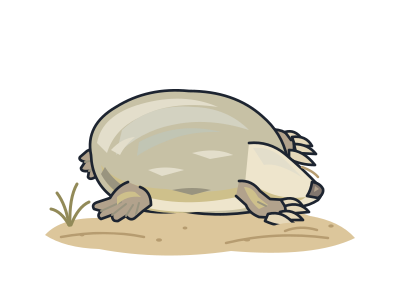
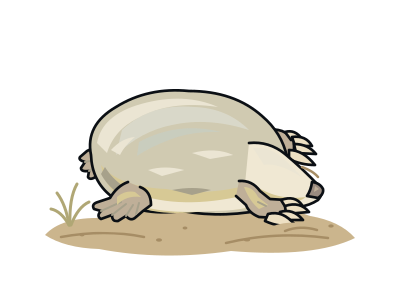
Grant’s golden mole is a blind desert mammal that “swims” through loose sand and wears a subtly shimmering coat. Sand-swimming means moving through sand, not water. The sand collapses behind it, so it does not leave lasting open tunnels. Its tiny eyes remain hidden beneath skin.
Its family connections are more surprising than its name suggests. Golden moles belong to the same broad mammal branch as elephants, aardvarks and tenrecs. DNA evidence groups them with tenrecs. Their resemblance to the familiar moles of Europe and North America comes from independently evolved adaptations for digging, not a close family relationship.
The coat’s iridescent sheen changes with the viewing angle. Light interacts with microscopic layers in flattened outer hairs to produce this effect; it is not simply golden pigment. Think of a soft, shifting silvery sheen rather than a bright rainbow. Researchers have measured the effect, but why these blind animals have it remains unresolved.
Tools for sand
Its front feet carry broad digging claws, while its rear feet are webbed.
An energy-saving rest
Daytime resting places can be about half a metre below the sand. A temporary slowdown in body activity helps save energy.
Mostly solitary
Adults generally live alone, although the areas they use can overlap.
Next to it on the tree
- Elephants, sea cows and hyraxesThe elephant's closest living relatives are sea cows and the rabbit-sized hyrax.
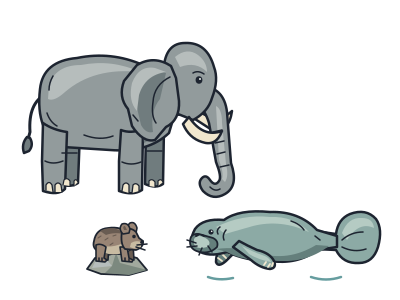
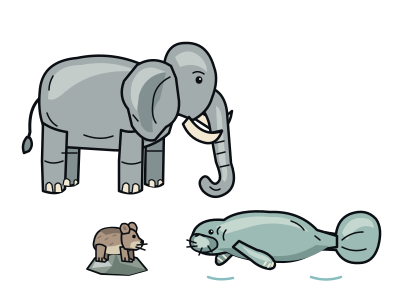
- AardvarkAn "earth pig" that digs into termite mounds; the only survivor of its whole order.
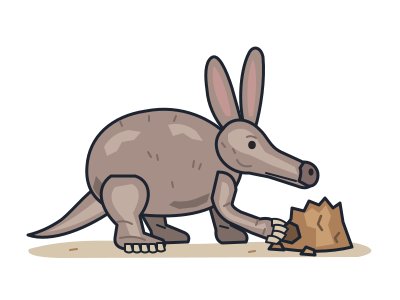
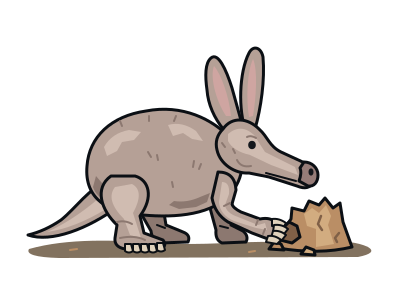
- Common tenrecA Madagascar hedgehog look-alike that is really a cousin of elephants.
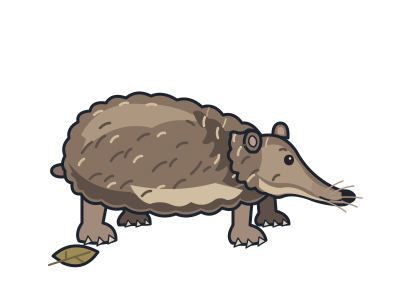
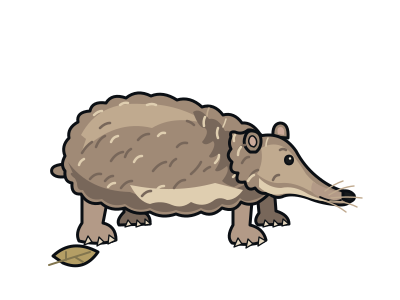
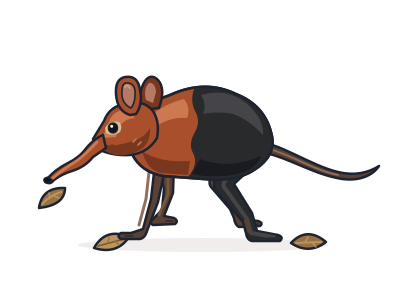
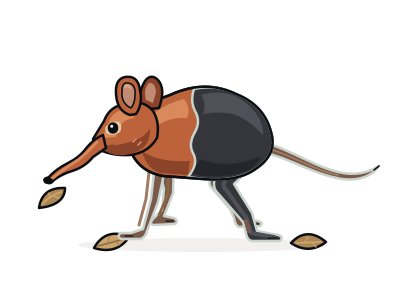
- Black-and-rufous sengiAn "elephant shrew" with a twitchy trunk-like nose, really a cousin of elephants.