A species
Rock snot
Didymosphenia geminata
A microscopic alga that can carpet whole river beds in woolly mats.
You and the rock snot meet in the Eukaryotes branch, shown at about 1.8 billion years ago (on 28 July, in a calendar from life's shared ancestor to today).
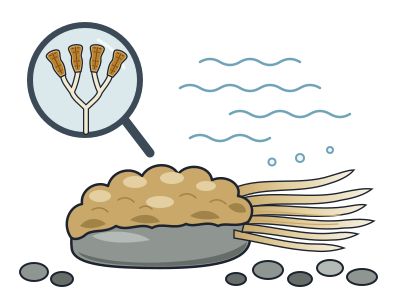
Picture a river bed buried under thick, woolly mats that wave in the current like shredded paper. People call this rock snot. But each mat is built by something far too small to see: single cells, each about as wide as a human hair. Rock snot is a diatom, a tiny alga in a glassy shell. On the tree of life, its wider group also includes the big seaweeds called kelp.
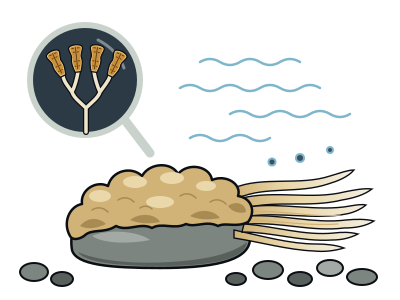
Each cell glues itself to a rock or other surface with a stalk. When the cell splits in two, its stalk splits too, so the stalks branch again and again. In a bloom, the pale stalks grow about 5 to 8 centimetres long. They clump into snot-like blobs, then join up into mats.
The mats can be more than 20 centimetres thick, about the length of a pencil. They can cover a river bed completely, and big blooms can stretch for kilometres along a river.
Despite the name, it isn't slimy. It feels like wet cotton wool. Most of a mat is not even alive. Only the cells are living. The stalks are made of sugary substances and protein, which bacteria and fungi find hard to break down, so the mats last a long time.
Starved, not overfed
Most algae blooms happen when water has too many nutrients. Rock snot is the opposite: it blooms when the water is very low in a nutrient called phosphorus.
A South Island story
In New Zealand it has been found in more than 150 South Island rivers. There are no confirmed records from the North Island.
Dry it out
Drying kills it, but fishing gear must stay completely dry for at least 48 hours. Soaking in water above 60 °C for at least a minute, or freezing solid, also kills it.
Next to it on the tree
- ThalassiosiraA pillbox-shaped ocean diatom, the first to have its genome read, revealing how cells build glass.
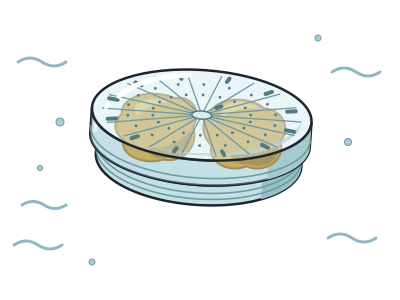
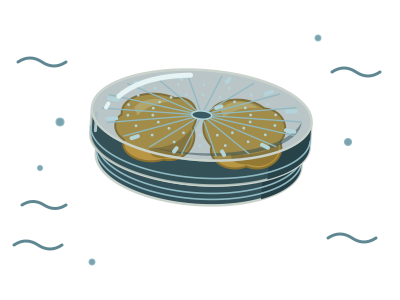
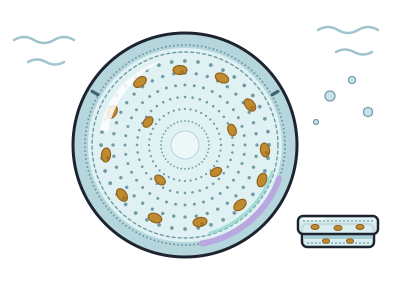
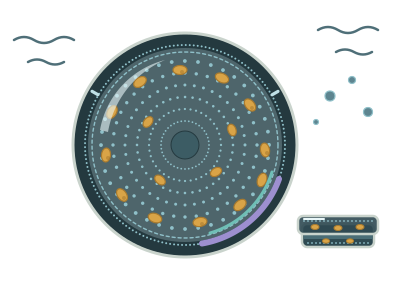
- Giant pillbox diatomOne of the biggest diatoms, a glass disc nearly half a millimetre wide, just visible by eye.
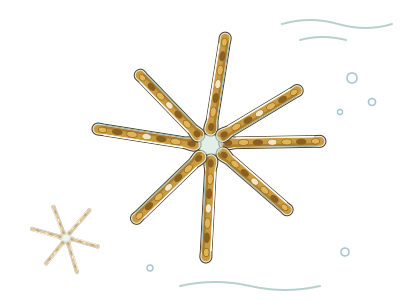
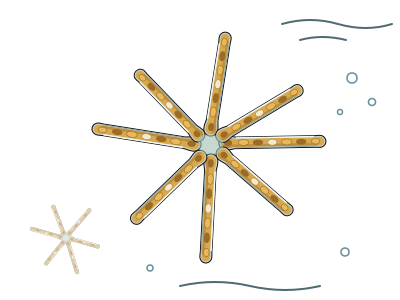
- Star diatomRod-shaped cells join at their tips into floating stars that bloom in lakes each spring.
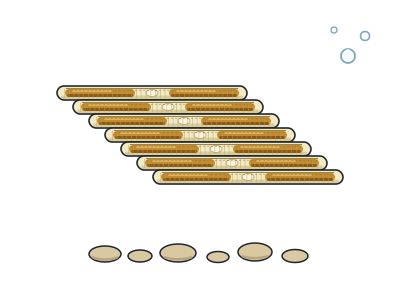
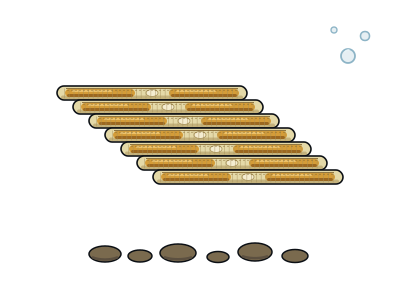
- Sliding diatomIts cells stack like a deck of cards and slide back and forth against each other in rhythm.