A species
Giant pillbox diatom
Coscinodiscus wailesii
A glass pillbox so big you might just see it by eye
You and the giant pillbox diatom meet in the Eukaryotes branch, shown at about 1.8 billion years ago (on 28 July, in a calendar from life's shared ancestor to today).
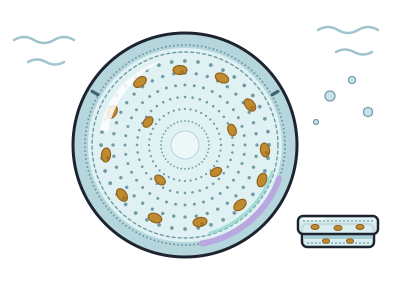
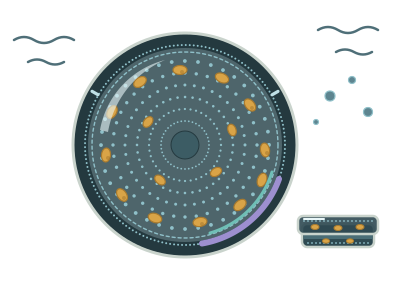
Most diatoms are far too small to see without a microscope, but this one is a giant. Its single cell is a glass disc about a third to half a millimetre wide, roughly the size of a printed full stop. That makes it one of the biggest diatoms there is. Against a dark background, the biggest cells may just be visible by eye as a tiny speck.
Diatoms are not tiny animals. They are single-celled algae that make their own food from sunlight. They belong to the same big group as kelp and water moulds, so this drifting speck is a distant relative of kelp, the huge brown seaweed.
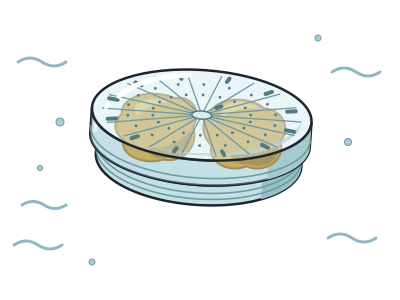
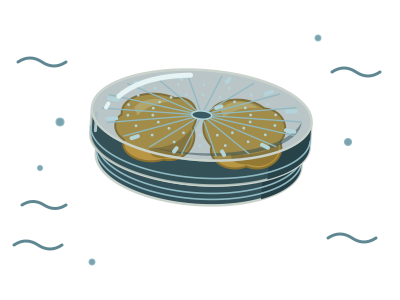
Its shell is made of silica, the same material as glass. The shell comes in two halves that fit together like a pillbox and its lid. The flat face is covered in an almost regular honeycomb of tiny six-sided holes called pores. It cannot swim, so it simply drifts in sunlit seawater as part of the plankton.
It comes from the Indian and Pacific Oceans, but it has spread. In Europe it was first spotted near Plymouth, England, in 1977. By about 1984 it had settled for good in the southern North Sea. When huge numbers grow at once, in what is called a bloom, it makes so much slimy mucus that it can clog fishing nets.
Trouble for seaweed farms
In Japan's Seto Inland Sea it blooms in winter and uses up the nutrients that farmed nori seaweed needs. The nori loses its colour, and farmers lose money.
A natural light filter
The pores in its glass shell bend and split light differently across the shell. Engineers study it as a model for new optical technology.
Hard to swallow
In European seas it is too big for the local tiny drifting grazers to eat. It also takes up fewer toxic metals than other diatoms do, which may help it do well in its new home.
Next to it on the tree
- ThalassiosiraA pillbox-shaped ocean diatom, the first to have its genome read, revealing how cells build glass.
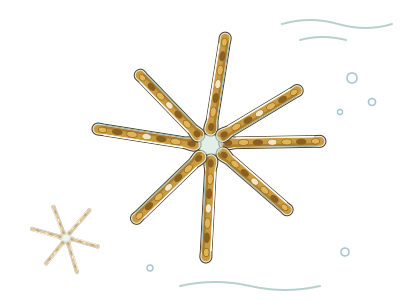
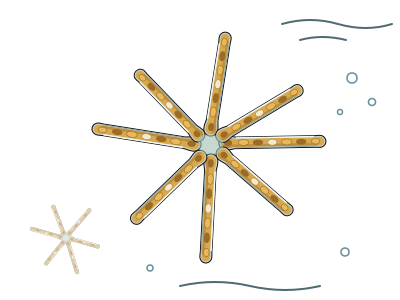
- Star diatomRod-shaped cells join at their tips into floating stars that bloom in lakes each spring.
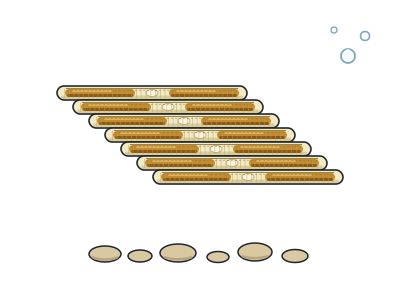
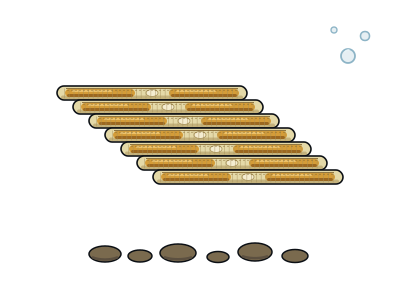
- Sliding diatomIts cells stack like a deck of cards and slide back and forth against each other in rhythm.
- Rock snotIts long stalks can coat river beds in thick, woolly mats, earning it the nickname rock snot.