A species
Thalassiosira
Thalassiosira pseudonana
A tiny glass pillbox and the first diatom to have its genes read
You and the thalassiosira meet in the Eukaryotes branch, shown at about 1.8 billion years ago (on 28 July, in a calendar from life's shared ancestor to today).
This tiny drifting cell lives inside a box made of glass. In 2004 it became the first diatom ever to have its whole genome read. Among its genes were some that scientists had not known before, for taking up silicon dissolved in water and for building a glass (silica) wall from it.
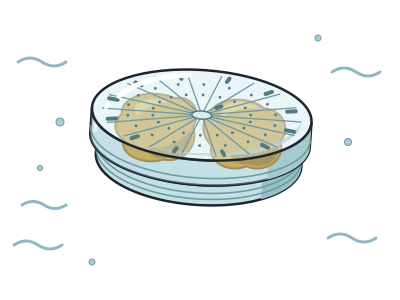
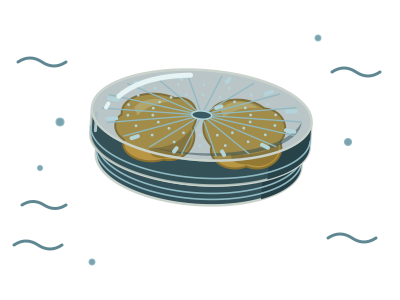
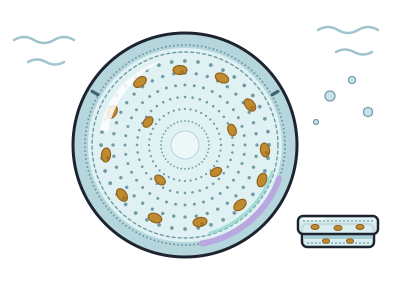
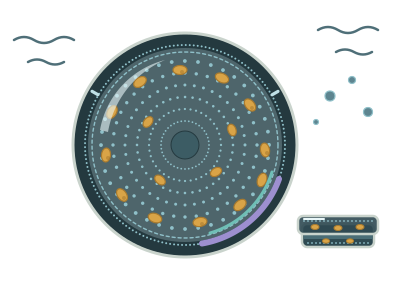
Each cell is a short, round cylinder, shaped like a pillbox, and only about 3 to 5 micrometres wide. You would need about 250 of them in a row to stretch just 1 millimetre. The glass wall comes in two halves that fit together like a Petri dish and its lid, with thin hoop-like bands joining them around the middle. Its flat faces are pierced by very small pores.
Diatoms are not plants. On the tree of life they sit with kelp and water moulds. The genome supported the idea that diatoms began when a single cell that could not use sunlight swallowed a red alga. The two merged into one living thing and swapped genes.
It is famous as an ocean diatom, but it also lives in lakes and rivers. DNA evidence suggests its ancestors lived in fresh water, and that its sea-living populations probably moved back into salty water fairly recently.
An animal-like surprise
Its genes revealed a complete urea cycle, a way of handling nitrogen that people link with animals. It had not been known before in a living thing that has complex cells and makes food from sunlight.
Grown in labs since 1958
The strain whose genes were read was collected in 1958 from Moriches Bay on Long Island, New York, and scientists have kept growing it in laboratories ever since.
First found in a German river
It was first described in 1957 from mud in the River Wümme near Bremen, Germany, under a different name, Cyclotella nana.
Next to it on the tree
- Giant pillbox diatomOne of the biggest diatoms, a glass disc nearly half a millimetre wide, just visible by eye.
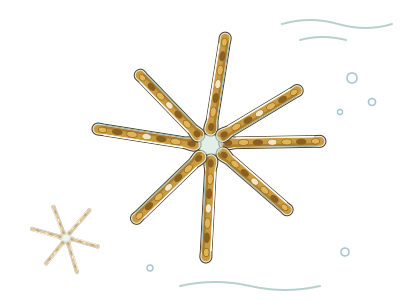
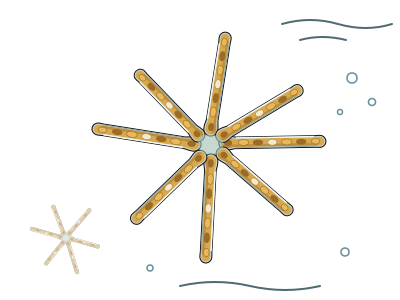
- Star diatomRod-shaped cells join at their tips into floating stars that bloom in lakes each spring.
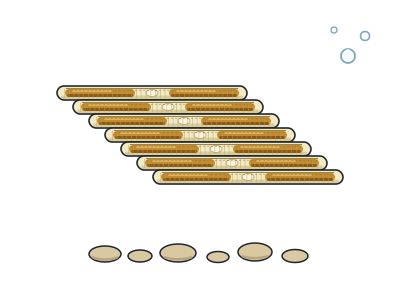
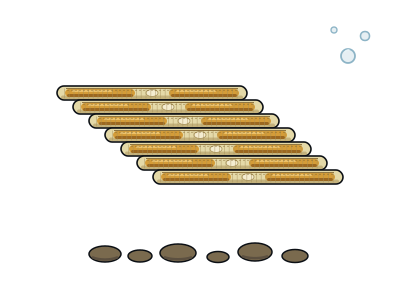
- Sliding diatomIts cells stack like a deck of cards and slide back and forth against each other in rhythm.
- Rock snotIts long stalks can coat river beds in thick, woolly mats, earning it the nickname rock snot.