A group of living things
Jawless fish
Cyclostomi
The last fish without jaws
This branch is shown at about 460 million years ago; its age is a rough estimate.
You and jawless fish meet in the Vertebrates branch, shown at about 520 million years ago (on 16 November, in a calendar from life's shared ancestor to today).
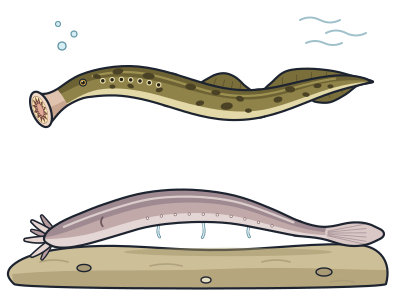
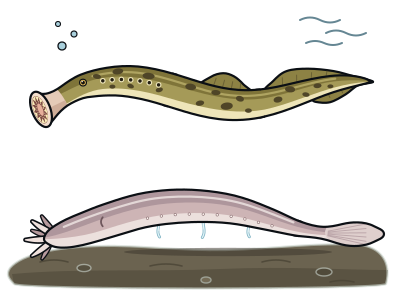
Almost every fish alive today has jaws. Lampreys and hagfish do not. They are the only vertebrates still living without jaws, the last survivors of an older, jawless world. Both are long, slippery and eel-shaped, but they are not eels. Real eels are bony fish with jaws, while these two have skeletons of cartilage.
For decades, scientists argued about whether lampreys and hagfish were each other's closest relatives. Some studies of their bodies put lampreys nearer to fish with jaws. Then genetic evidence grouped the two together. A 100-million-year-old hagfish fossil from Lebanon backed this up. It had chemical traces suggesting it already had slime glands. This means their 'simple' look is not a frozen snapshot of early life. It is their own special way of living.
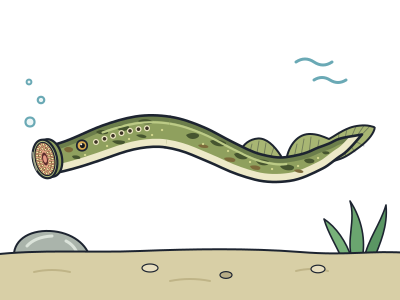
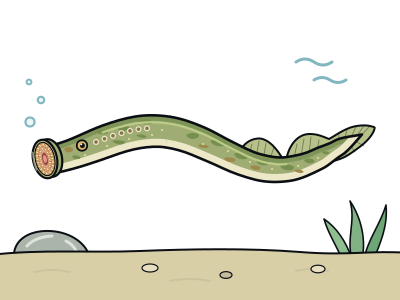
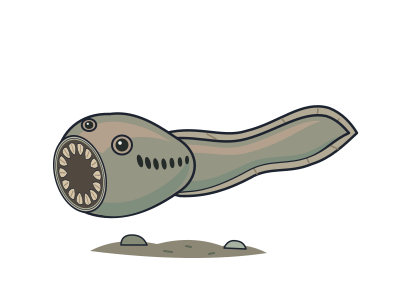
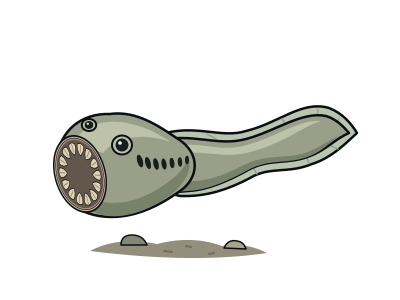
A sea lamprey has a round sucker for a mouth, ringed with sharp teeth, and a row of seven little gill holes behind each eye, like portholes. Some lampreys clamp onto other fish to feed, but many kinds never eat at all as adults.
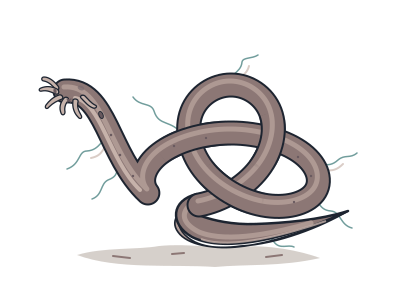
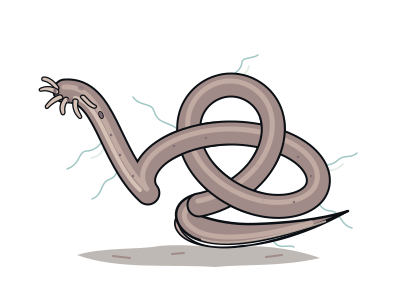
Hagfish have loose skin that fits like a baggy sock, and two pinching tooth plates instead of jaws. They mostly scavenge dead animals on the sea floor. A hagfish can make about 400 times its own body volume in slime, and almost all of that slime is seawater.
Tied in knots
The Atlantic hagfish can tie its body into a knot, then slide the knot along itself to scrape off slime or pull food loose.
An ancient sucker
The oldest known fossil lamprey lived about 360 million years ago in what is now South Africa. It was only about 4 cm long, yet it already had a toothed sucker mouth much like today's lampreys.
A different defence
Like us, lampreys and hagfish have an immune system that learns to recognise germs. But theirs uses different germ-catching molecules instead of the antibodies that jawed animals like us use.
Inside jawless fish
- Sea lampreyA jawless survivor with a suction-cup mouth full of teeth: a window on fish before jaws.
- Atlantic hagfishCan fill a bucket with slime in seconds, then ties itself in a knot to wipe it off.
- PriscomyzonA thumb-sized Devonian lamprey that already had the sucker mouth, showing lampreys barely changed.
Next to it on the tree
- Jawed vertebratesJaws changed everything: they opened up a whole new menu.
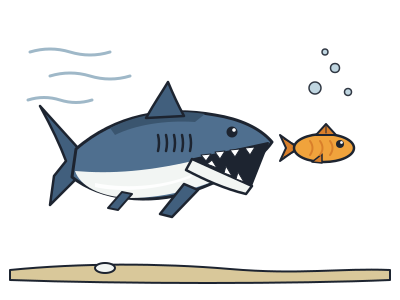
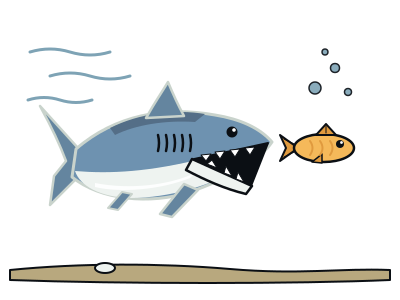
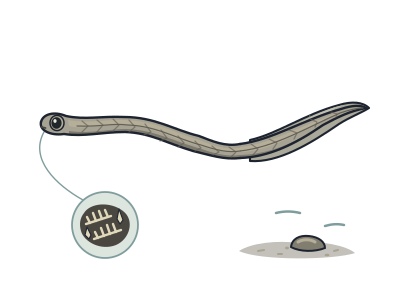
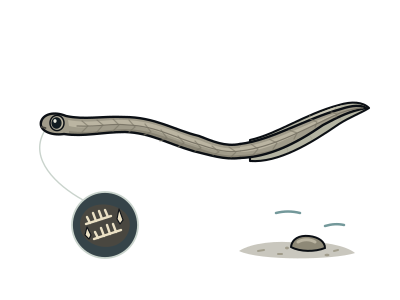
- ConodontsEel-like animals known mostly from tiny teeth, so plentiful that geologists use them to date rocks.
- ArandaspisAn armour-plated fish with no jaws or paired fins, one of the oldest vertebrates known from a body.
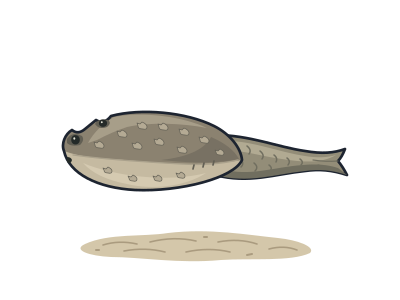
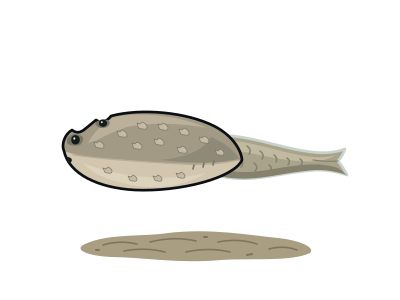
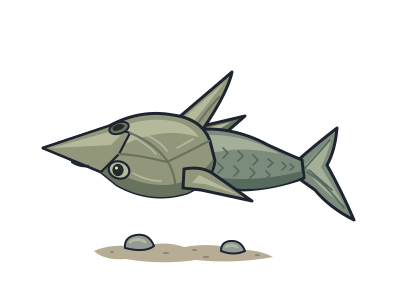
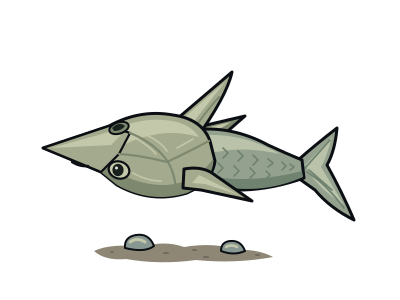
- PteraspisA jawless fish shaped like a torpedo, with a long armoured snout and a spike on its back.
- CephalaspisA jawless fish with a horseshoe-shaped bony helmet and eyes on top, nosing along riverbeds.
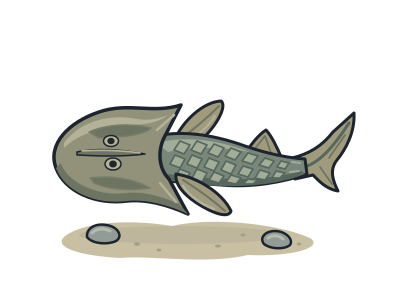
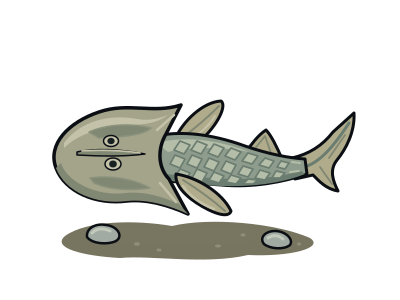
- DunkleosteusA huge armoured fish with self-sharpening bony blades instead of teeth.
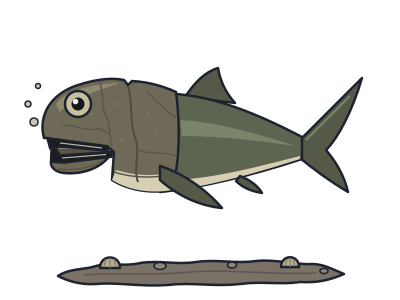
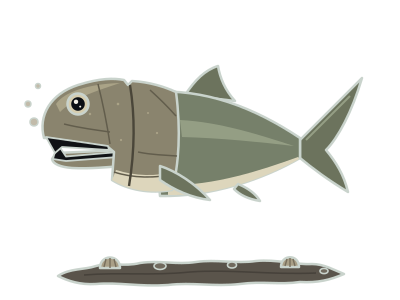
- EntelognathusAn armoured Silurian fish with jaw bones like ours, a clue to where our own face came from.
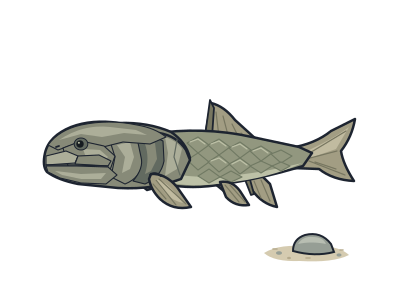
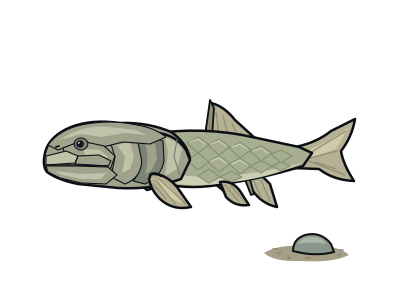
- MaterpiscisA 380-million-year-old fossil mother with an unborn baby and its cord: the oldest known live birth in a vertebrate.