An extinct species
Dunkleosteus †
Dunkleosteus terrelli
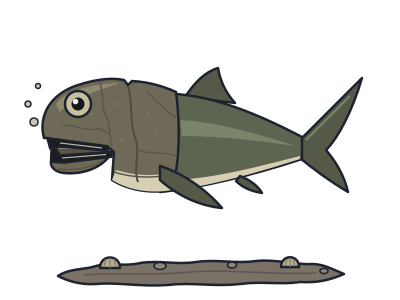
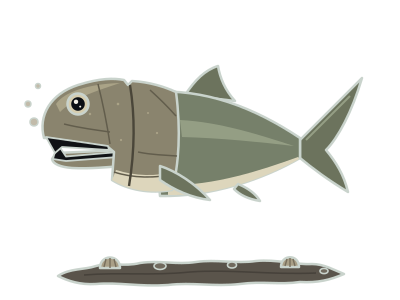
An armoured ocean hunter that sliced its prey with self-sharpening bony blades instead of teeth.
Lived about 372–359 million years ago.
You and the dunkleosteus meet in the Vertebrates branch, shown at about 520 million years ago (on 16 November, in a calendar from life's shared ancestor to today).
Dunkleosteus had no teeth at all. Its jaws carried sharp bony blades that sharpened themselves as its mouth opened and closed. The blades met like scissors, so they could slice flesh and crush bone. This armoured hunter swam in warm tropical seas about 372 to 359 million years ago, long before the dinosaurs.
It was a placoderm, a 'plate-skinned' fish. Thick bony armour covered its head and the front of its body, and a joint linked the head shield to the body shield. Placoderms were early offshoots of the family line that leads to all living animals with jaws, including us. They sit outside the group made up of sharks and bony fish, so Dunkleosteus was not a shark.
Most of what fossils show is that armour. Most of its inner skeleton was cartilage covered by only a thin layer of bone, and this rarely fossilised. No complete body has ever been found. Scientists now think typical adults were about 3 to 3.4 metres long, roughly as long as a small car. They probably had a deep, chunky body shaped like a tuna's. Clumps of fish bones found with its fossils suggest it ate other fish.
Found on a lakeshore
In 1867, Jay Terrell found the first fossils in cliffs on the shore of Lake Erie, near Cleveland, Ohio. Its species name, terrelli, honours him.
A state symbol
In 2020, Ohio made Dunkleosteus its official state fossil fish.
A wide-opening mouth
Its mouth could open to about 45 degrees. A joint at the top of the head let both the upper and lower jaws move.
Next to it on the tree
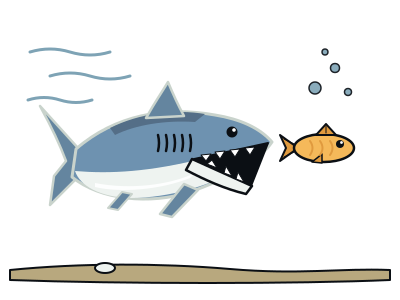
- Jawed vertebratesJaws changed everything: they opened up a whole new menu.

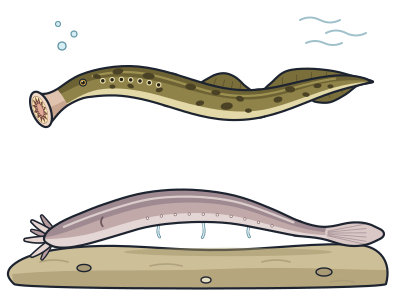
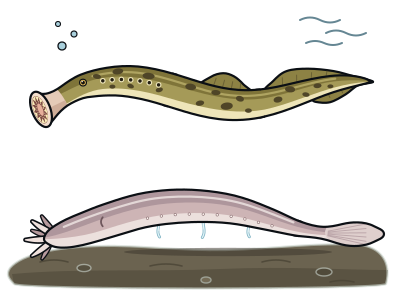
- Jawless fishThe last jawless fish: lampreys and hagfish, survivors of a world before jaws.
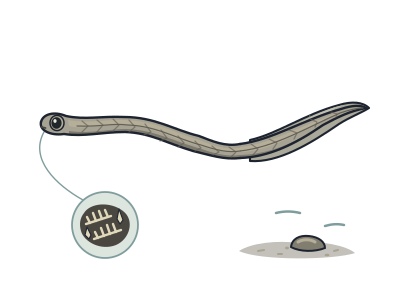
- ConodontsEel-like animals known mostly from tiny teeth, so plentiful that geologists use them to date rocks.
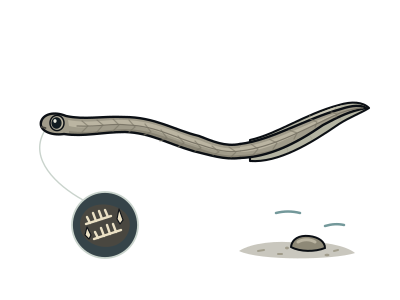
- ArandaspisAn armour-plated fish with no jaws or paired fins, one of the oldest vertebrates known from a body.
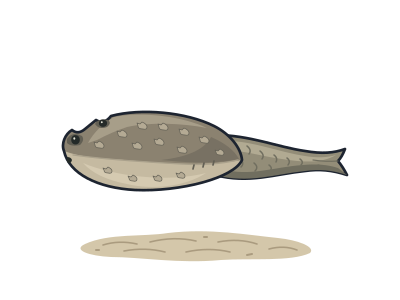
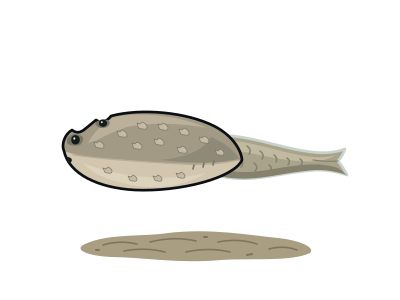
- PteraspisA jawless fish shaped like a torpedo, with a long armoured snout and a spike on its back.
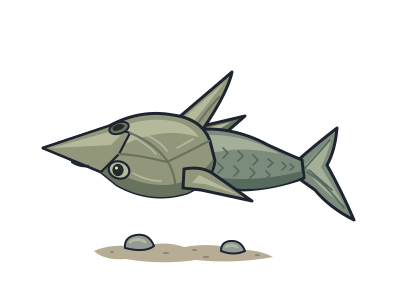
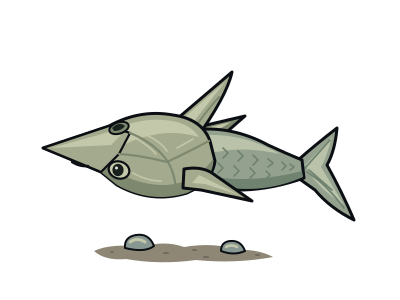
- CephalaspisA jawless fish with a horseshoe-shaped bony helmet and eyes on top, nosing along riverbeds.
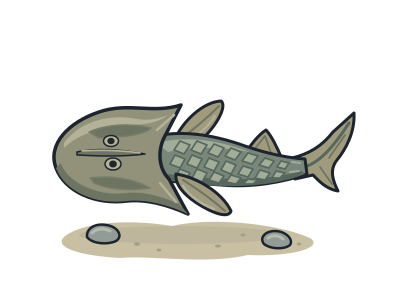
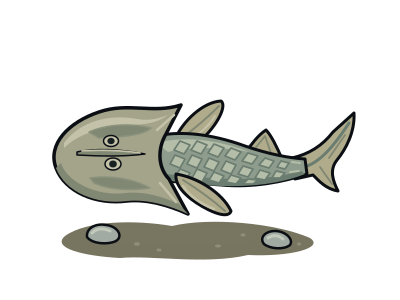
- EntelognathusAn armoured Silurian fish with jaw bones like ours, a clue to where our own face came from.
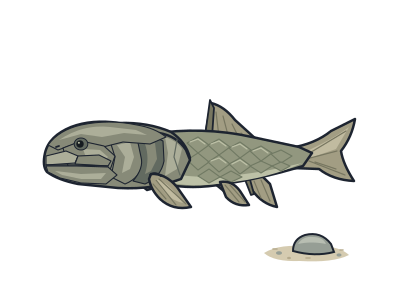
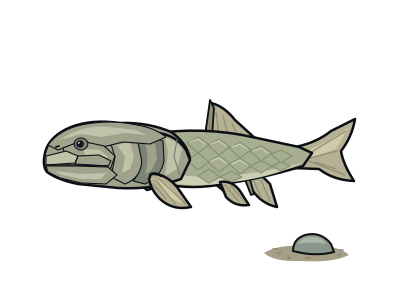
- MaterpiscisA 380-million-year-old fossil mother with an unborn baby and its cord: the oldest known live birth in a vertebrate.