An extinct group
Conodonts †
Conodonta
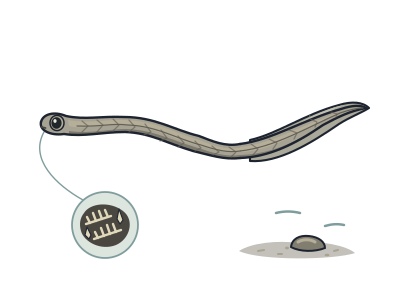
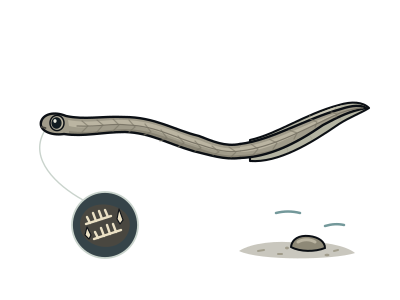
Eel-like animals whose tiny mouthparts help date rocks
Lived about 495–201 million years ago.
You and conodonts meet in the Vertebrates branch, shown at about 520 million years ago (on 16 November, in a calendar from life's shared ancestor to today).
Conodonts were eel-like animals known mostly from tiny, tooth-like mouthparts—fossils so plentiful that geologists use them to date rocks. Despite their shape, they were not true eels. Scientists generally classify them as vertebrates, placing these little animals in the wider family of fishes and humans.
They lived about 495 to 201 million years ago, in seas around the world. Their mouthparts were widespread, and their shapes changed rapidly over geological time. These features make the fossils useful for matching rock layers between distant places, as well as working out their ages.
Most of their bodies were soft and rarely survived as fossils. Exceptional finds at Granton in Edinburgh preserved body outlines, revealing short heads, very large eyes and tail fins. These animals also had several kinds of mouthpart, including comb-like structures. The Granton specimens measured about 2 to 5.5 centimetres long—roughly the length of a small paperclip to a short finger.
Teeth without jaws
They had no jaws, even though their mouthparts performed tooth-like jobs.
A familiar mineral
Their hard mouthparts contained calcium phosphate, a material also found in our bones and teeth.
Eleven rare finds
Discoveries at Granton in the 1980s and 1990s included 11 near-complete animals.
Next to it on the tree
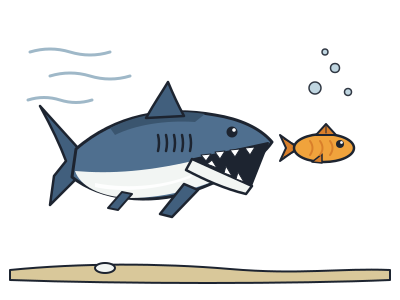
- Jawed vertebratesJaws changed everything: they opened up a whole new menu.
- Jawless fishThe last jawless fish: lampreys and hagfish, survivors of a world before jaws.
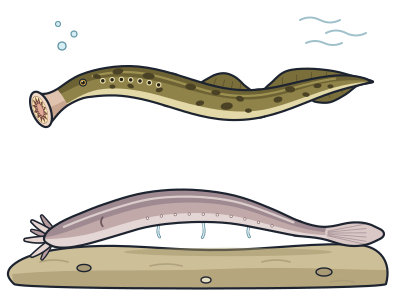
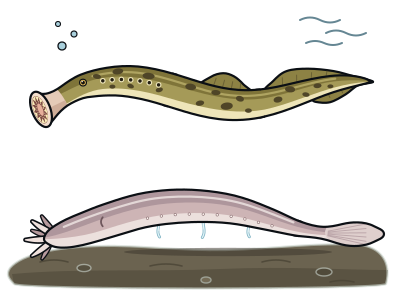
- ArandaspisAn armour-plated fish with no jaws or paired fins, one of the oldest vertebrates known from a body.
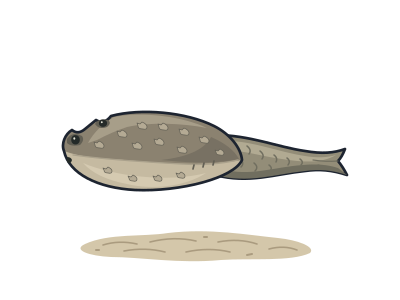
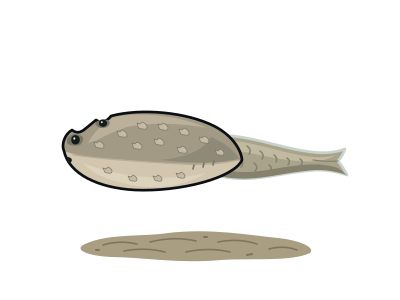
- PteraspisA jawless fish shaped like a torpedo, with a long armoured snout and a spike on its back.
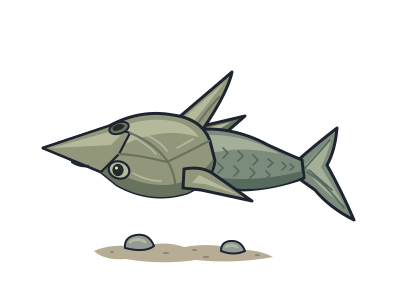
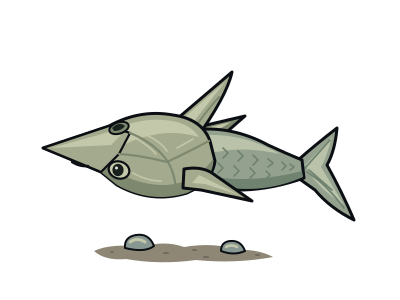
- CephalaspisA jawless fish with a horseshoe-shaped bony helmet and eyes on top, nosing along riverbeds.
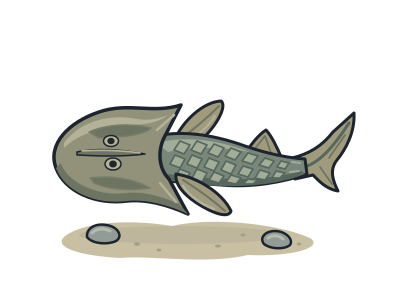
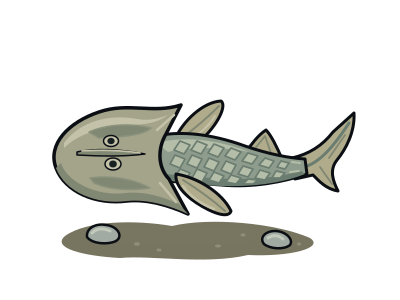
- DunkleosteusA huge armoured fish with self-sharpening bony blades instead of teeth.
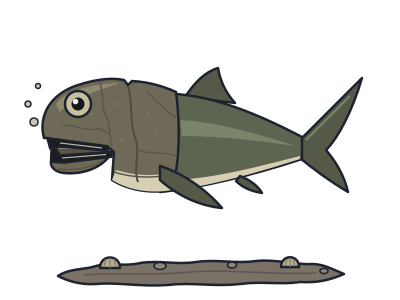
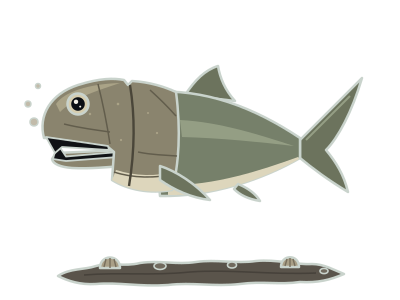
- EntelognathusAn armoured Silurian fish with jaw bones like ours, a clue to where our own face came from.
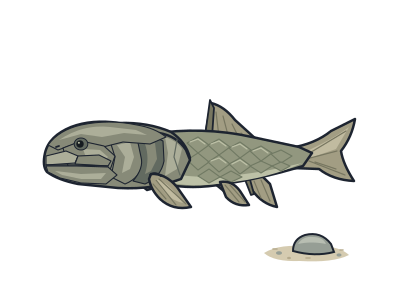
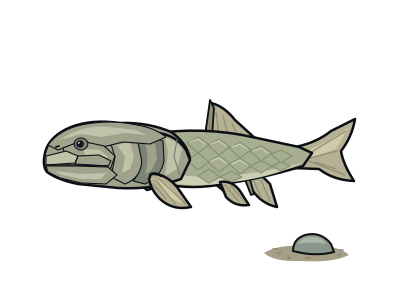
- MaterpiscisA 380-million-year-old fossil mother with an unborn baby and its cord: the oldest known live birth in a vertebrate.