A species
Atlantic hagfish
Myxine glutinosa
Instant slime, a sliding knot and a surprising fish family.
You and the atlantic hagfish meet in the Vertebrates branch, shown at about 520 million years ago (on 16 November, in a calendar from life's shared ancestor to today).
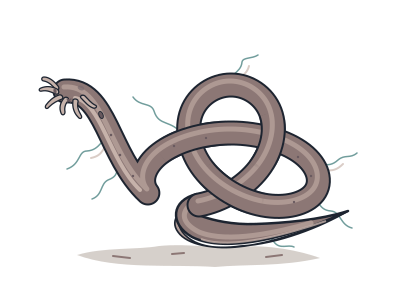
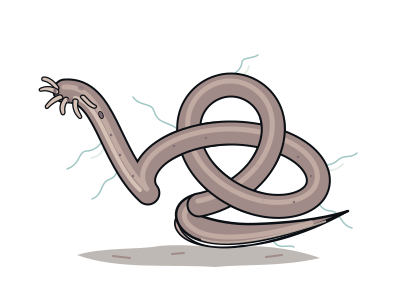
Hagfishes are famous for making a bucketful of slime almost instantly, then tying themselves in a knot to scrape it off. Atlantic hagfish slime forms in a fraction of a second when fluids released from their skin meet seawater. They do not carry a bucketful inside themselves: fine threads and mucus trap the surrounding water. The finished slime is almost entirely water.
This slippery defence can clog an attacking fish’s mouth and gills, making it let go. A hagfish clears slime away by sliding a knot along its body. Knotting also helps it pull food free, giving it something to push against.
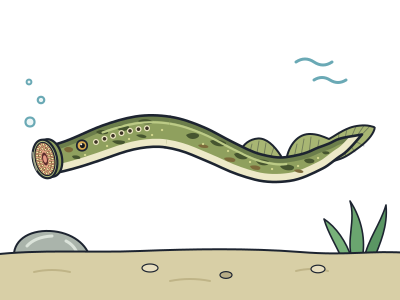
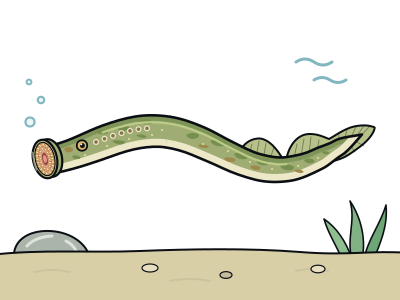
Despite its eel-like shape, this fish belongs with the lampreys, not the eels. Hagfishes and lampreys are each other’s closest living groups of relatives and together form the surviving jawless-fish branch. Atlantic hagfish live on muddy seabeds, often burying themselves during daylight. They emerge at night to look for food.
A flexible skull
Its skull is made of cartilage rather than bone.
Teeth on its tongue
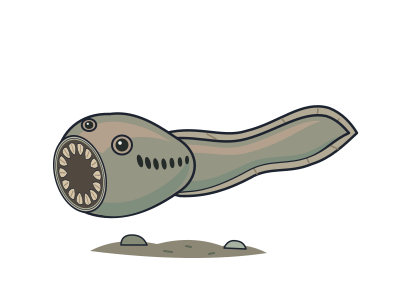
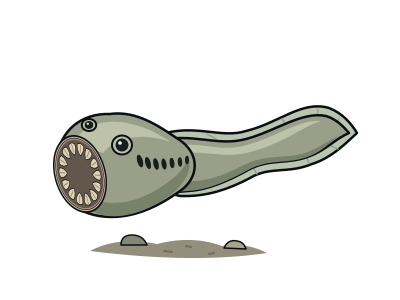
Hard, horn-like teeth on its feeding tongue help it grasp food.
Earthy colours
Its colour can be grey, brown, reddish brown or purplish brown, usually with a paler underside.