A species
Sago palm
Cycas revoluta
It looks like a palm, but it is a cone plant from a plant line older than the dinosaurs.
You and the sago palm meet in the Eukaryotes branch, shown at about 1.8 billion years ago (on 28 July, in a calendar from life's shared ancestor to today).
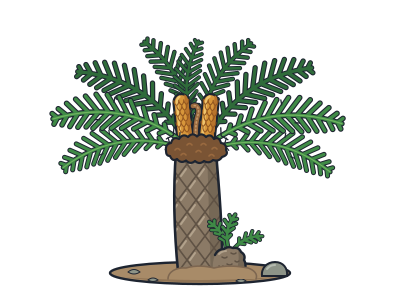
With its crown of stiff, feathery leaves, this plant looks just like a small palm tree. But it is not a palm. Palms are flowering plants, and this one never flowers. Male plants make cones instead, like a pine tree. On the tree of life its neighbours are ginkgo and conifers, not palms.
It is a cycad. The cycad line began about 280 million years ago, before the dinosaurs. Cycads were widespread in the time of the dinosaurs, so they grew alongside them and may well have been eaten by some plant-eaters. Yet the cycad species alive today are young. Most appeared in roughly the last 12 million years, long after the dinosaurs died out.
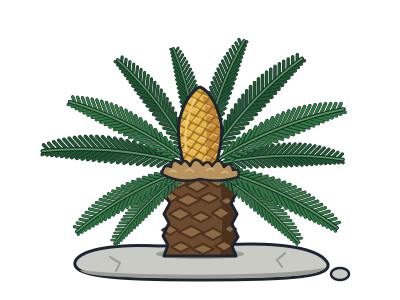
Each plant is either male or female. Males grow a tall yellow cone up to about 60 centimetres long. Females grow a furry golden dome holding bright orange seeds about the size of a large walnut or a small egg. Every part of the plant is poisonous, especially the seeds, so keep it away from pets and children.
In the wild it grows on rocky coasts and cliffs in southern Japan and parts of China. It grows very slowly. After about 50 years it can reach about 4.5 metres tall.
Swimming sperm
Cycads and ginkgos are unusual among seed plants because their sperm can swim, a bit like the sperm of ferns and mosses.
Roots with helpers
Cycads grow special coral-shaped roots that house tiny blue-green bacteria. The bacteria take nitrogen from the air and turn it into plant food.
A name about curled edges
Each shiny leaflet is about 10 centimetres long, with a sharp tip and edges that curl under. The species name 'revoluta' refers to those rolled-under edges.