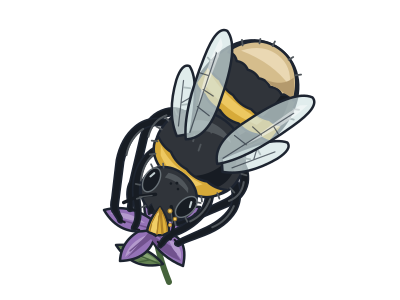
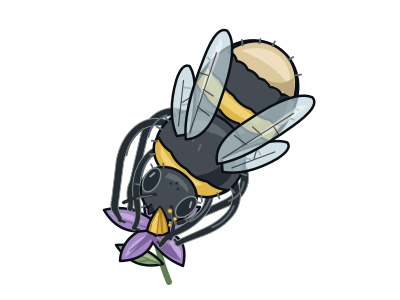
A species
Buff-tailed bumblebee
Bombus terrestris
A furry bee with muscles for warming up and shaking out pollen.
You and the buff-tailed bumblebee meet in the Two-sided animals branch, shown at about 580 million years ago (on 11 November, in a calendar from life's shared ancestor to today).
The buff-tailed bumblebee shivers its flight muscles to warm up while keeping its wings still. Its thick, furry coat helps hold that warmth inside. Those same muscles can also shake pollen from flowers. It belongs to the same broad insect group as honey bees, wasps and ants, but it is not simply a large honey bee.
Some flowers keep pollen inside structures with tiny openings. The bee vibrates against the flower to shake the pollen out, rather like shaking pepper from a pot. This is called buzz pollination. Its wings usually stay folded during the buzz: making this sound does not mean it is flying.
Females of this species comb pollen from their hairy bodies into carrying baskets on their back legs. Most of this collected pollen feeds the young in the nest. Some loose grains reach other flowers, helping the plants reproduce.
Not every tail is buff
The name comes from the queen’s yellowish-brown tail. In the familiar British form, workers usually have white tails, sometimes with a faint buff edge.
An underground home
Nests are usually underground, often in old rodent holes.
Four wings, not two
The smaller back wings attach to the front wings with tiny hooks.
Next to it on the tree
- Western honey beeTalks in dances, builds in hexagons, and pollinates much of our food.
- Wallace's giant beeThe largest bee, as long as a thumb, thought lost until rediscovered in 2019.
- Violet carpenter beeA big black bee with violet wings that chews nest tunnels in dead wood.
- Red mason beeA gentle spring bee that nests in hollow stems and garden bee hotels.
- Sugarbag beeAn Australian stingless bee that builds spiral brood combs and makes tangy honey.
- Orchid beeMales collect perfumes from orchids and store them in swollen back legs.
- Blue-banded beeHead-bangs flowers to shake out pollen, a trick tomatoes need.
- Dominican amber stingless beeBees trapped in amber with pollen on their legs, once said to yield ancient DNA.