A species
Common wasp
Vespula vulgaris
A paper-nest builder and summer pest hunter.
You and the common wasp meet in the Two-sided animals branch, shown at about 580 million years ago (on 11 November, in a calendar from life's shared ancestor to today).
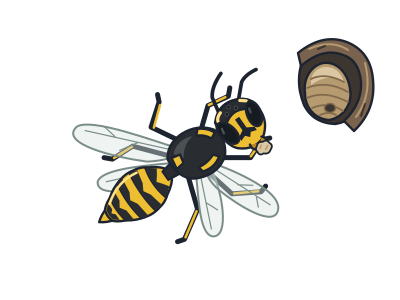
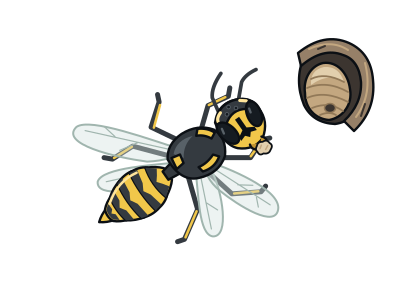
The common wasp builds a paper nest from chewed wood and hunts garden pests in summer. It belongs to the same broad insect group as honey bees, bumblebees and ants. But its building material is not honey-bee wax: wood mixed with saliva dries into a paper-like material.
Workers catch caterpillars, flies, spiders and other small animals, then carry food home for the young. This hunting helps control some garden pests. The adults mainly run on sugary fuel instead, drinking nectar, fruit juices and the sweet liquid released by aphids. Feeding the young and feeding themselves are different jobs.
In Britain, a queen that has survived winter starts a nest in spring and raises the first workers herself. These workers are female. They gather food, enlarge and defend the nest, and care for the young while the queen lays eggs. British colonies normally die out as winter arrives, but new queens shelter through winter.
A hidden home
Nests are usually underground, but can also fill sheltered spaces in trees and buildings.
Four wings
Adults have two pairs of wings, as well as long antennae.
Not everyone can sting
Male common wasps have no sting.
Next to it on the tree
- European hornetA big, fairly calm wasp that hunts by night as well as by day.
- Northern giant hornetThe largest hornet; Japanese honeybees defend their hives by mobbing it in a ball and overheating it.
- European paper waspBuilds an open, umbrella-shaped paper nest and has spread from Europe across North America.
- Heath potter waspA solitary wasp that builds a tiny clay pot on a heather stem for each egg.