A group of living things
Turtles and tortoises
Testudines
A shell built from ribs and backbone
This branch is shown at about 210 million years ago; its age is a rough estimate.
You and turtles and tortoises meet in the Amniotes branch, shown at about 320 million years ago (on 4 December, in a calendar from life's shared ancestor to today).
A turtle’s shell is part of its skeleton, built partly from broadened ribs and the backbone. It is not a suit of armour the animal can climb out of. This basic shell plan stretches back about 200 million years: fossil relatives already had complete shells about 210 million years ago. That does not mean turtles have stopped evolving.
Their family connections are surprising too. Turtles are more closely related to birds and crocodiles than to lizards and snakes. They are not dinosaurs themselves, but belong on a neighbouring branch of the reptile family tree.
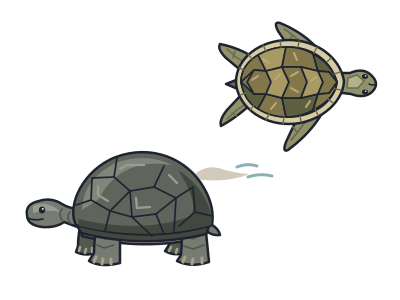
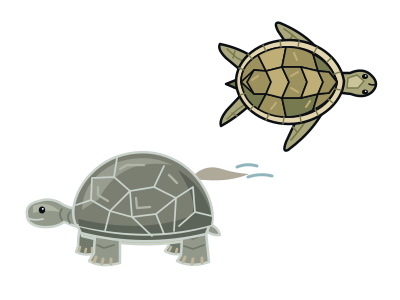
Picture a tortoise beside a sea turtle. Both belong to this group, but their limbs suit very different lives. Tortoises walk on land with rounded feet; sea turtles swim with flippers. Across the group, members live in places as different as deserts, ponds, rivers and oceans. The shared shell plan comes in many forms, rather than one fixed design.
Shoulders on the inside
Unlike other reptiles, turtles have their shoulder bones inside the ribcage.
Beaks, not teeth
Living turtles have toothless jaws with cutting edges like beaks.
Warmth can shape development
In many turtle species, nest temperature helps determine whether hatchlings develop as males or females.
Inside turtles and tortoises
- Green sea turtleNavigates by Earth's magnetic field to return to the beach where it hatched.
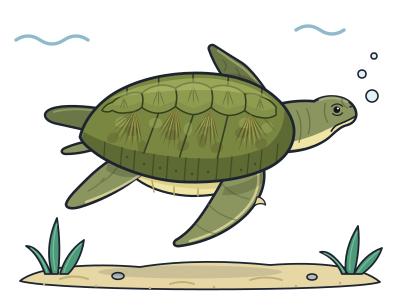
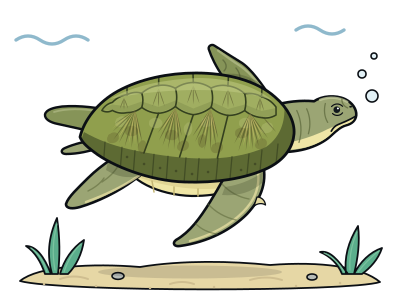
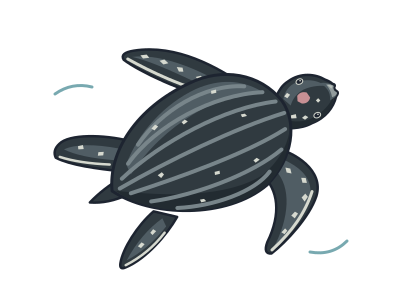
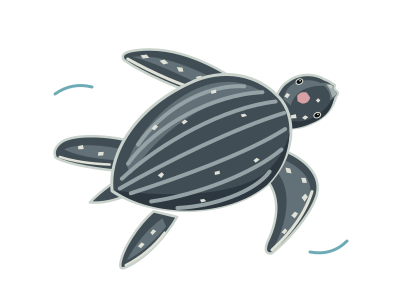
- Leatherback sea turtleThe largest living turtle has a soft, leathery shell and dives over a kilometre deep for jellyfish.
- ArchelonA sea turtle as long as a small car that swam above the dinosaurs' seas.
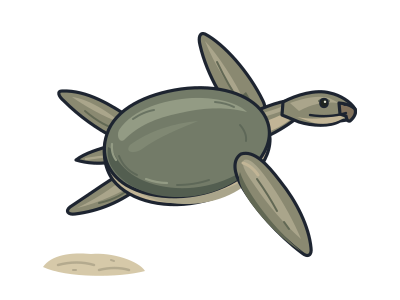
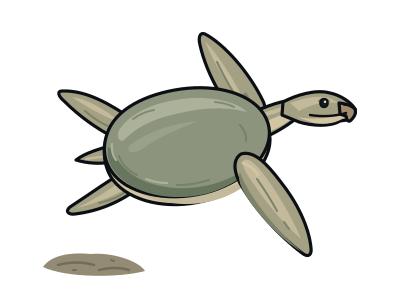
- Side-necked turtlesInstead of pulling their heads straight back, they tuck them sideways under the shell.
- TortoisesLand turtles with domed shells and elephant-like legs, from desert burrowers to island giants.
- Snapping turtlesBig-headed American river turtles with powerful jaws and long, rough tails.
- Eastern box turtleA hinged belly shell lets it close up completely, like a box with a lid.
- Red-eared sliderThe world's most common pet turtle, now living wild in ponds on every inhabited continent.
Next to it on the tree
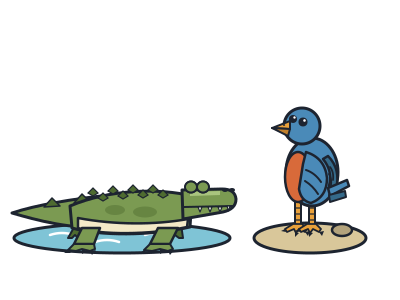
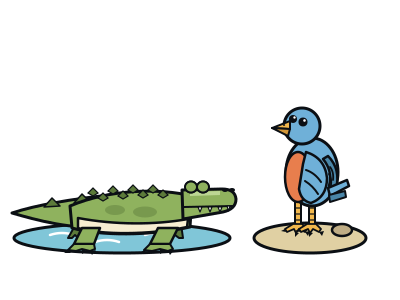
- Crocodiles and dinosaursThe 'ruling reptiles': crocodiles on one side, dinosaurs (birds included) on the other.
- OdontochelysA 'half-shelled' turtle with teeth: it had a belly shell before a back shell.
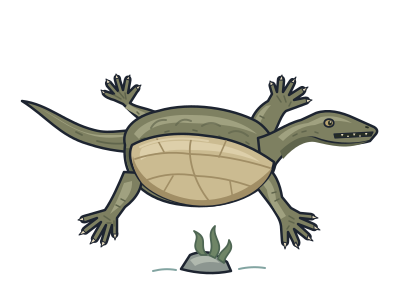
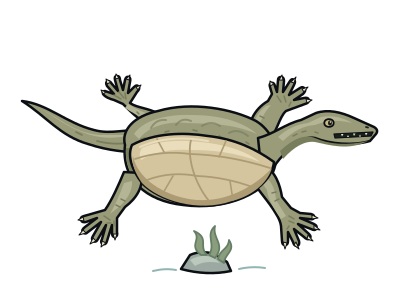
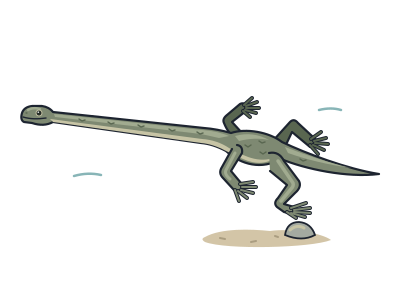
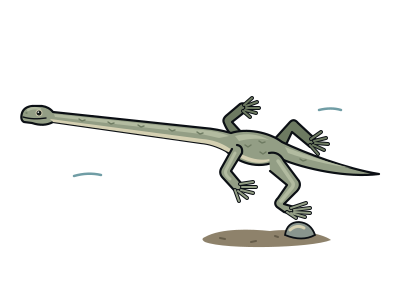
- TanystropheusA reptile whose stiff neck was longer than its body and tail together.
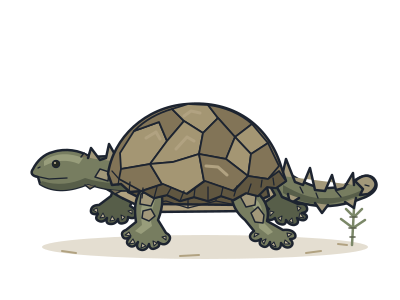
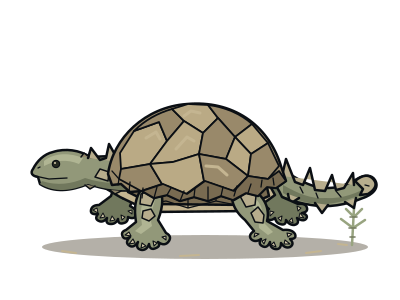
- ProganochelysAn early turtle with a full shell and a spiky tail, but it could not pull its head in.
- EuparkeriaA small, nimble Triassic reptile that looks like the ancestor of crocodiles and dinosaurs.