An extinct species
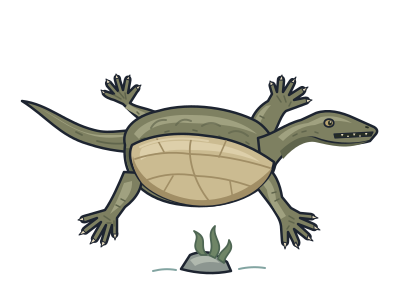
Odontochelys †
Odontochelys semitestacea
A toothed turtle relative with a belly shell, but no complete bony back shell.
Lived about 228–220 million years ago.
You and the odontochelys meet in the Amniotes branch, shown at about 320 million years ago (on 4 December, in a calendar from life's shared ancestor to today).
Its belly had a complete shell, but its back did not have a complete bony one. This ‘half-shelled’ animal was an early relative of turtles and tortoises, known from fossils about 228 to 220 million years ago. It belonged outside the group containing all living turtles and their shared ancestor. That relationship did not mean it was their direct ancestor.
The fossils preserved a belly shell, widened ribs and separate bony plates along the backbone. Small, pointed teeth lined both jaws and parts of the roof of its mouth. ‘Half-shelled’ described this unusual arrangement; it did not mean that half an ordinary turtle shell had broken away.
Its remains came from Guanling in south-western China, in rocks formed in a marine setting. A study of bone chemistry suggested that it lived in coastal waters influenced by fresh water and mainly ate marine plants or algae. Those were clues from its bones, not observations of its meals or movements.
Fingers and toes
Each hand had five fingers, and each foot had five toes.
A long tail
Its tail contained at least 20 backbone bones and had no bony club.
Named in 2008
Scientists formally described the species in 2008.
Next to it on the tree
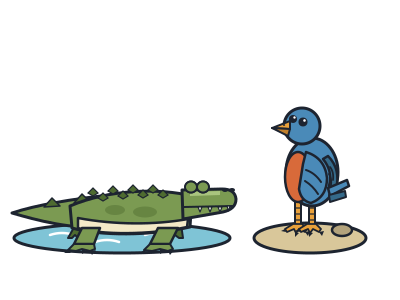
- Crocodiles and dinosaursThe 'ruling reptiles': crocodiles on one side, dinosaurs (birds included) on the other.
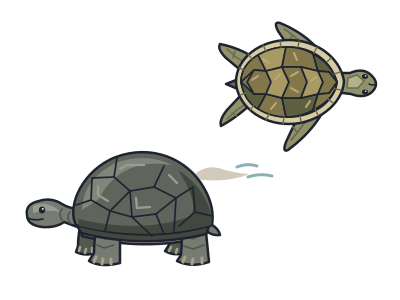
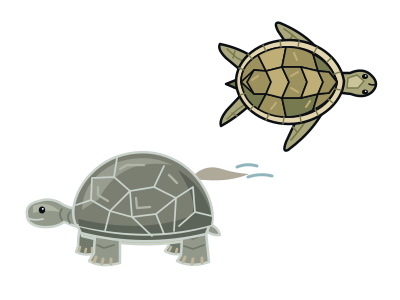
- Turtles and tortoisesA shell made from the ribs and backbone, unchanged in plan for 200 million years.
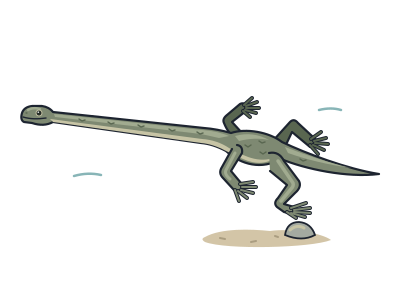
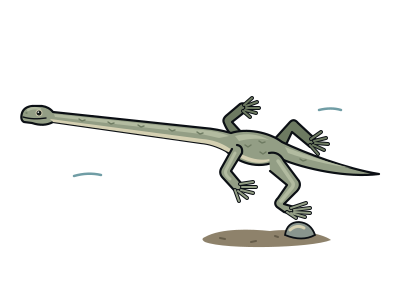
- TanystropheusA reptile whose stiff neck was longer than its body and tail together.
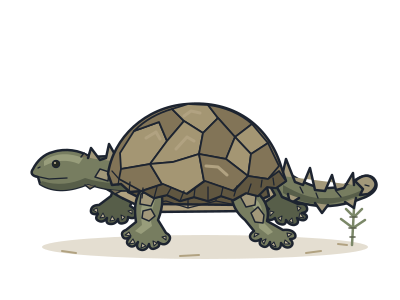
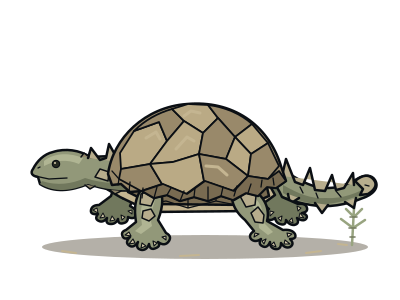
- ProganochelysAn early turtle with a full shell and a spiky tail, but it could not pull its head in.
- EuparkeriaA small, nimble Triassic reptile that looks like the ancestor of crocodiles and dinosaurs.