A species
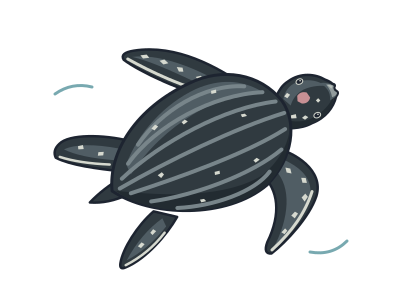
Leatherback sea turtle
Dermochelys coriacea
A leathery-shelled giant built for ocean journeys.
You and the leatherback sea turtle meet in the Amniotes branch, shown at about 320 million years ago (on 4 December, in a calendar from life's shared ancestor to today).
The largest living turtle is a jellyfish eater with a leathery shell, able to dive more than a kilometre deep. Yet it belongs to a different family from green turtles and all other living sea turtles. It is the only member of its own family still alive.
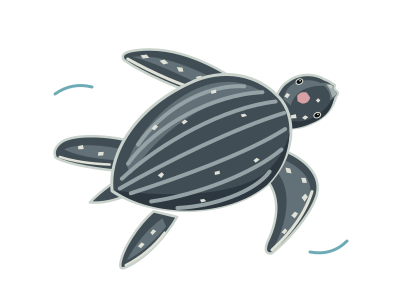
Leathery does not mean boneless. Beneath its firm, rubbery skin lies a patchwork of small bones, rather than the familiar hard outer covering of other sea turtles. Its mainly black skin has pale spots, and adults have a pink patch on top of the head.
A tracked leatherback reached about 1,230 metres below the surface. Its slippery meals are easier to hold thanks to backward-pointing spines in its mouth and throat. But floating rubbish can be mistaken for food, and accidental capture in fishing gear is a leading threat.
A long breath
Leatherbacks can stay underwater for up to about 85 minutes.
Seven ridges
Seven raised ridges run lengthways along the upper shell.
Eggs by the hundred
A female can lay several batches of about 100 eggs during one nesting season.
Next to it on the tree
- Green sea turtleNavigates by Earth's magnetic field to return to the beach where it hatched.
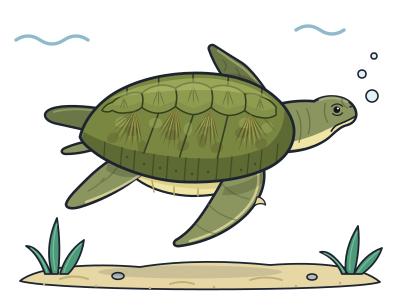
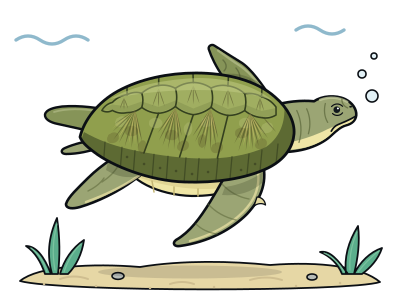
- ArchelonA sea turtle as long as a small car that swam above the dinosaurs' seas.
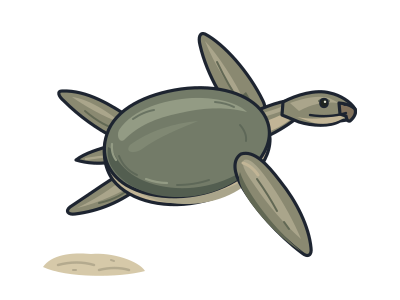
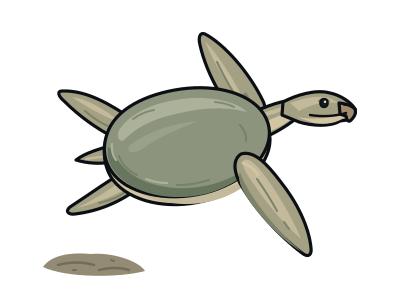
- Side-necked turtlesInstead of pulling their heads straight back, they tuck them sideways under the shell.
- TortoisesLand turtles with domed shells and elephant-like legs, from desert burrowers to island giants.
- Snapping turtlesBig-headed American river turtles with powerful jaws and long, rough tails.
- Eastern box turtleA hinged belly shell lets it close up completely, like a box with a lid.
- Red-eared sliderThe world's most common pet turtle, now living wild in ponds on every inhabited continent.