A group of living things
Sloths
Folivora
One family, two routes to life hanging from trees.
This branch is shown at about 30 million years ago; its age is a rough estimate.
You and sloths meet in the Placental mammals branch, shown at about 95 million years ago (on 23 December, in a calendar from life's shared ancestor to today).
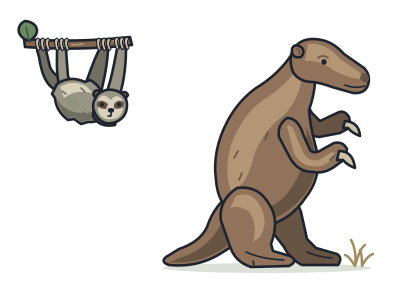
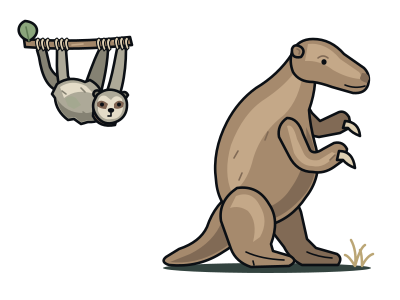
Tree-hanging life evolved twice in the sloth family. Two-toed and three-toed sloths look alike, but they are not each other's closest relatives. Three-toed sloths are more closely related to the extinct giant Megatherium. Two-toed sloths belong on another branch, alongside an extinct ground sloth called Mylodon.
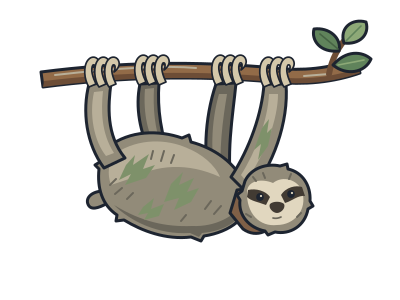
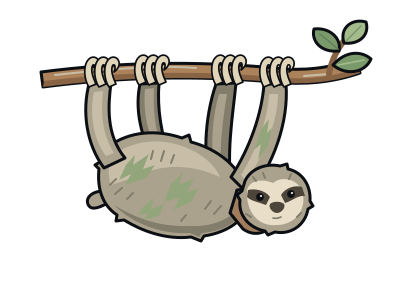
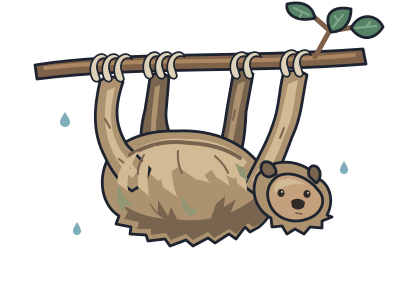
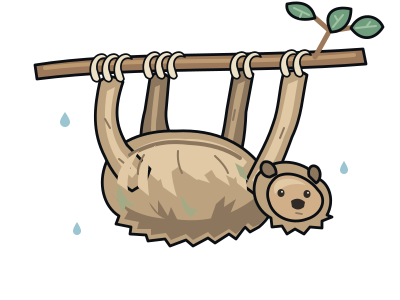
Living sloths inhabit forest treetops in Central and South America, including cool, misty cloud forests. Their long, curved claws hook around branches and help them hang securely. Those same hooks make travelling on the ground awkward. Similar ways of living can develop on separate branches of a family tree.
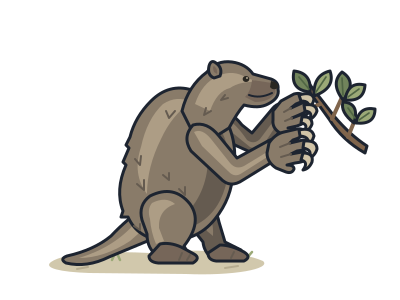
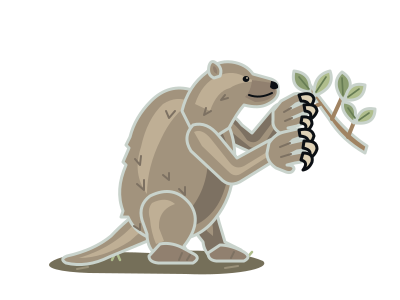
But the sloth family was not always a collection of small tree-hangers. During the Ice Age, giant ground sloths walked through South America. Megatherium could weigh about four tonnes, comparable to an elephant, and stood about 3.5 metres tall when raised on its hind legs. It was a ground-dweller, not an enormous animal dangling from a branch.
A clinging passenger
Two-toed sloths usually have one baby at a time. The youngster clings to its mother's fur, resting against her chest or belly.
Claws did not mean meat
Despite its enormous claws, Megatherium ate plants. Chemical evidence from its teeth supports this diet.
Danger between trees
Habitat destruction threatens living sloths. Roads and power lines add dangers when they move between trees.
Inside sloths
- Brown-throated slothAlgae can live in its fur; it usually climbs down to poo about once a week.
- Giant ground slothAn elephant-sized sloth that walked the ground and reared up to browse trees.
- Linnaeus's two-toed slothHangs upside down with two claws on each hand and three on each hind foot.
- Jefferson’s ground slothAn ox-sized ground sloth named after Thomas Jefferson, who described its huge claws.