An extinct species
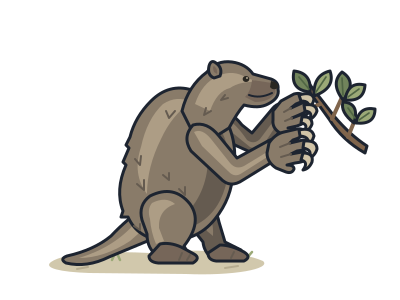
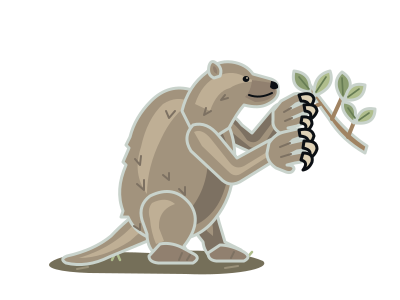
Giant ground sloth †
Megatherium americanum
An elephant-sized sloth that reached into trees from the ground.
Lived about 800,000–12,000 years ago.
You and the giant ground sloth meet in the Placental mammals branch, shown at about 95 million years ago (on 23 December, in a calendar from life's shared ancestor to today).
An elephant-sized relative of today's tree sloths, this giant was built for life on the ground. Its skeleton suggested it could rear up to reach leaves rather than climb into branches. Despite its enormous size, its bones placed it among sloths, not bears or elephants. Its wider family also included anteaters and armadillos.
It lived in South America hundreds of thousands of years ago and survived until about 12,000 years ago. Feeding studies suggested that it browsed on plants in open country, where shrubs and trees provided food. It was not simply an oversized version of a modern sloth hanging in rainforest branches.
It walked on four legs, but its powerful hind legs and large tail could support a different feeding pose. With its tail braced against the ground, it could lift its front half and reach towards foliage. This posture was reconstructed from its anatomy, rather than directly preserved behaviour.
A skeleton sent to Spain
Its first scientifically studied skeleton was discovered in Argentina in 1787 and sent to Madrid.
A name to match its size
Its scientific name meant roughly ‘great beast from America’.
Darwin's divided skull
A skull collected by Charles Darwin survived in two separated halves, held at the Hunterian Museum and Down House.
Next to it on the tree
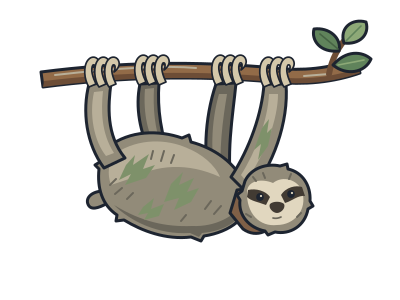
- Brown-throated slothAlgae can live in its fur; it usually climbs down to poo about once a week.
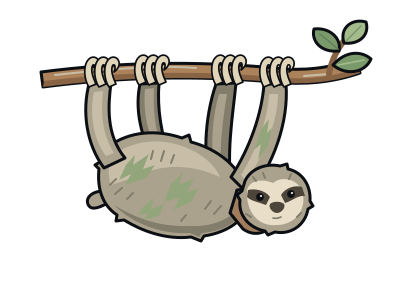
- Linnaeus's two-toed slothHangs upside down with two claws on each hand and three on each hind foot.
- Jefferson’s ground slothAn ox-sized ground sloth named after Thomas Jefferson, who described its huge claws.