A species
Brown-throated sloth
Bradypus variegatus
A slow mover with a living green coat
You and the brown-throated sloth meet in the Placental mammals branch, shown at about 95 million years ago (on 23 December, in a calendar from life's shared ancestor to today).
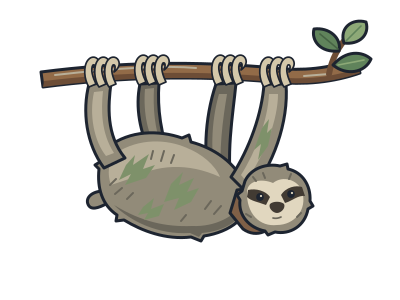
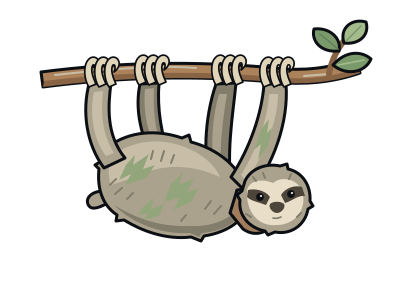
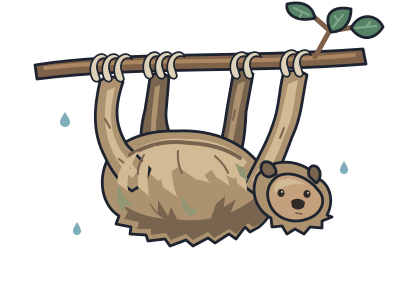
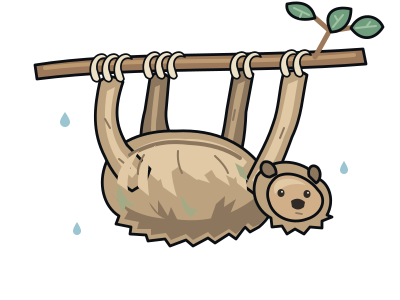
The brown-throated sloth moves slowly, can have algae growing in its fur, and usually climbs down to poo about once a week. Those tiny living things can give its shaggy grey-brown coat a greenish tint. The green is not moss, dirt or the fur’s own colour.
Its family connections are just as surprising. This three-toed sloth is more closely related to the extinct giant ground sloth Megatherium than to the living two-toed sloth. That giant was a relative, not an established direct ancestor. Two-toed and three-toed sloths developed their similar ways of hanging and moving upside down in trees independently.
It lives mostly in forest treetops, eating mainly leaves and favouring young ones. Across the species, these sloths eat from more than 50 kinds of plant. Their food also supplies most of their water. A mother normally has one baby, which clings to her belly during its early months.
Three on every limb
Each of its four limbs ends in three curved claws.
A capable swimmer
Its movements on land are awkward, but it swims well.
A striped back patch
Males have a cream-to-orange patch of shorter back fur, crossed lengthways by a dark stripe.
Next to it on the tree
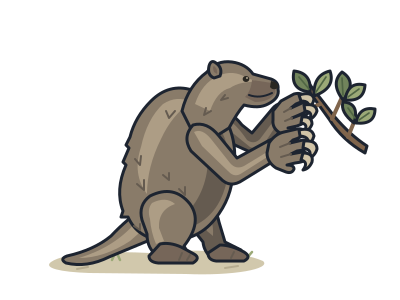
- Giant ground slothAn elephant-sized sloth that walked the ground and reared up to browse trees.
- Linnaeus's two-toed slothHangs upside down with two claws on each hand and three on each hind foot.
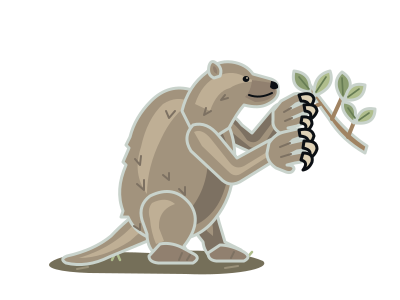
- Jefferson’s ground slothAn ox-sized ground sloth named after Thomas Jefferson, who described its huge claws.