A species
Red fox
Vulpes vulpes
A dog-family hunter that pounces into snow.
You and the red fox meet in the Placental mammals branch, shown at about 95 million years ago (on 23 December, in a calendar from life's shared ancestor to today).
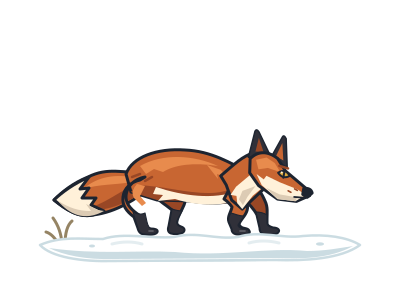
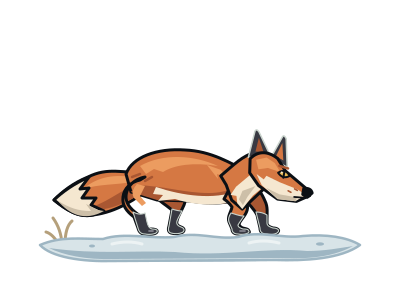
A red fox pauses above the snow, listening for a mouse hidden underneath. Then it leaps high and lands on its prey from above. Hearing also helps it hunt through tall grass. In a study of about 600 hunting jumps, researchers found that the foxes tended to jump north-east. When prey was hidden, hunting success was strongly linked to the direction of the jump.
This pouncing hunter belongs to the dog family, alongside wolves and pet dogs. Within that family, it belongs to the group called true foxes, rather than the group containing wolves. So its hunting style may look unlike a dog's, but the family connection is real.
Mice are only part of the menu. Red foxes also eat birds, frogs, worms, berries and other fruit. In towns, they may search bins for scraps. Both parents care for their cubs, and sometimes older offspring or other females help. Raising a family can be a shared job.
Meals for later
Red foxes hide food and can find their stored meals again.
Eyes closed at birth
Cubs are born with closed eyes, which open after about 9–14 days.
Different feet
Each front foot has five claws, including a raised inner claw. Each hind foot has four.
Next to it on the tree
- DogA wolf that joined humans tens of thousands of years ago and learned to read our faces.


- Dire wolfA heavy Ice Age dog relative with a distinct ancient history; newer DNA work suggests ancestry from two lineages.
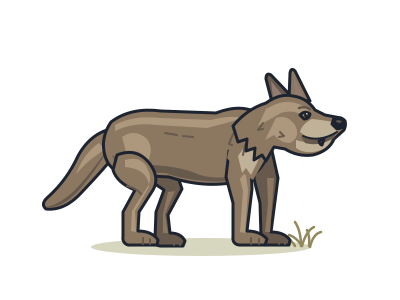
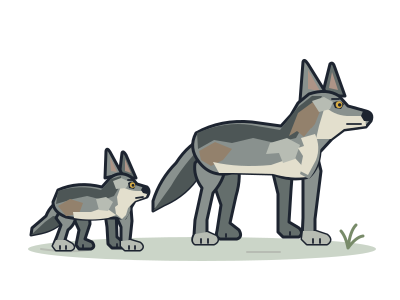
- Grey wolfHunts in family packs; every dog descends from an ancient grey wolf population that is now extinct.
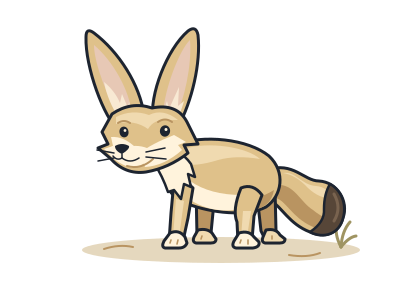
- Fennec foxThe smallest fox, with giant ears that shed desert heat.
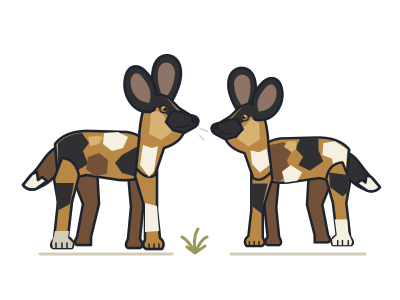
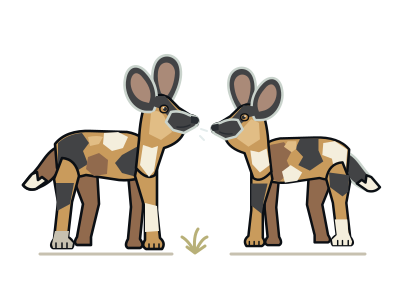
- African wild dogSneezes may help packs agree when to set off; a five-pack study linked more sneezes with departure.
- CoyoteA clever wild dog that has spread across North America and now lives in many big cities.
- Arctic foxA small fox whose coat turns white in winter and whose fur keeps it warm far below freezing.
- Maned wolfA fox-like dog on stilt legs from South American grasslands that eats a lot of fruit.